·
05 · Killington · 4241

4241

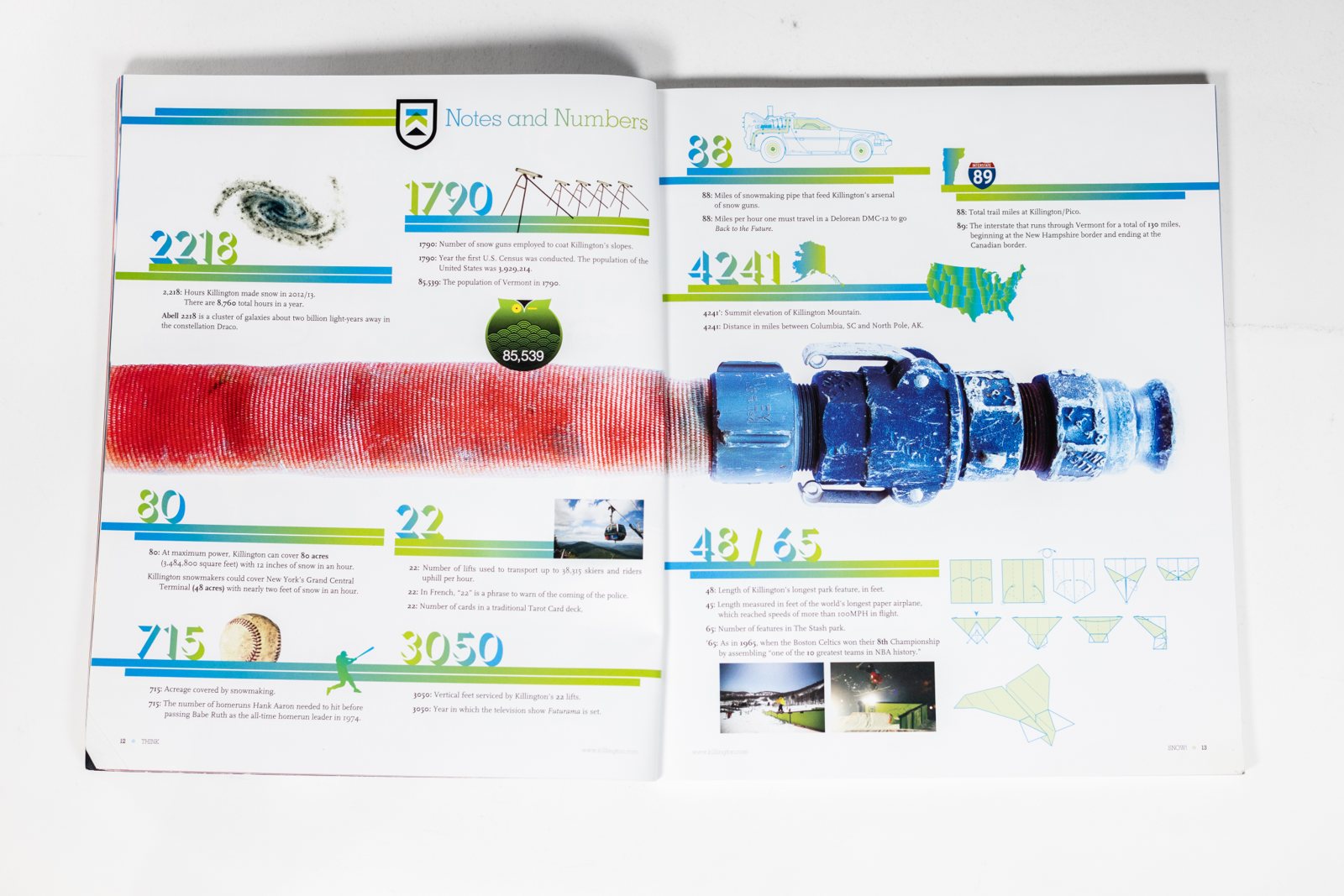
Named for the summit that makes the Beast the Beast — 4,241 feet. What began as a budget argument became a decade-long editorial engine — magazine, film, podcast — and the standard for what a ski town could publish.

A decade-long editorial engine — 152 pages · 1M+ copies · ~75 films · a 4.9★ podcast.
The full story

A stack of forgettable brochures, turned into a decade-long editorial engine that redefined what a ski town could publish.

The system — Editorial & distributionAn editorial and distribution system — a ski town's own magazine, film series, and podcast under one masthead, self-initiated and largely self-funded.

at a glance / the facts
Client
Killington · POWDR
Agency
Buttery
Role
Creative Director
Years
2011–2021
Disciplines
Editorial · Film · In-house studio
Formats
Magazine · Video series · Podcast · Web
Spun out
Buttery (resort agency)
01The diagnosis

A gap is an opportunity if you can fill it.

We started by looking at what everyone else was making, and it was all the same thing.

Swap the resort name, change the photo, keep moving. Brochures that nobody kept, nobody remembered, and nobody felt anything about. The same flattening I'd spend years fighting at the brand level was happening in print: forgettable, repeatable, interchangeable. And meanwhile there was a real appetite in the Killington and Vermont community for something with actual craft — print, design, story that meant something — and nobody was feeding it.

That's not an aesthetic complaint. It's a gap. And a gap is an opportunity if you can make the case to fill it

Every regional print piece in Vermont ski country was cookie-cutter.
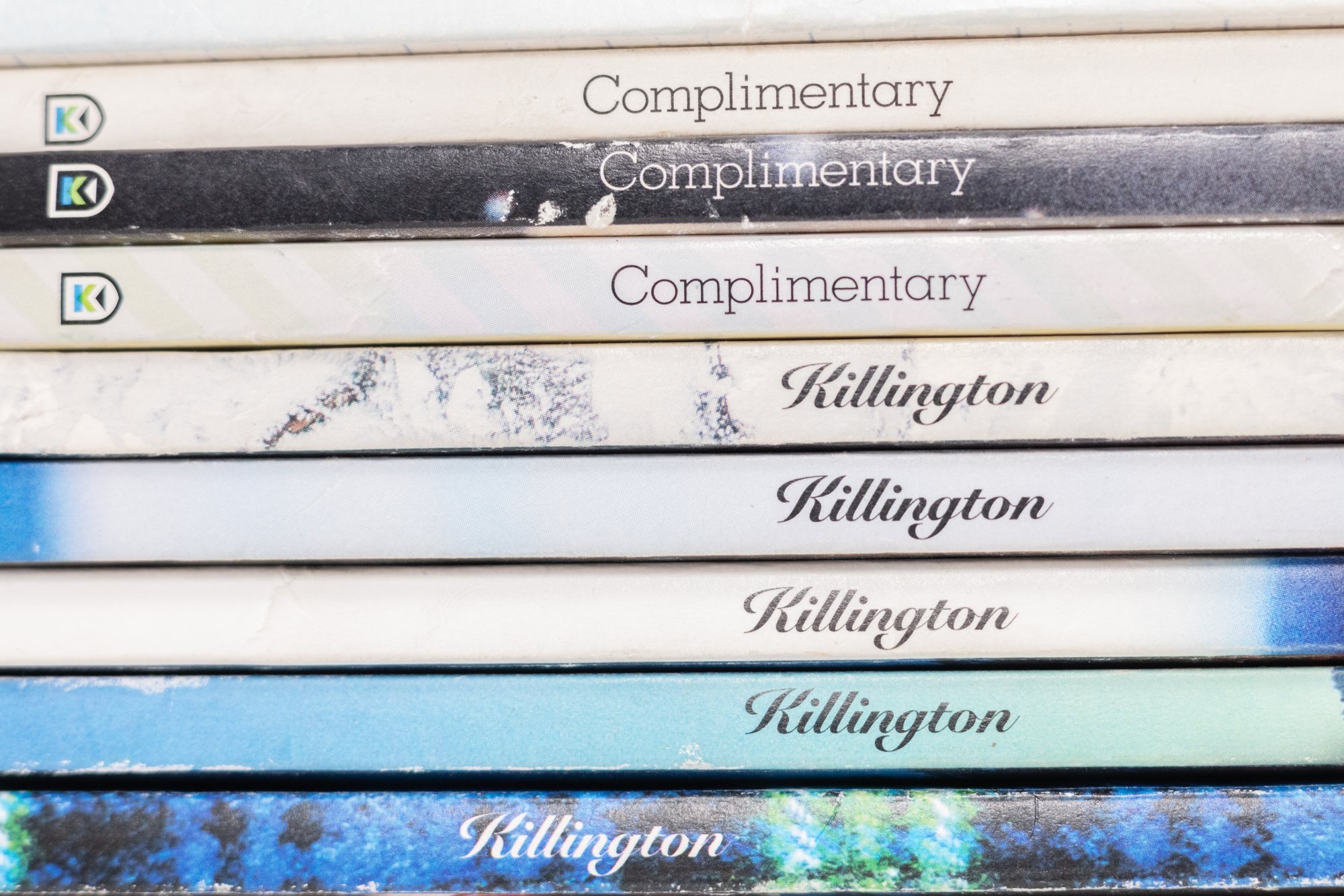
A decade of 4241 and Killington magazines stacked spine-out — 'Complimentary' and 'Killington' issues

Nobody was feeding it

There was a real appetite in the Killington and Vermont community for print, design, and story that meant something. Every brochure ignored it — a gap sitting in plain sight.

02The mentor

Chris brought the love of print. I turned it into a larger editorial vehicle.

Filling that gap didn't start with me alone. The conversation started with Chris Danforth — my boss at Copper Mountain and then Killington, who had a publishing background from working at a paper in college. We'd talk about print constantly: about brochures and small-format work that had no impact on brand-building, about how the love of print and design and storytelling just wasn't being met in the community. Chris brought the love of print. I was the glue that turned it into a larger editorial vehicle.

Credit where it's due, all the way through this one — 4241 was never a solo act, and the honest version is a better story than solo ever could be

03The system

We built the system that made the beauty affordable and repeatable.

Before a single page got designed, we built the business case.

We looked at what Killington was already spending on forgettable print and made an argument: take that spend and reallocate it into one rich, beautiful, coffee-table-worthy vehicle instead of a stack of brochures nobody keeps. Then we engineered the funding so it could sustain itself — leverage the local Chamber of Commerce to sell ads, which did two things at once: it offset the print costs, and it grew the Chamber's own membership in the process. The magazine paid for itself and strengthened the local business community that advertised in it.

That's the part I'm proudest of, and it's the part that matters for everything that came after: we didn't just want to make something beautiful. We built the system that made the beauty affordable and repeatable

Story first. System keeping it alive.
The magazine is the visible half. The reallocation-and-ad-model is the half that let it exist at all.
I was living that sentence in 2011, a decade before I'd build it into software.
04The grind

The road to the mountain was gone. We shipped on time.

The business case won the argument. Then came the part arguments don't cover. The first year, we started in mid-June, with files due to ship the last weekend of September.

In one summer we had to sell the ads, organize them, sometimes recreate them from scratch, craft the entire narrative, and source every visual. Everything a magazine demands, built from nothing on a hard deadline. And then, at the worst possible moment, Hurricane Irene hit.

August 28, 2011. Irene tore apart more than 500 miles of Vermont highway and destroyed Route 4, the road to Killington. We were landlocked in the mountains for about two weeks, right in the teeth of production.

We hit the print deadline anyway.

That's the sentence I'd point to if you asked me what kind of operator I am. The road to the mountain was physically gone, and we still shipped files on time. Not adversity for color. Proof of what it takes to make a ship date hold when the world isn't cooperating

05Who made it

Already the connective tissue the whole thing routed through.

The honest credit, year one — because "solo" would be a lie, and the truth is more hireable anyway:

Chris Danforth — lead publisher: budget, leadership, story. Me — story, photography, ad sales and collection, production. Joe Polevy — design and story. Mike Horn — editorial narrative. Justin Cash — photography.

Look at the lanes. Everyone else ran one. Chris led, Joe designed, Mike wrote, Justin shot. I ran four, spanning the creative, the commercial, and the operational. I was the one touching the money, the pictures, the words, and the print run all at once. Not the boss that first year. But already the connective tissue, the person the whole thing routed through.

Year two, Chris moved on, and I took over as publisher, guiding story, design, photography, ads, and production. The org handed me the whole operation because I was already functioning as its spine. And that second year, we leaned hard into getting more value out of the narratives, pushing them into digital venues and into video. Same instinct I'd run for the rest of my career: don't just make the thing, make the thing work harder across formats
The spine

A team made every issue and a community carried it — but the calls, from the money to the pictures to the words to the print run, routed through me before they ever routed through a title.

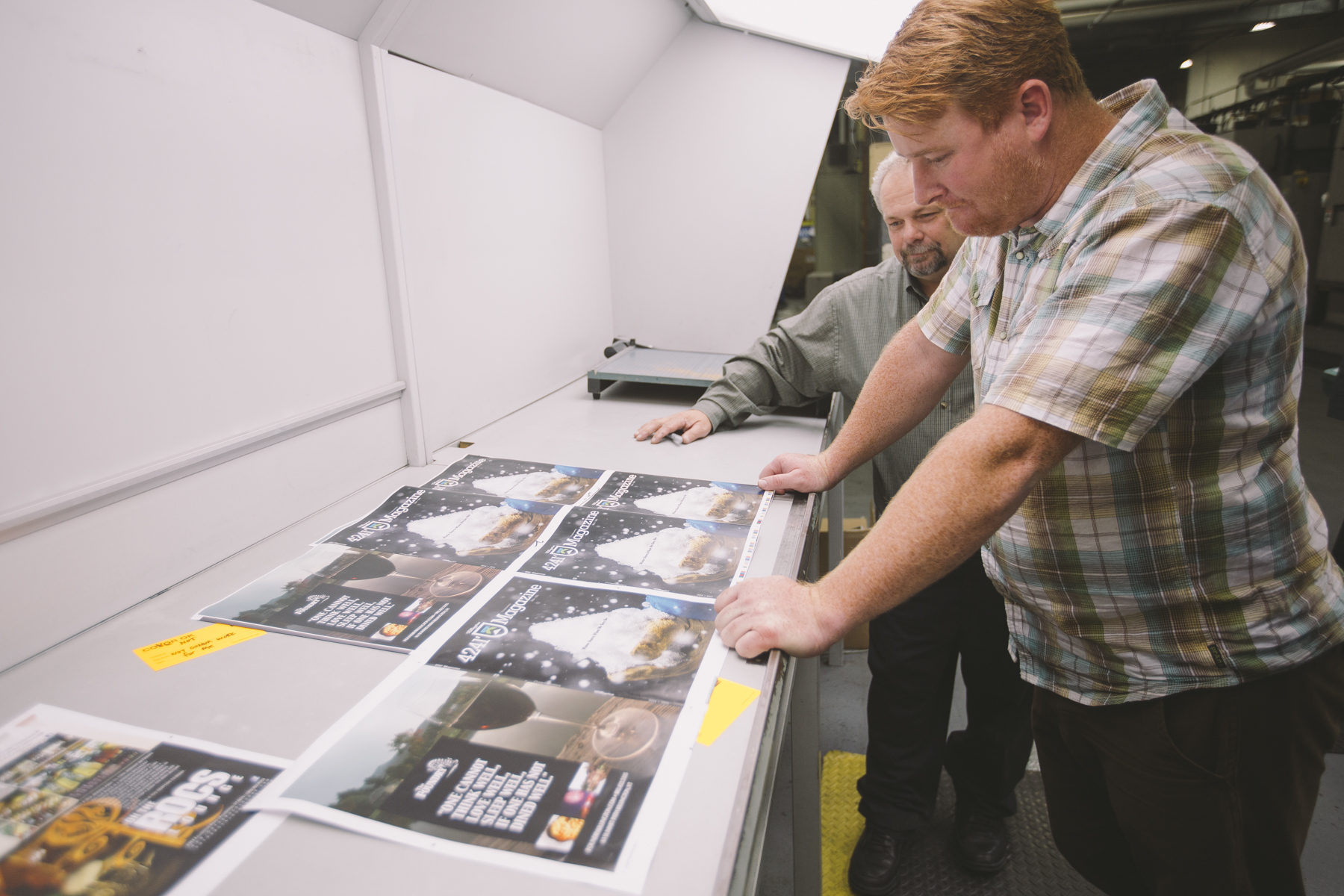
Two press operators checking a printed press sheet of 4241 Magazine on a light table during the print run
06What grew out of it

Buttery grew out of 4241.

4241 came first. The agency came next.

The magazine worked well enough, was good enough, mattered enough, that Killington asked the creative team behind it to become the resort's agency. Buttery grew out of 4241. That's the accurate order, and it matters. The work created the agency, not the other way around. I was there at the origin — and got to experience all the brilliance and fun of working with the Buttery team

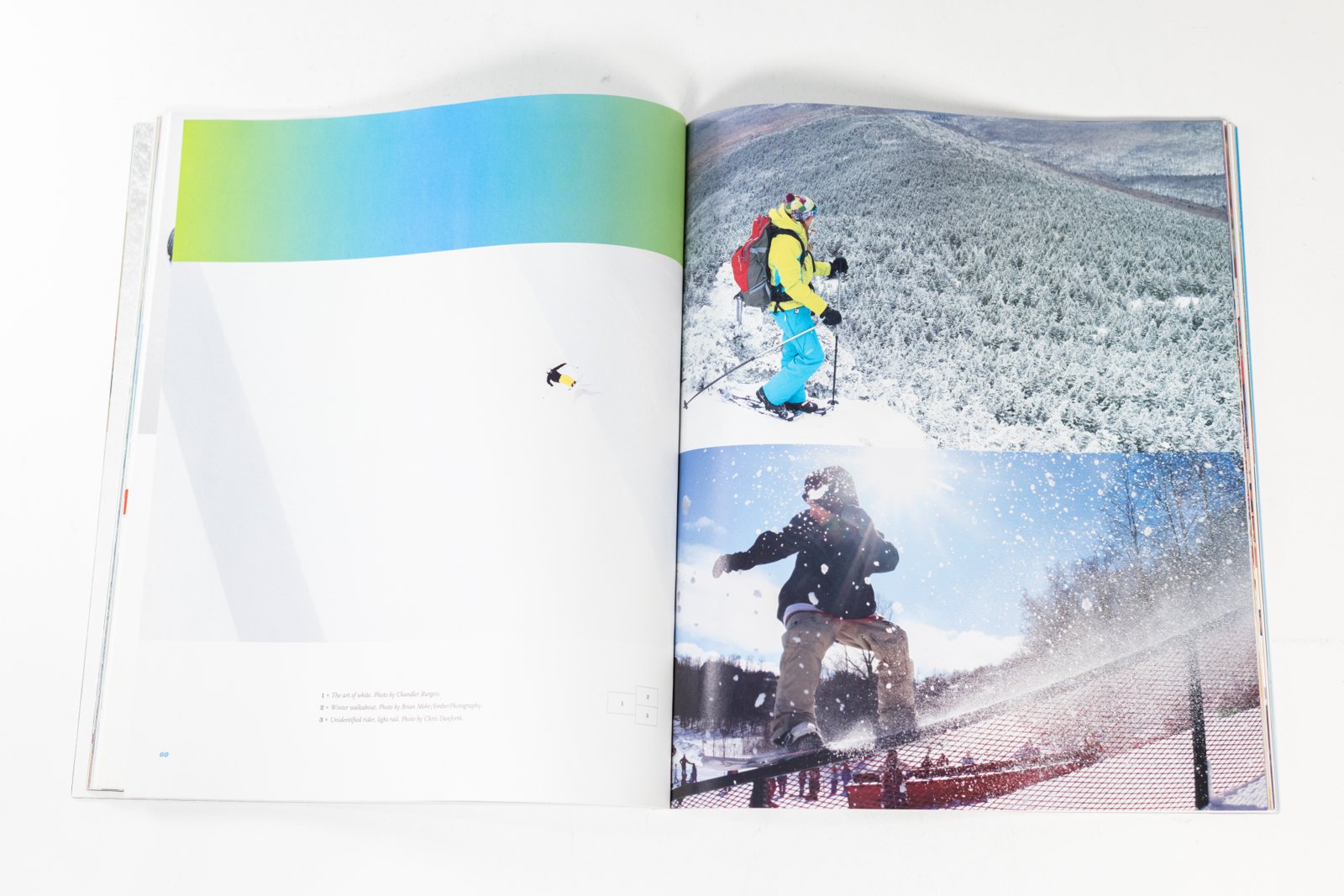
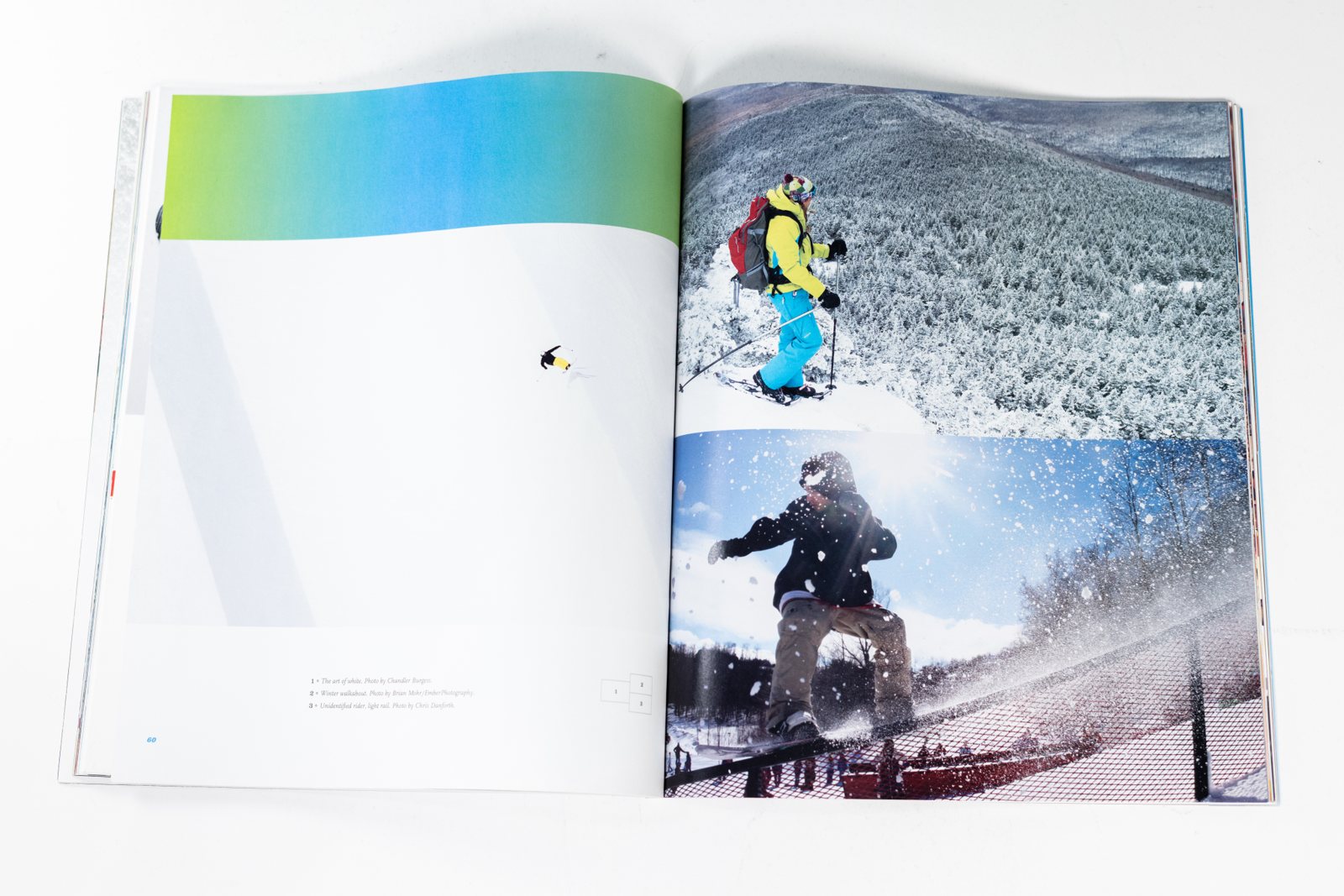
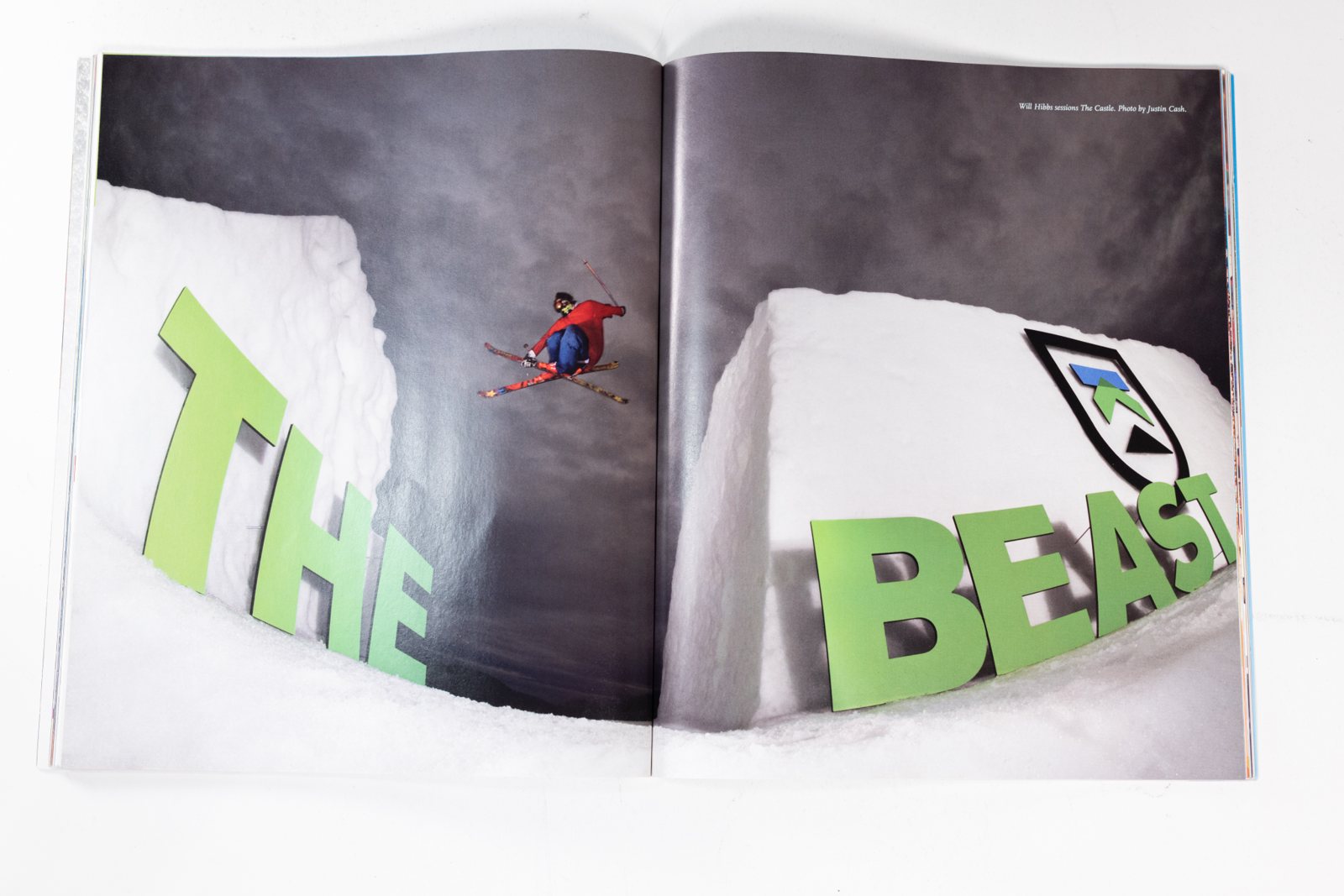
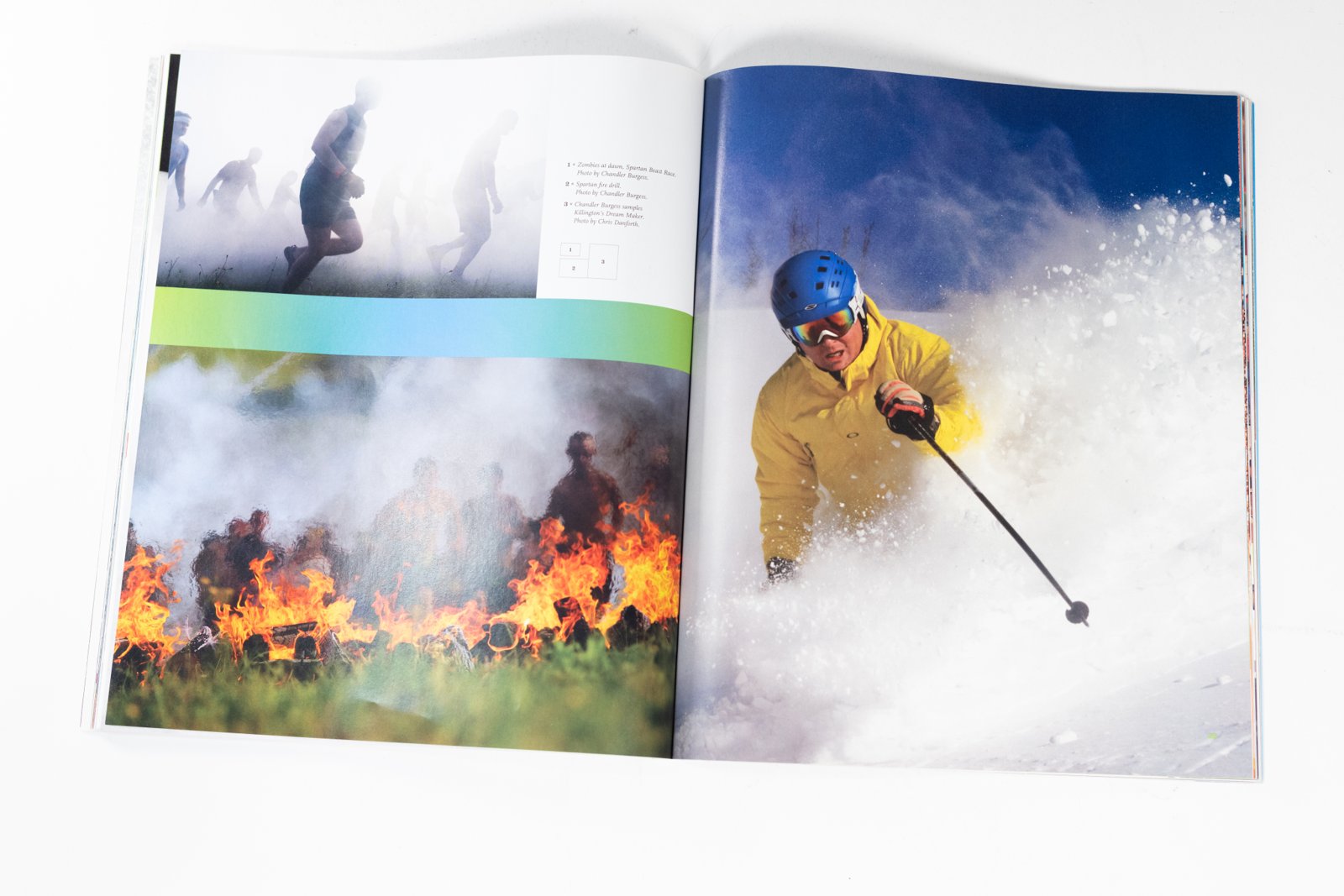
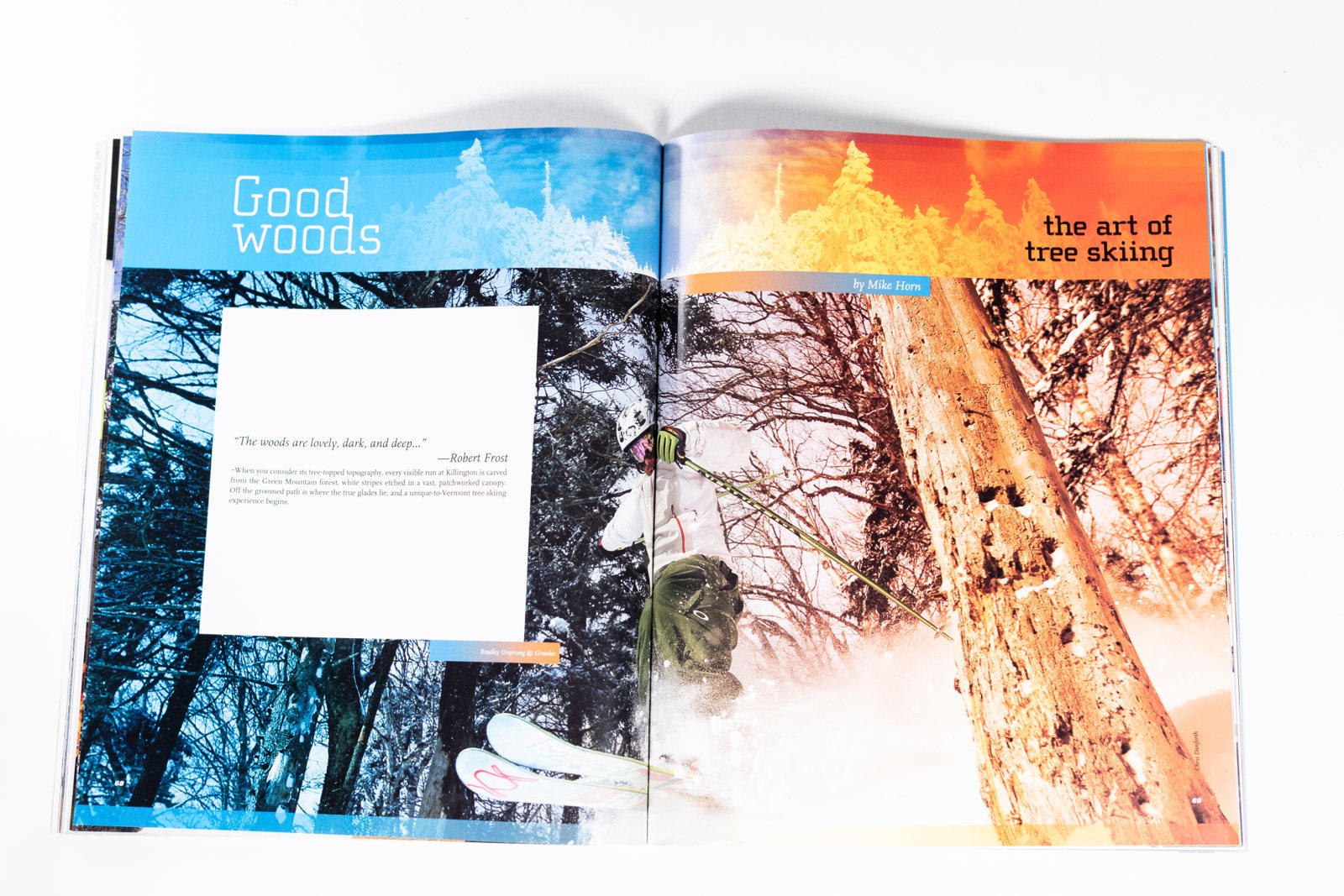
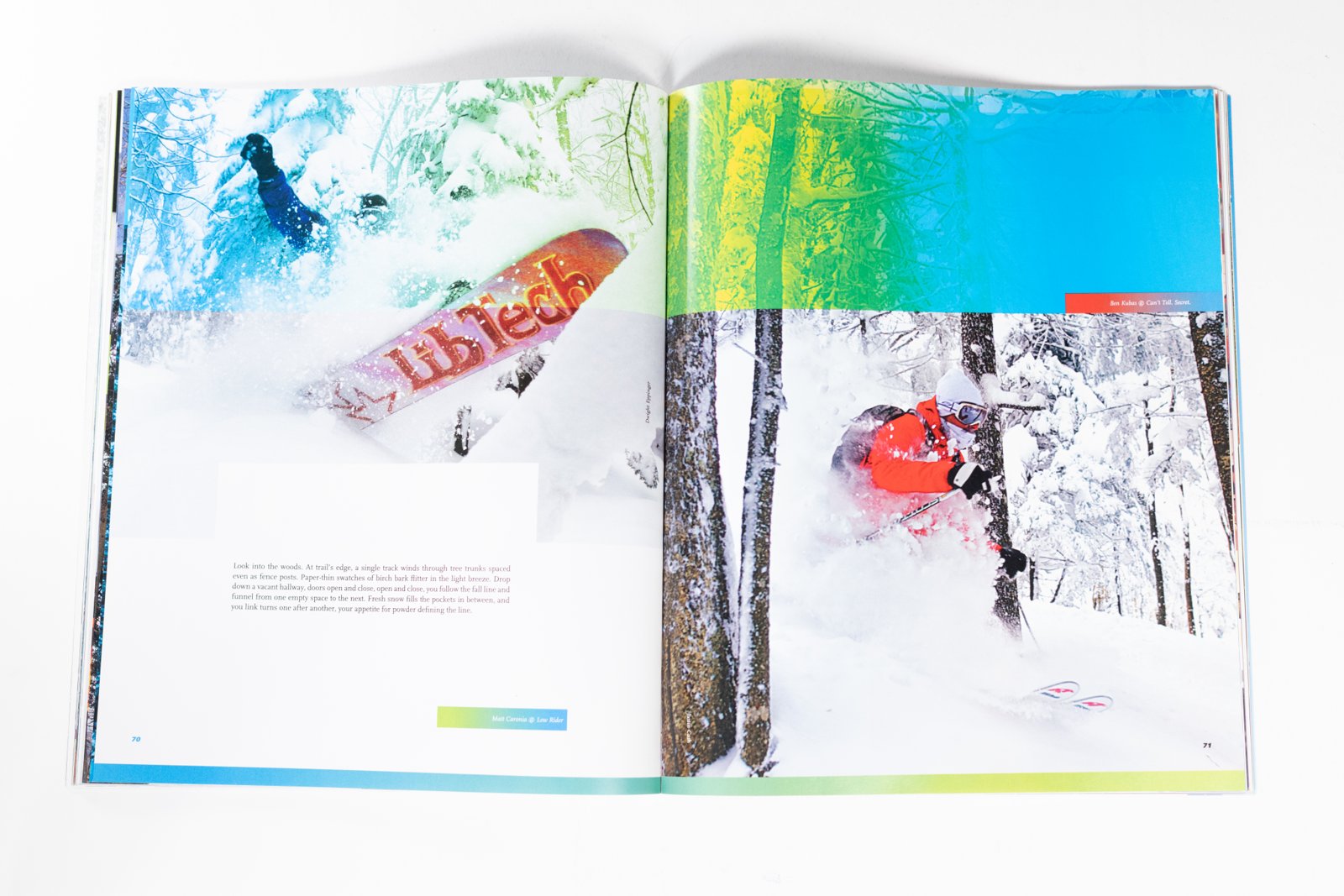
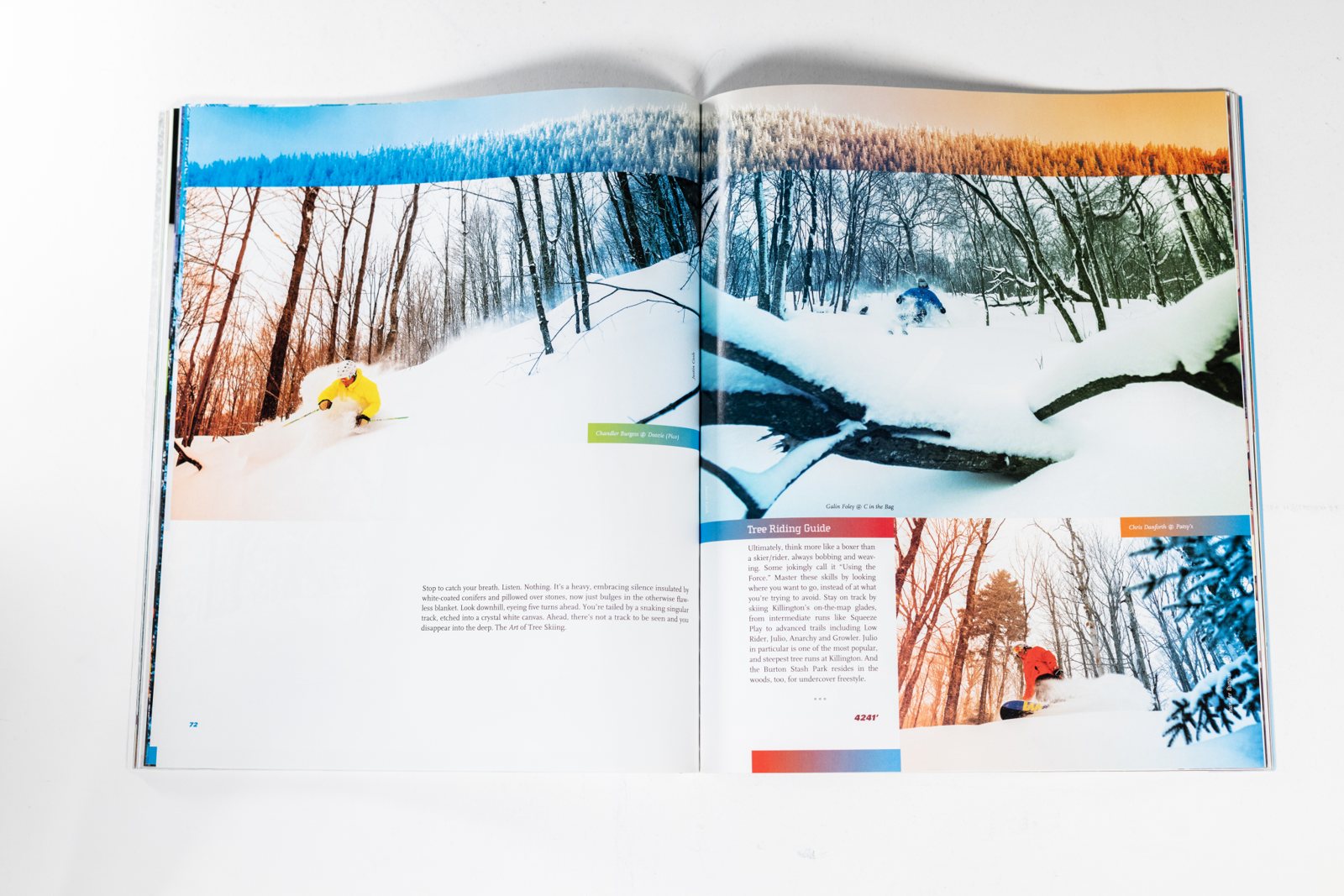
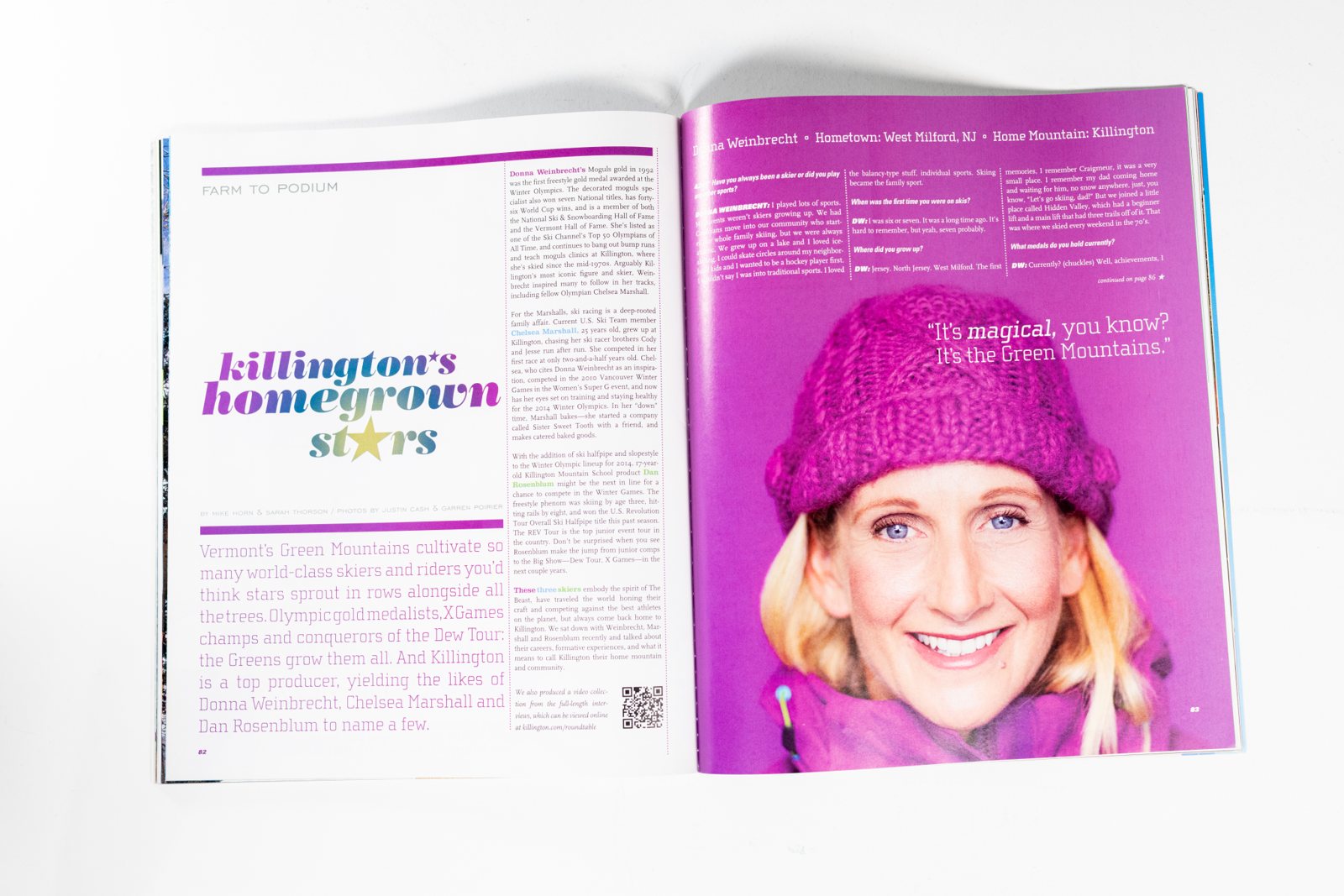
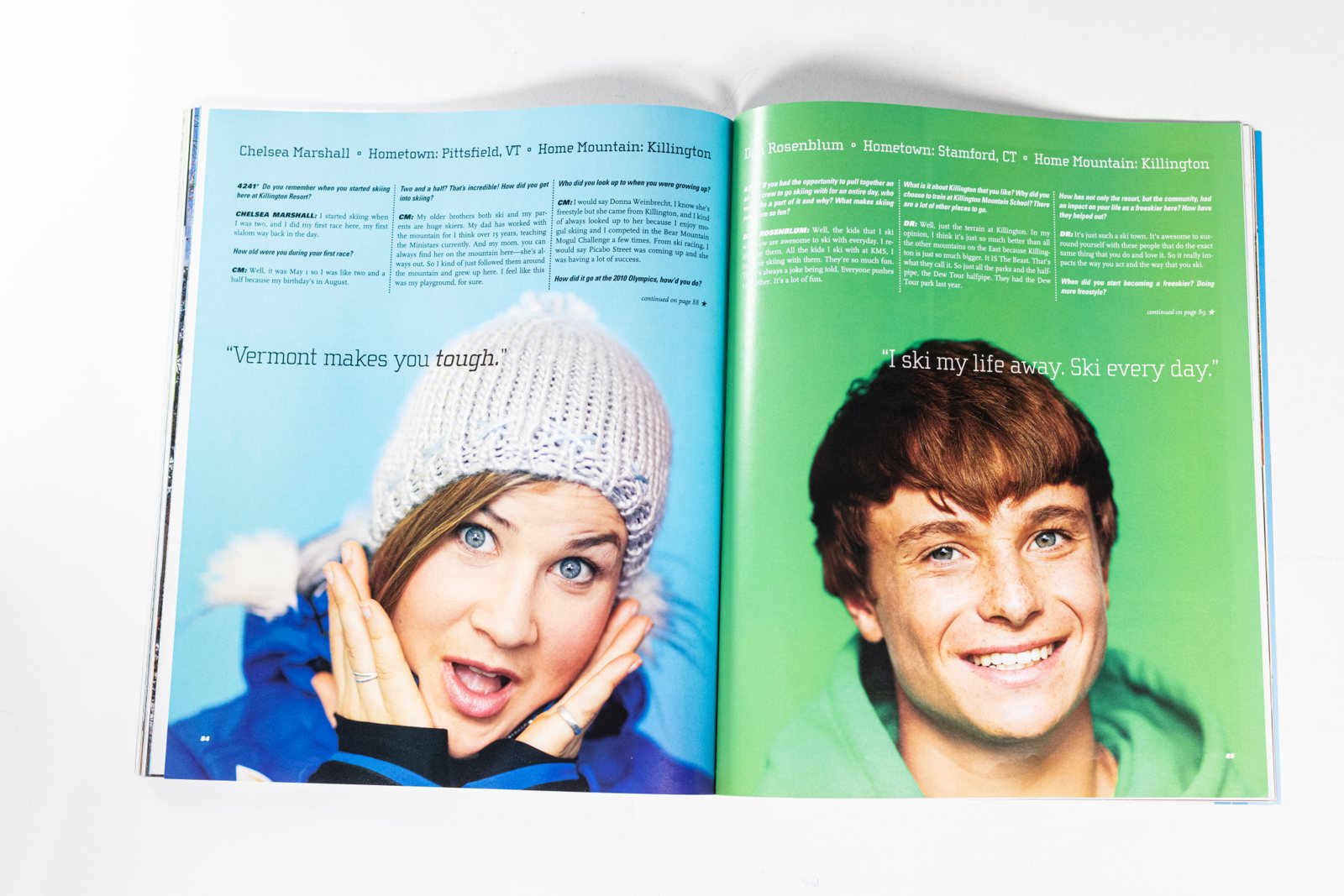
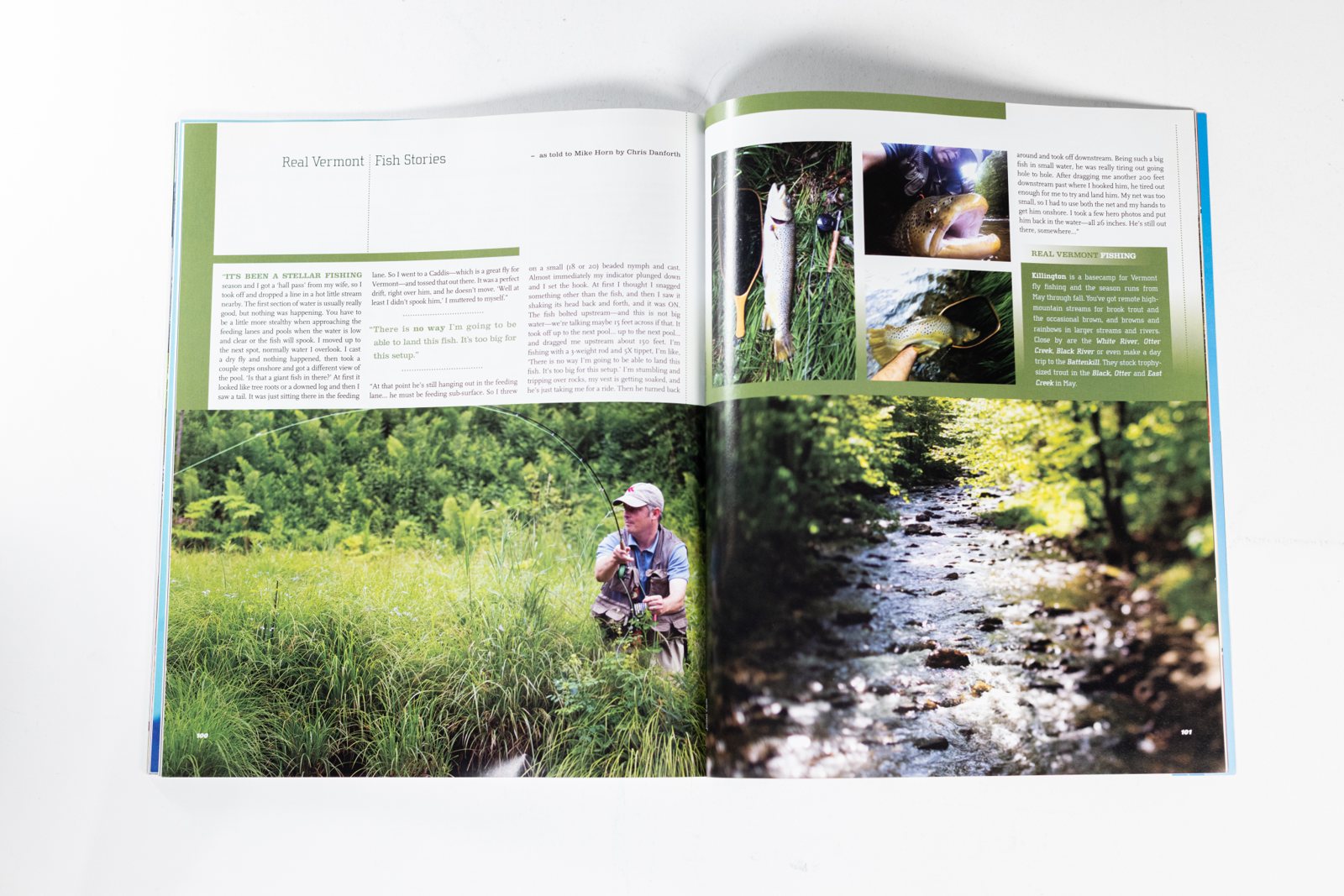
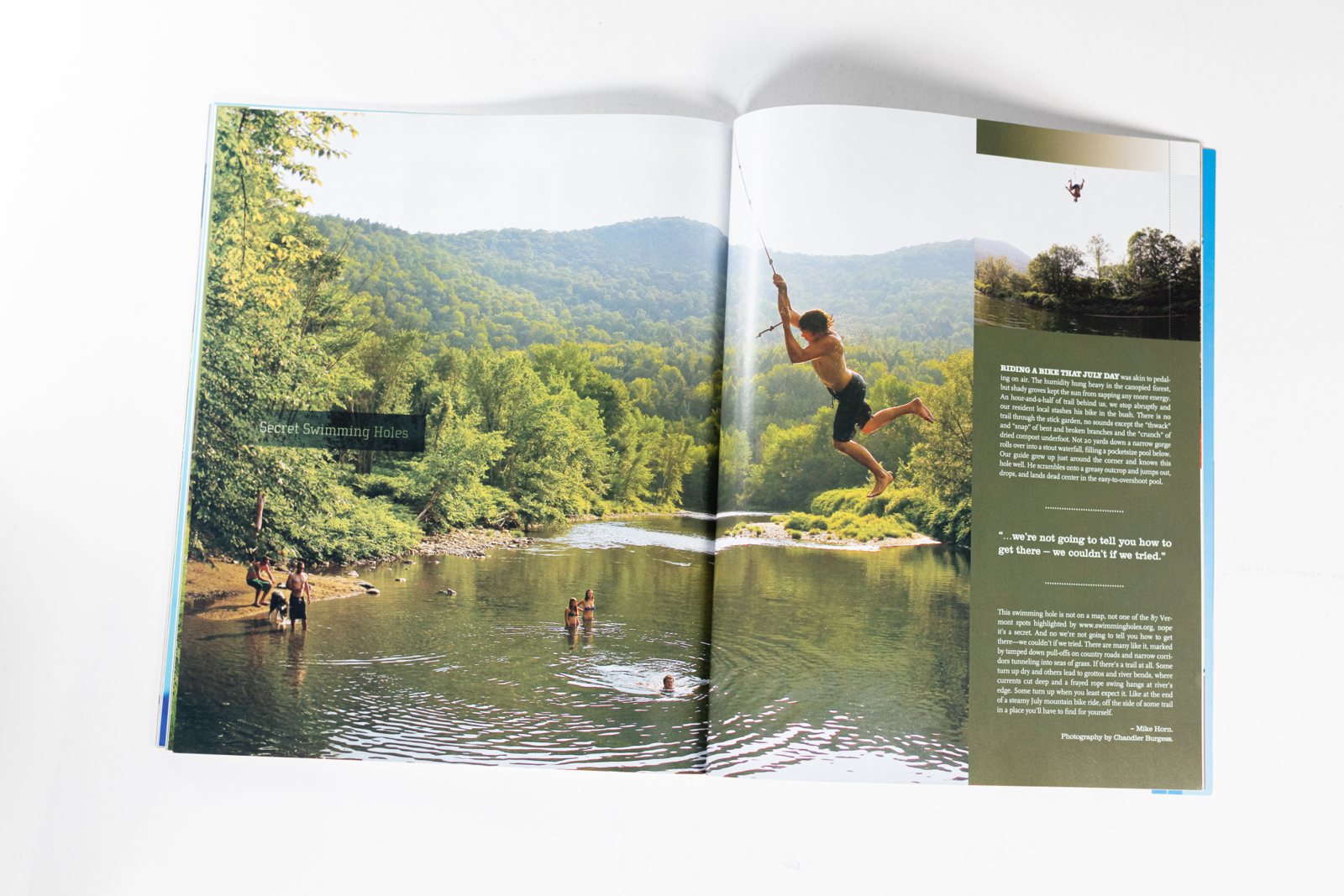
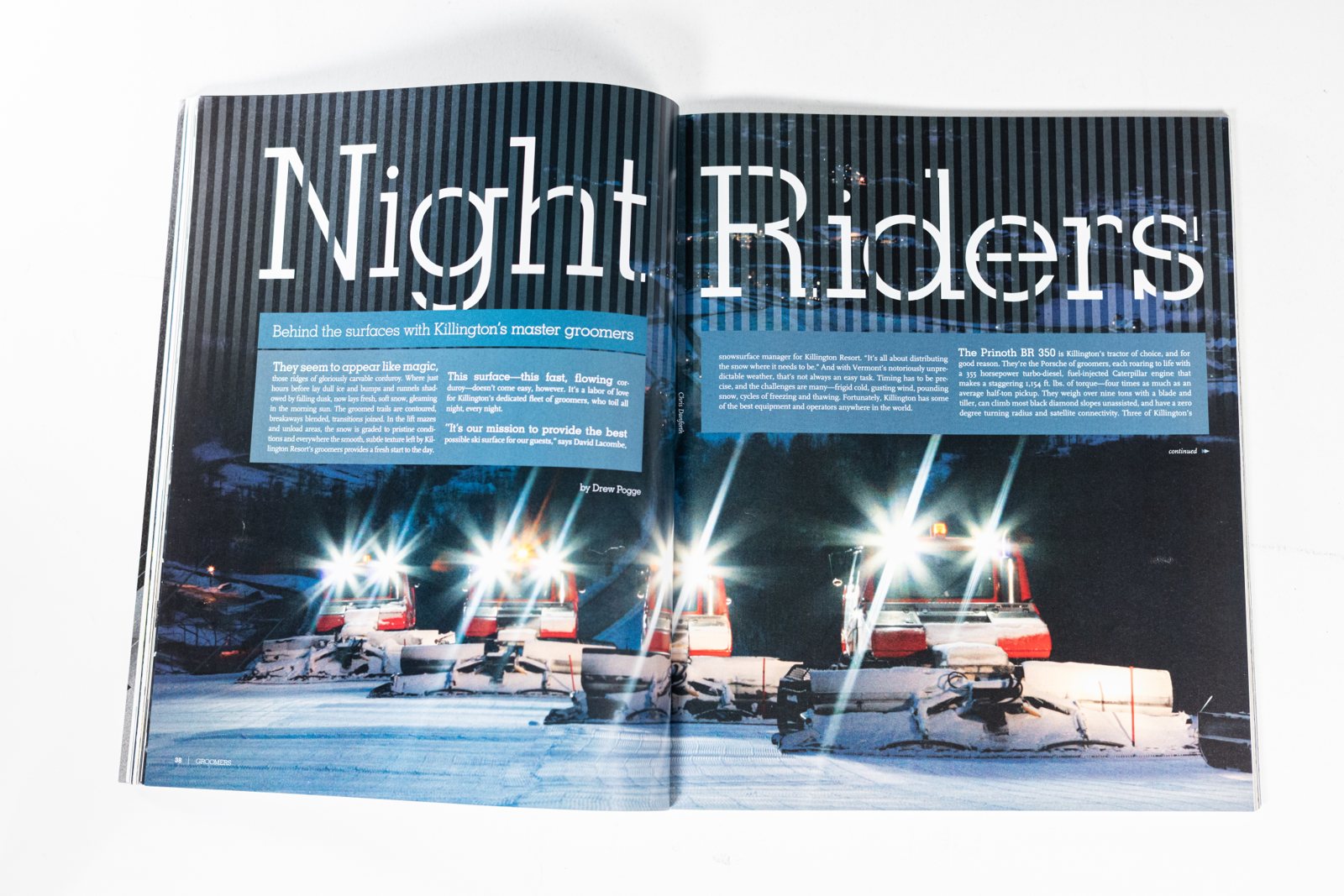
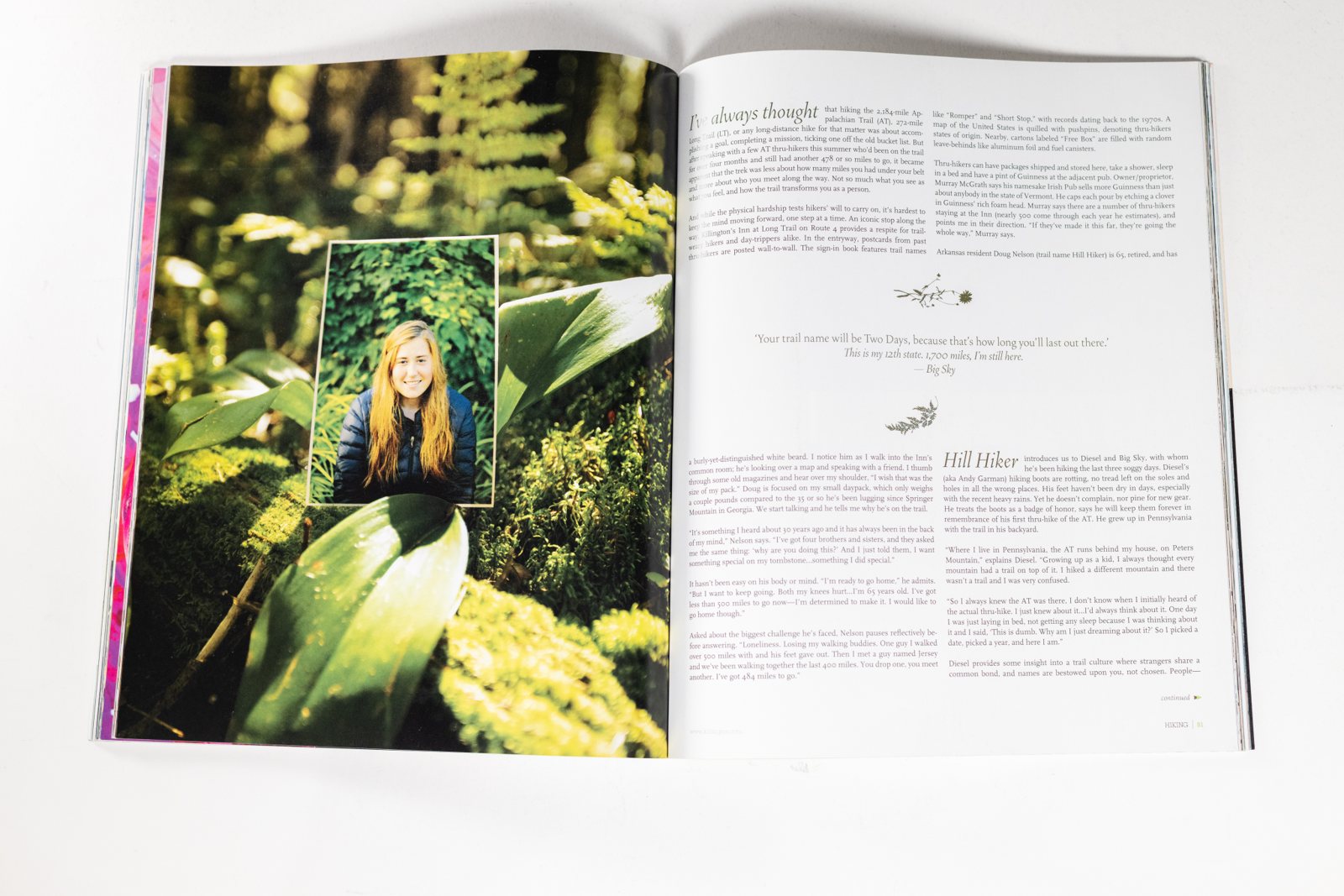
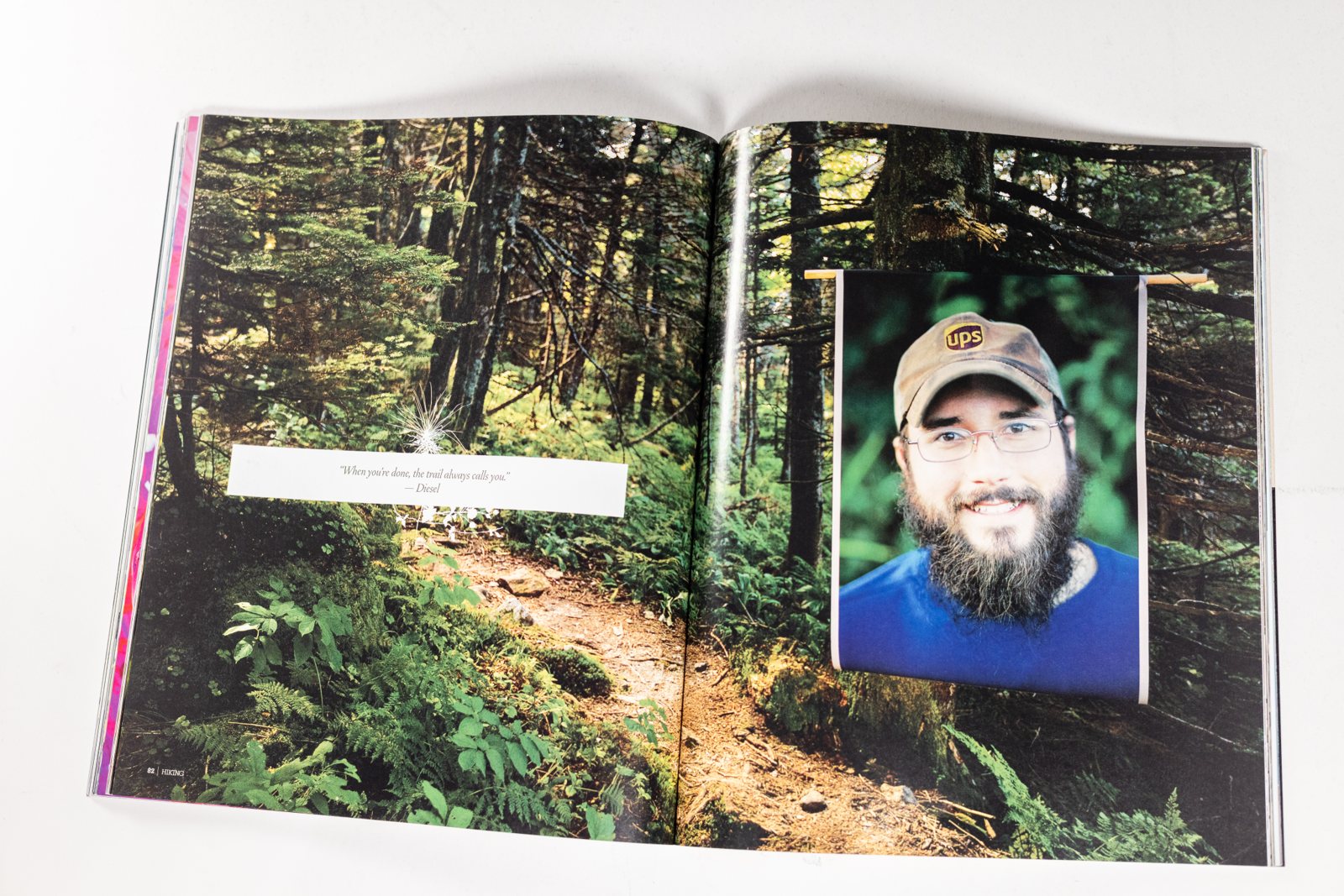
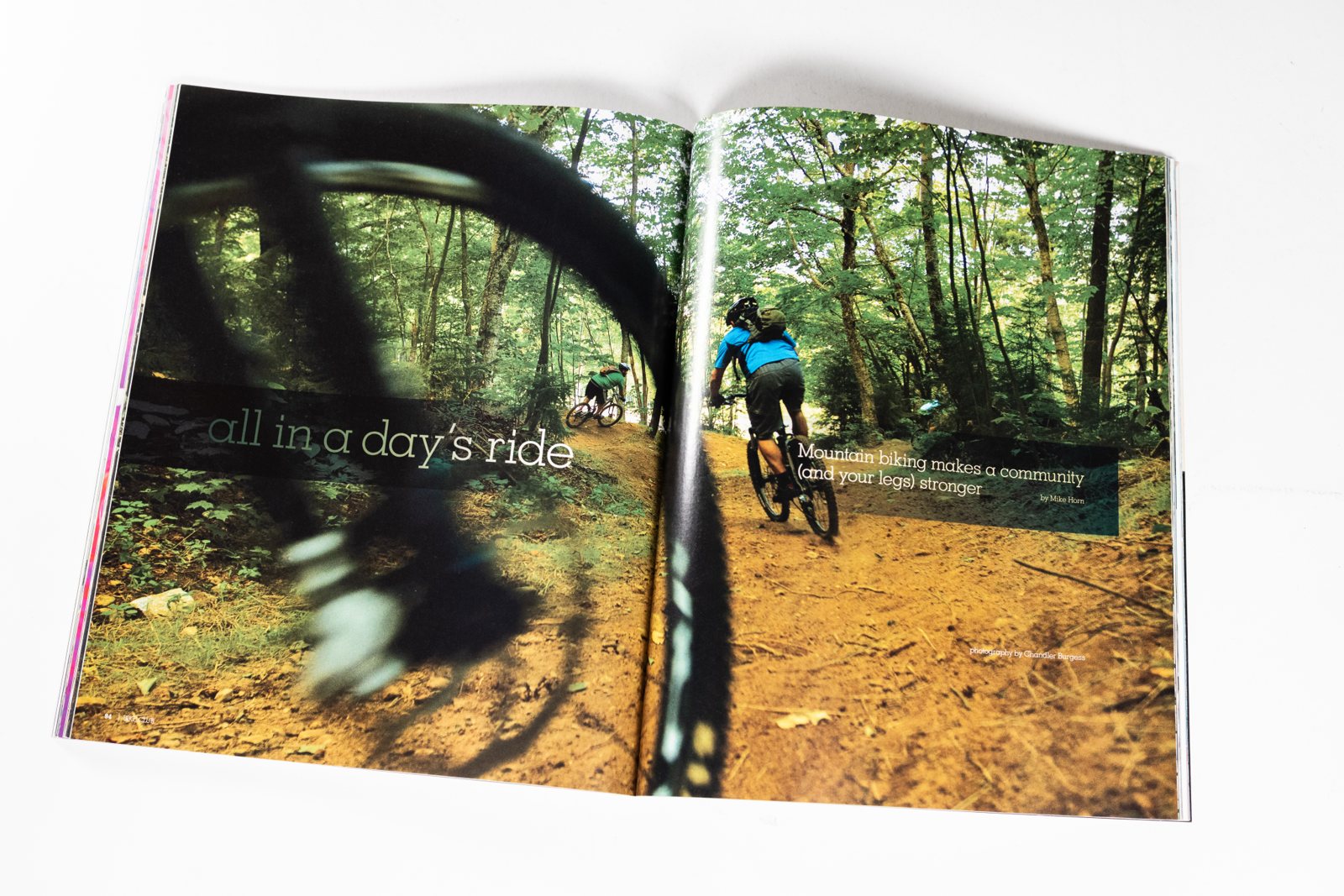
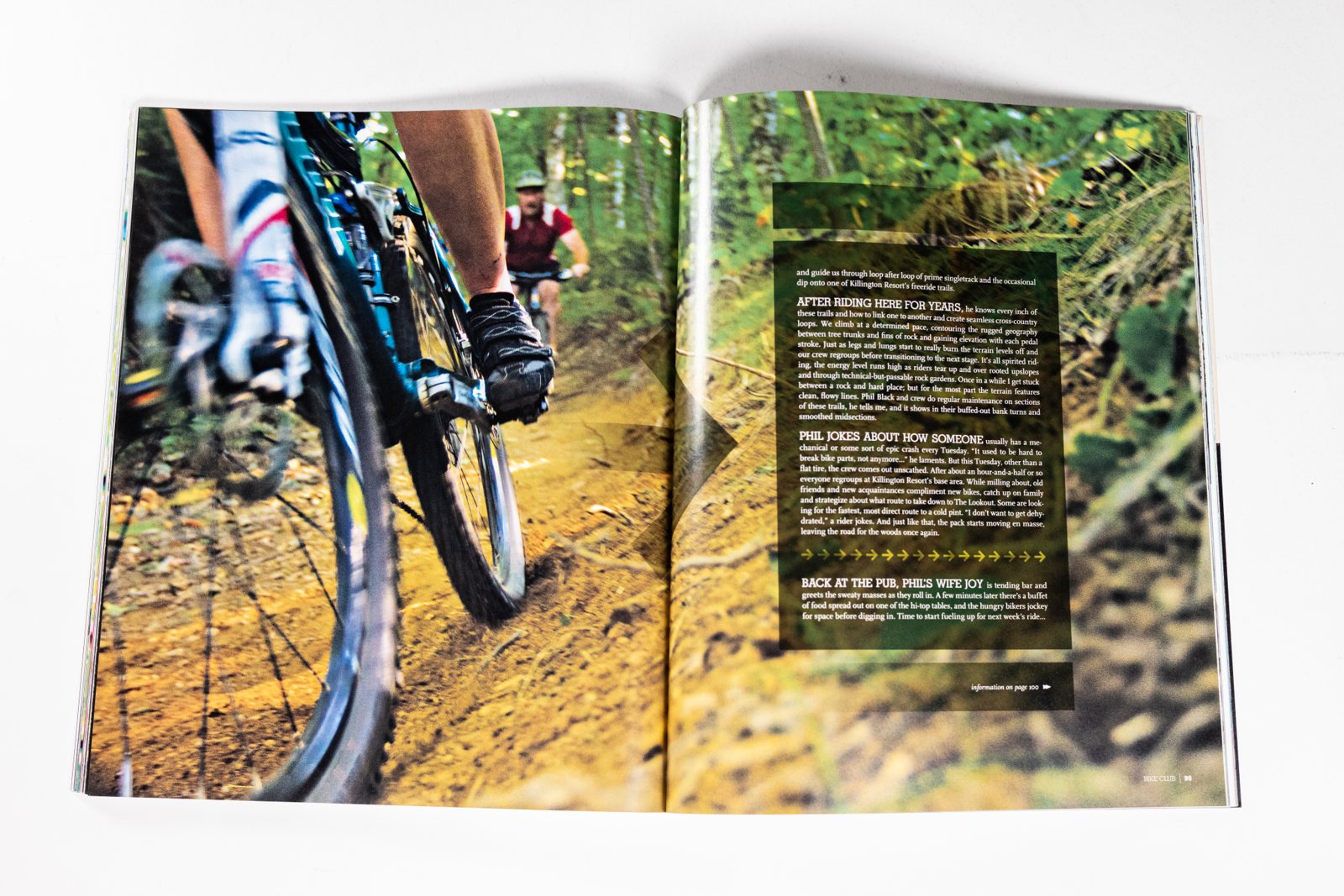
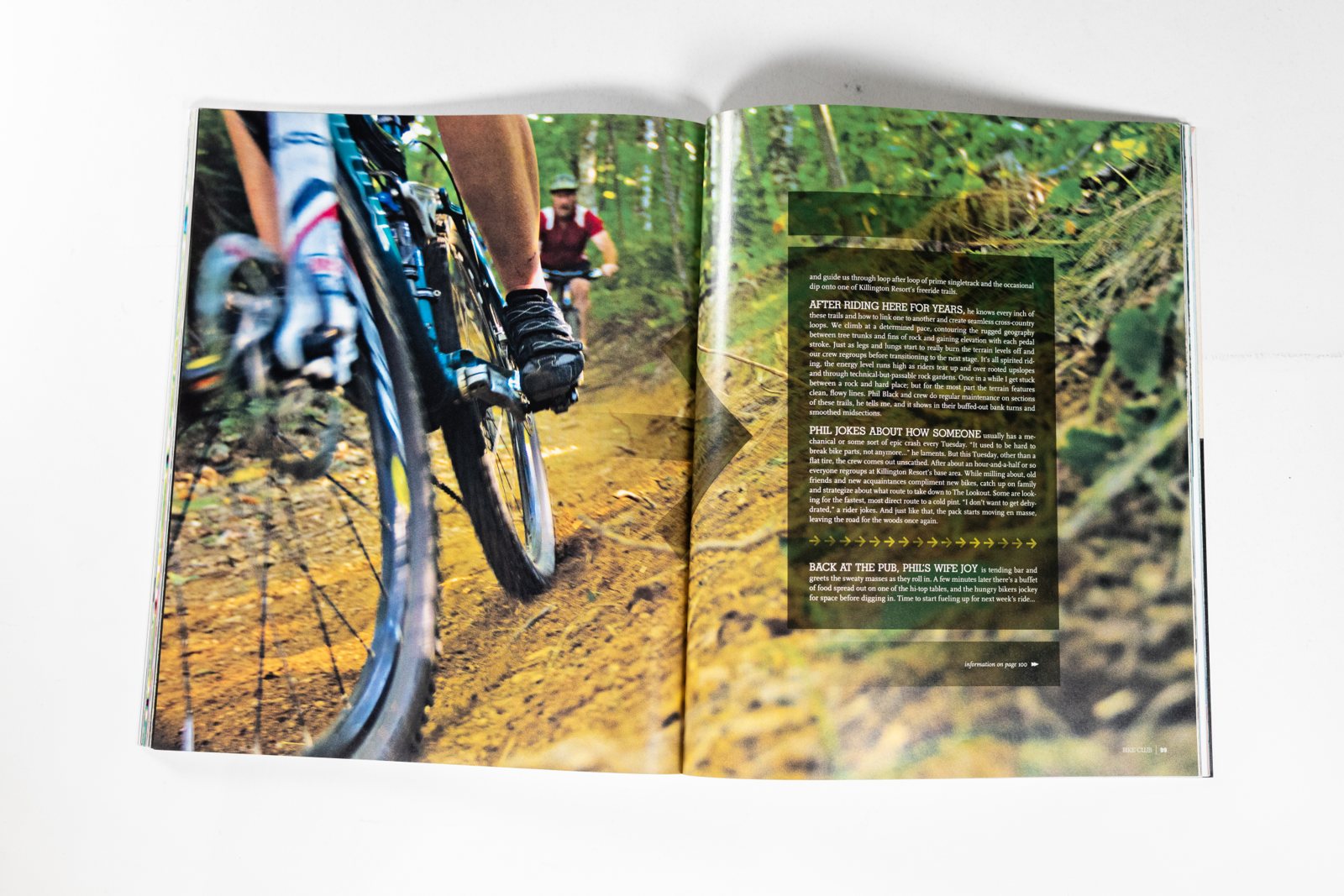
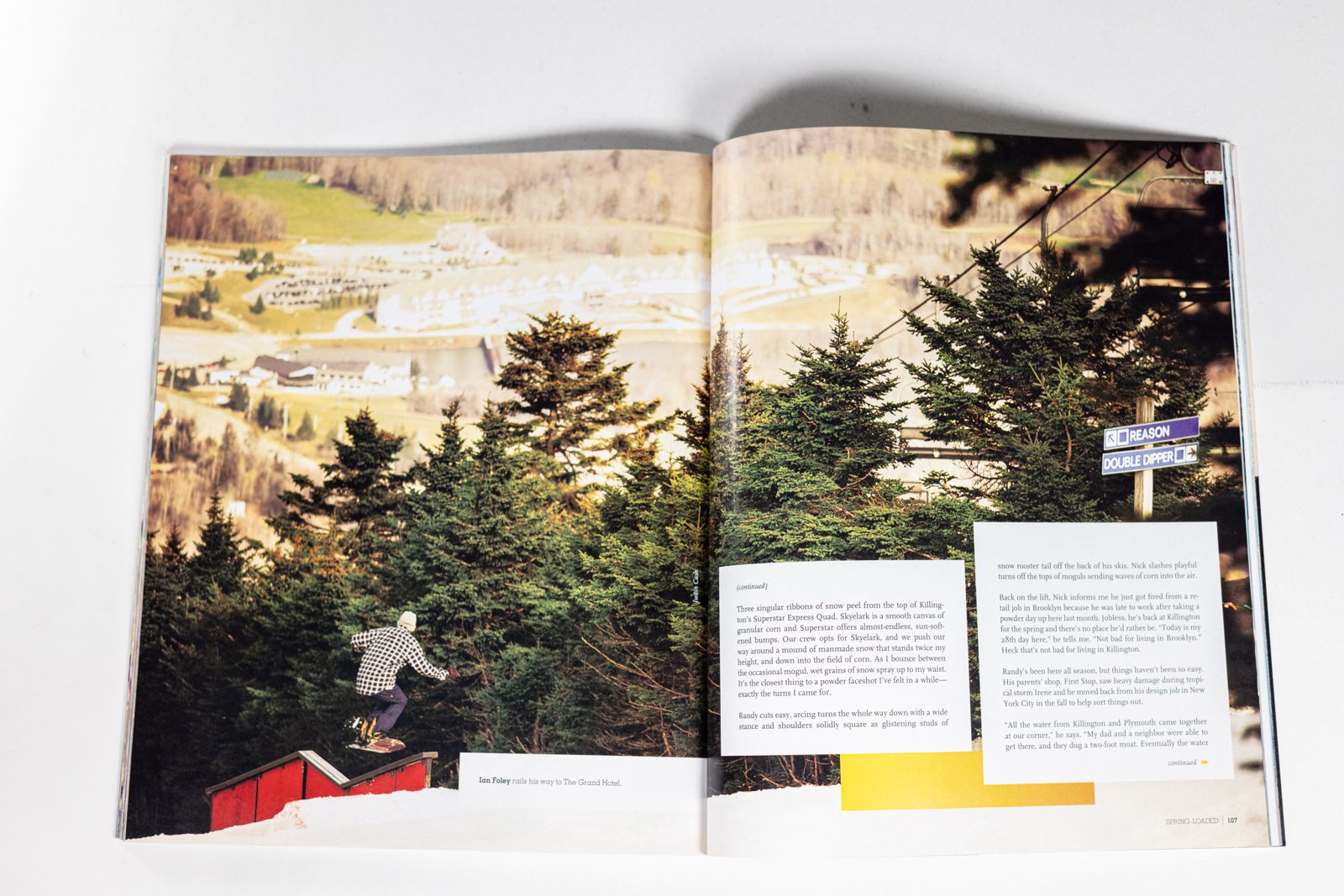
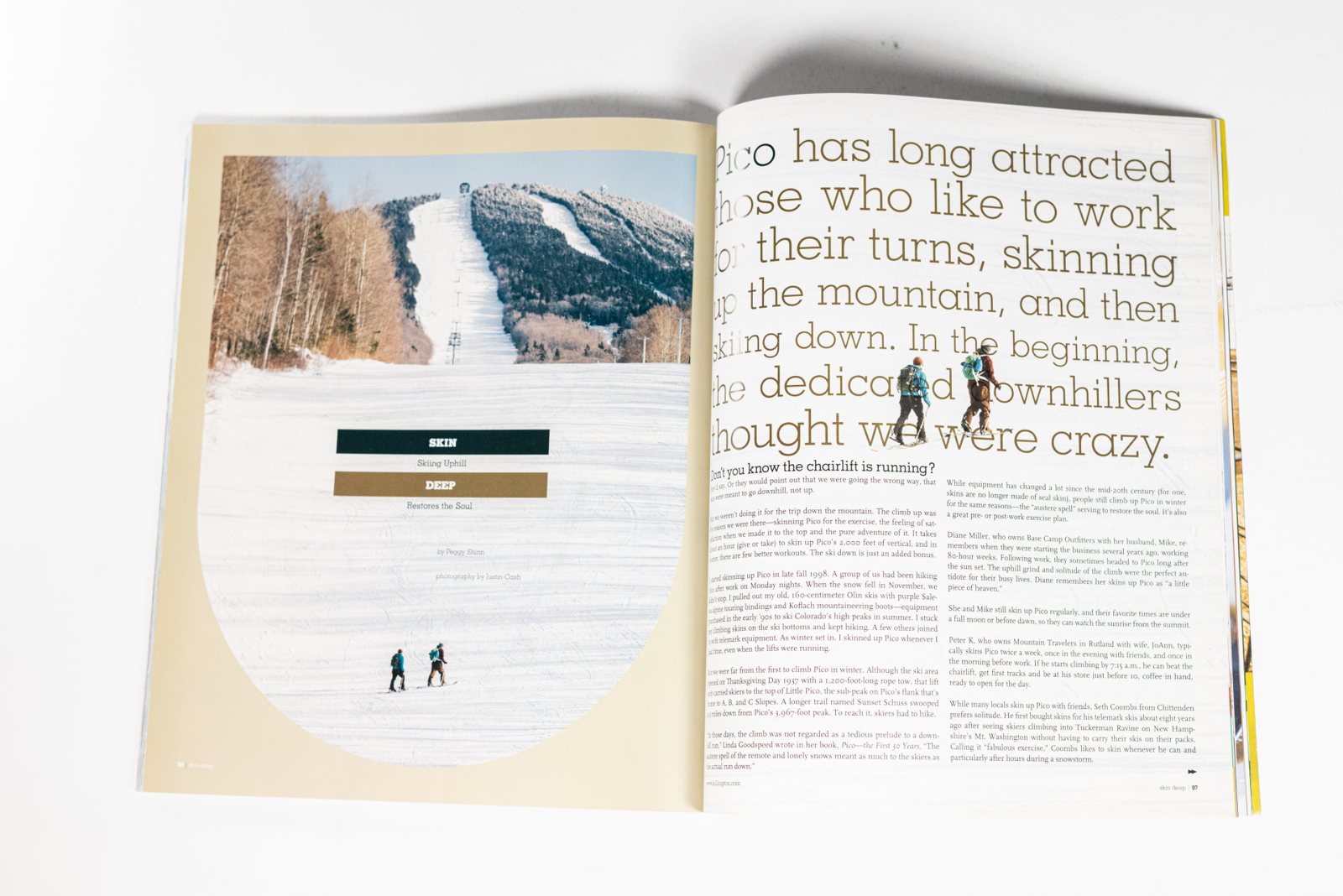
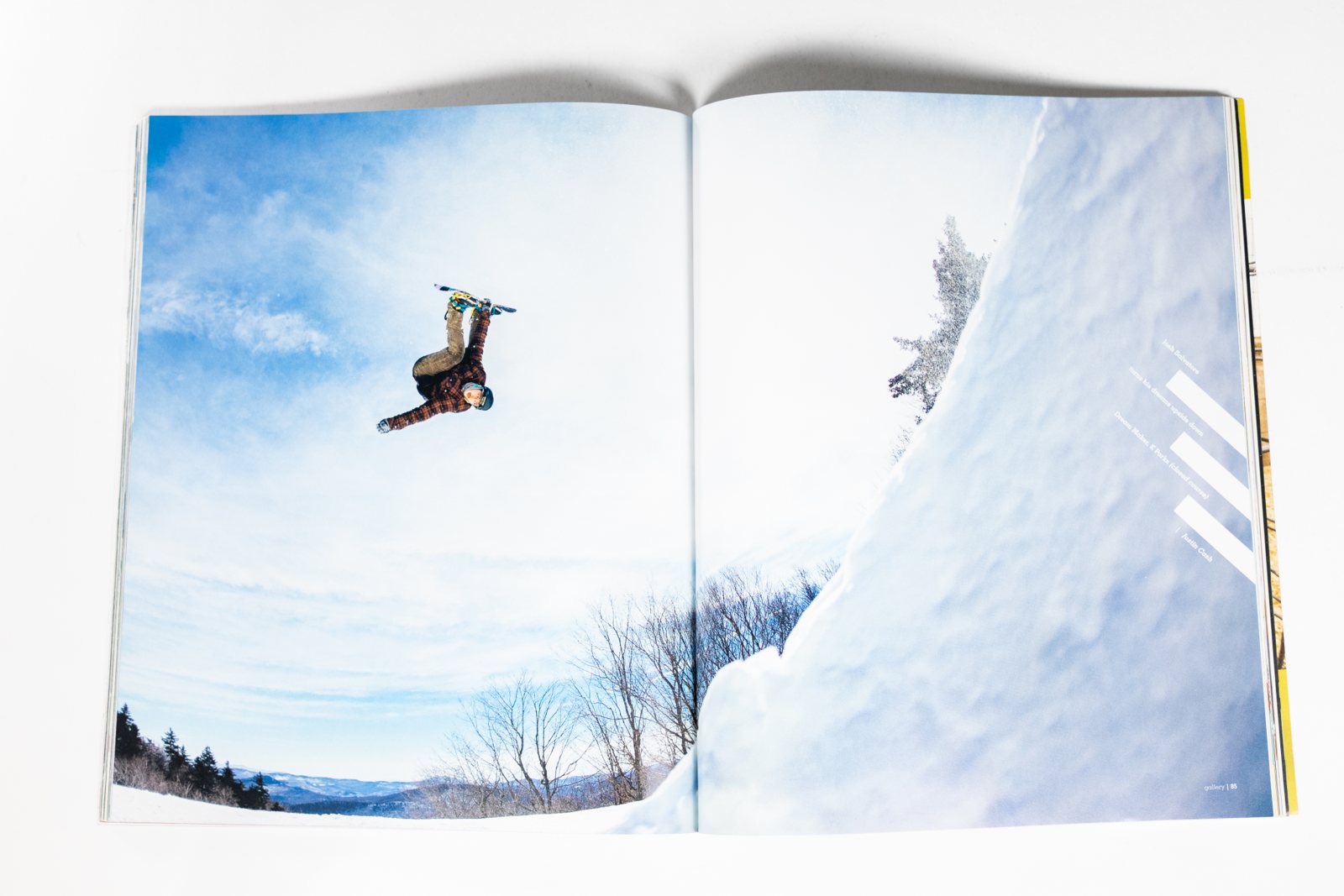
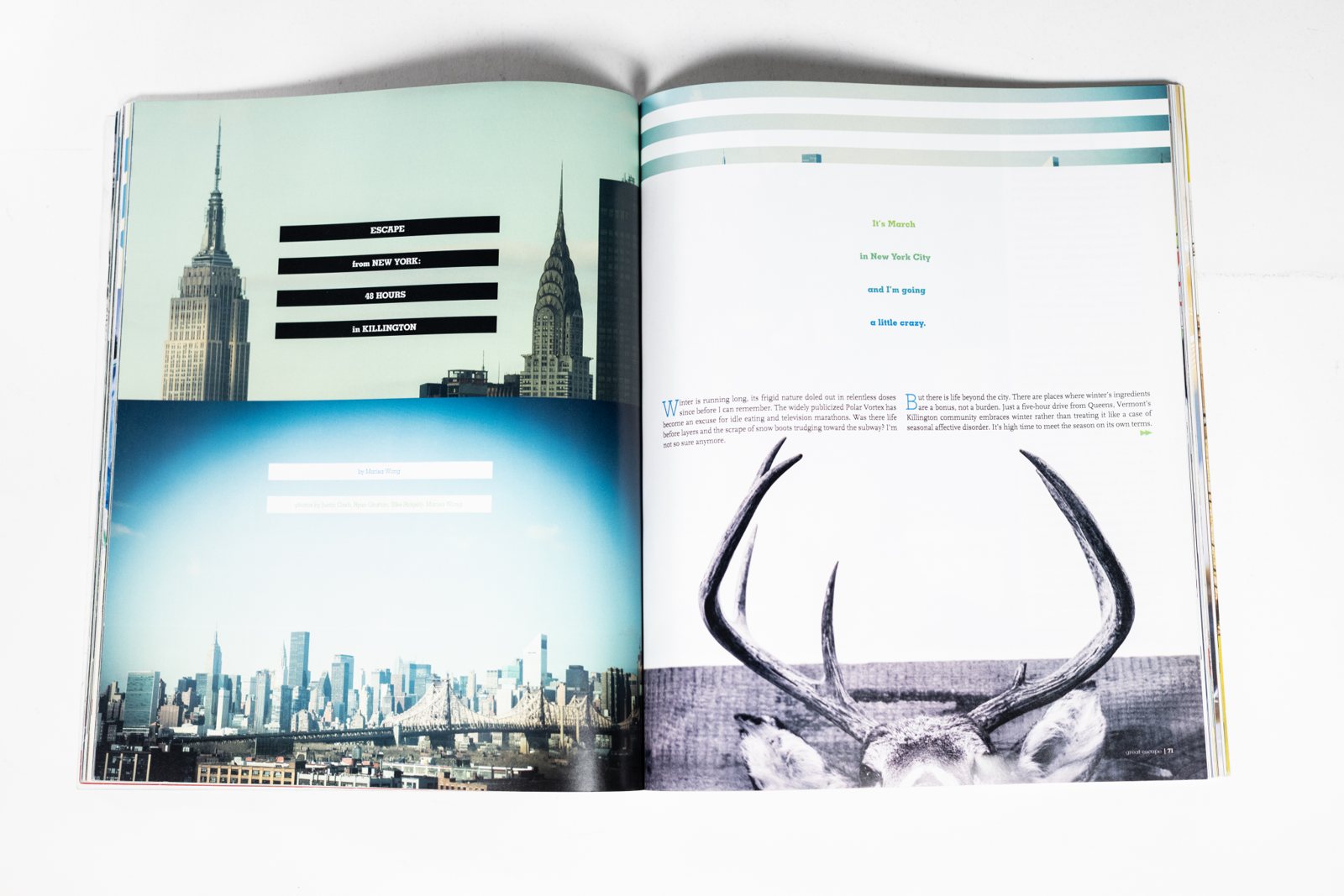
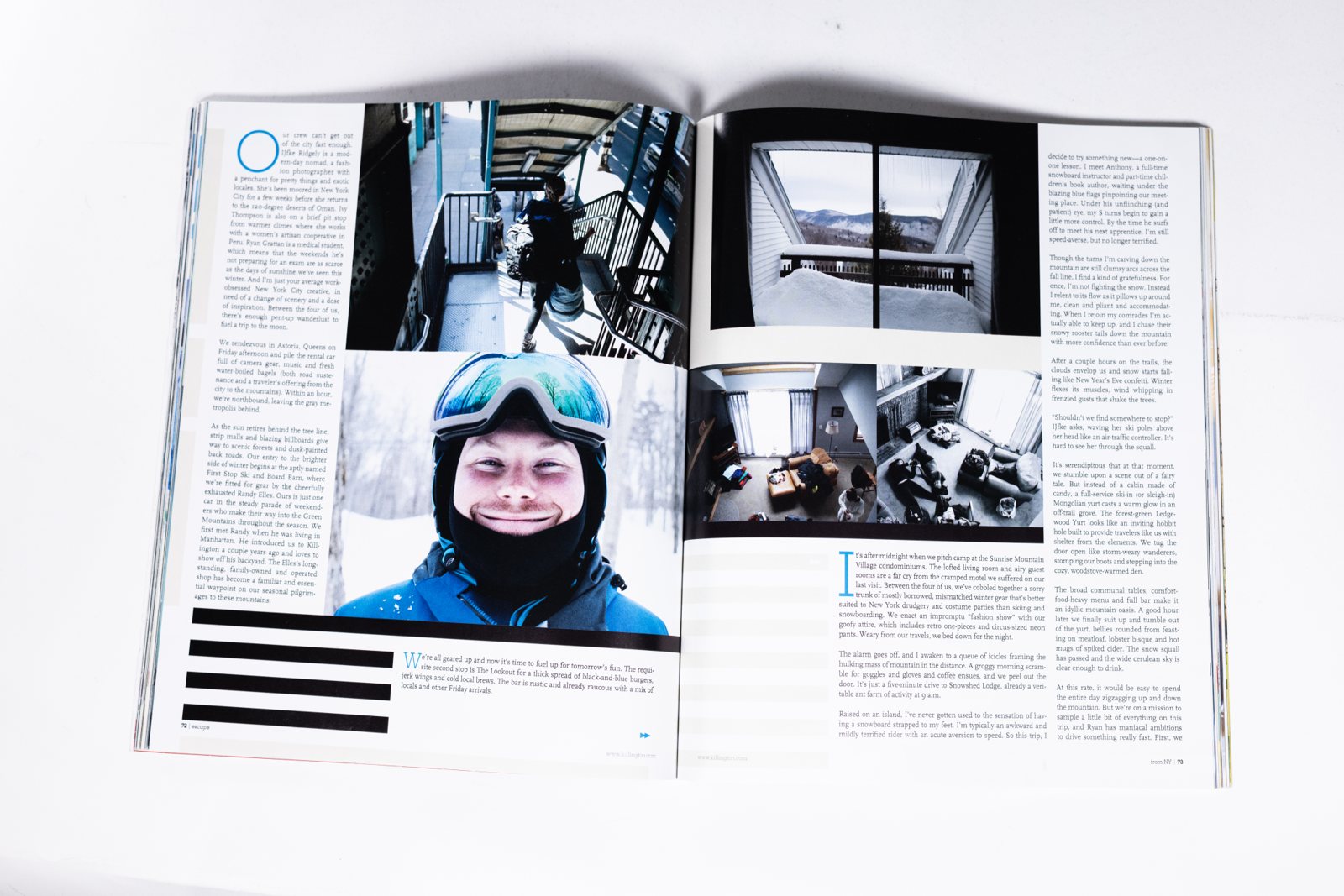
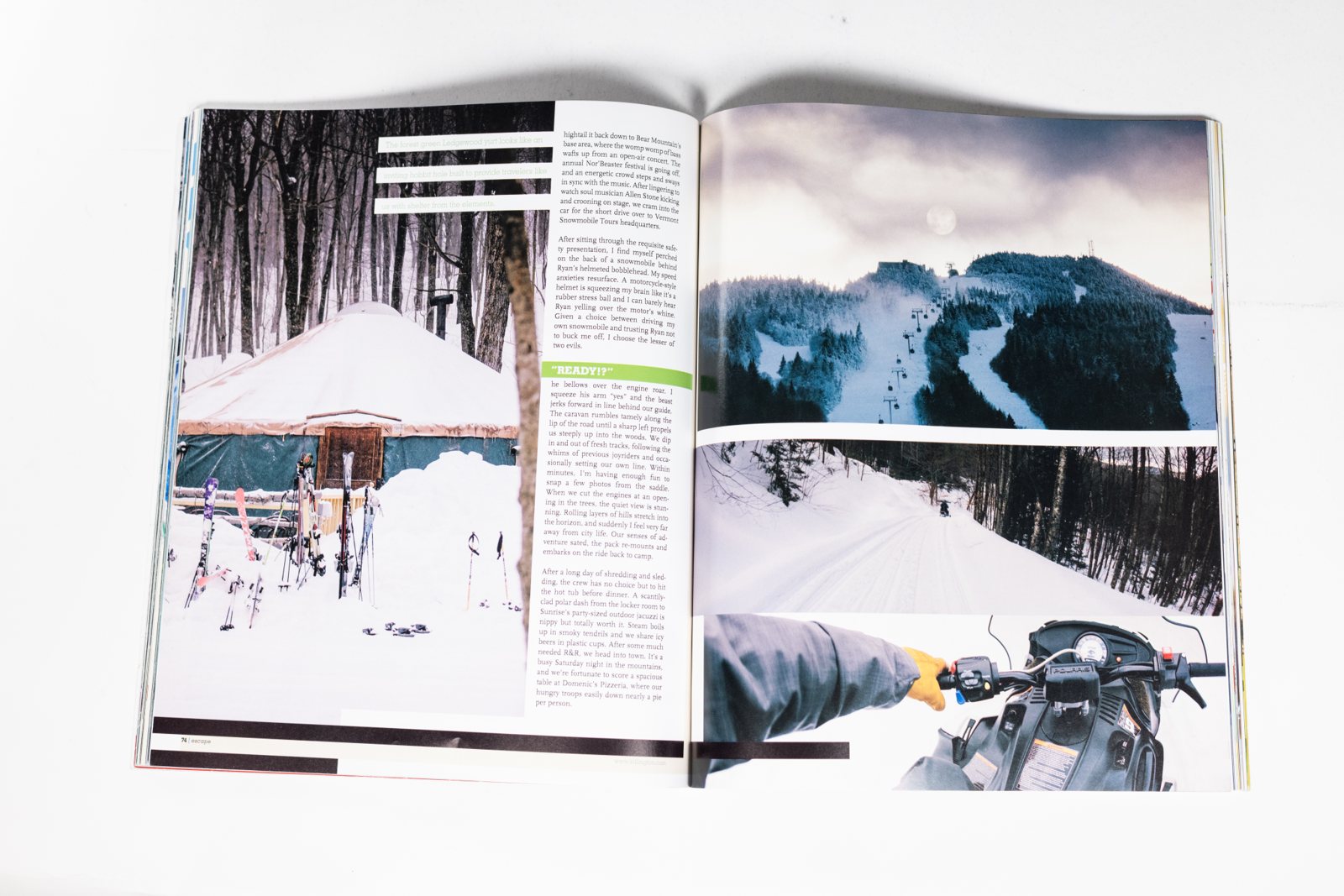
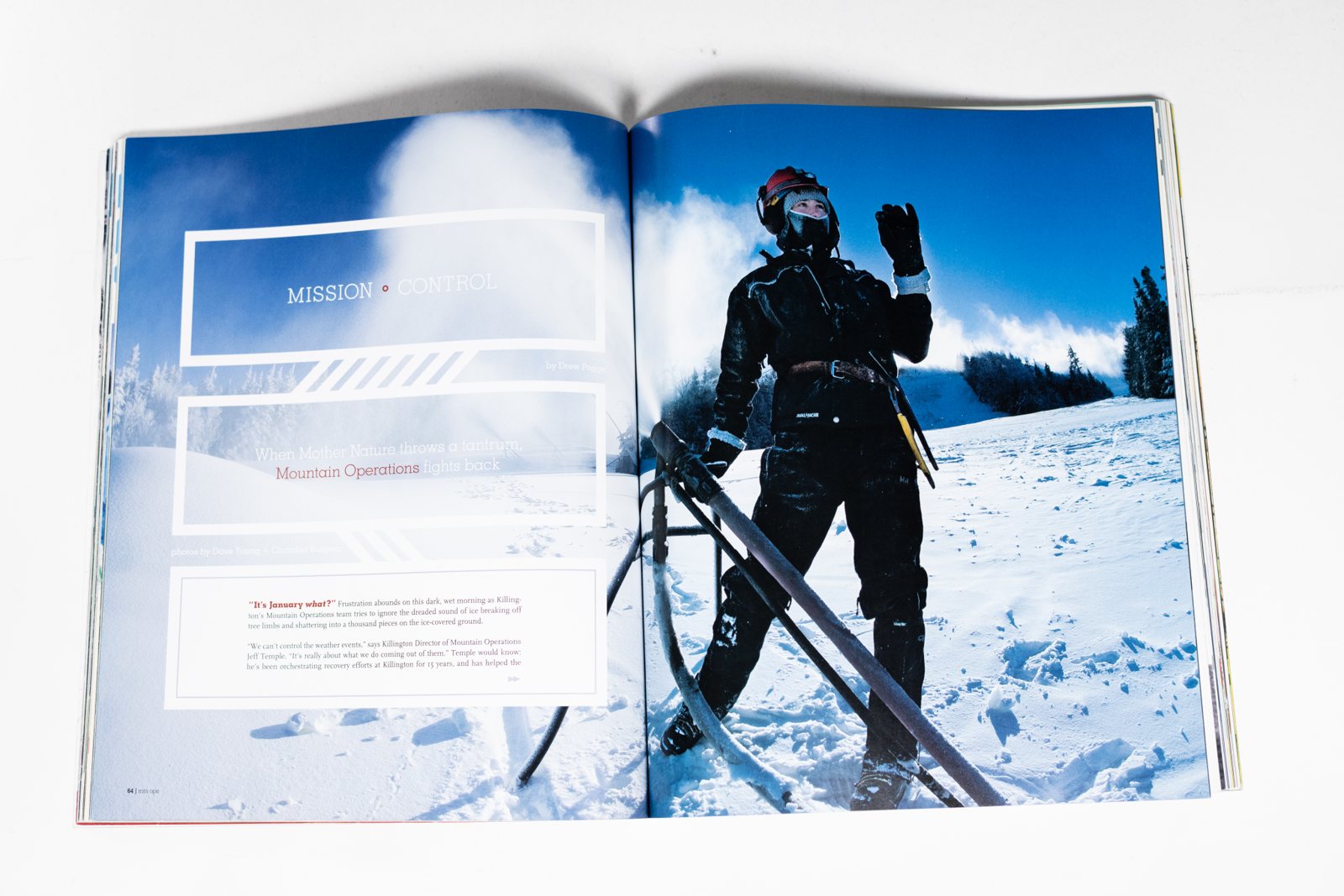
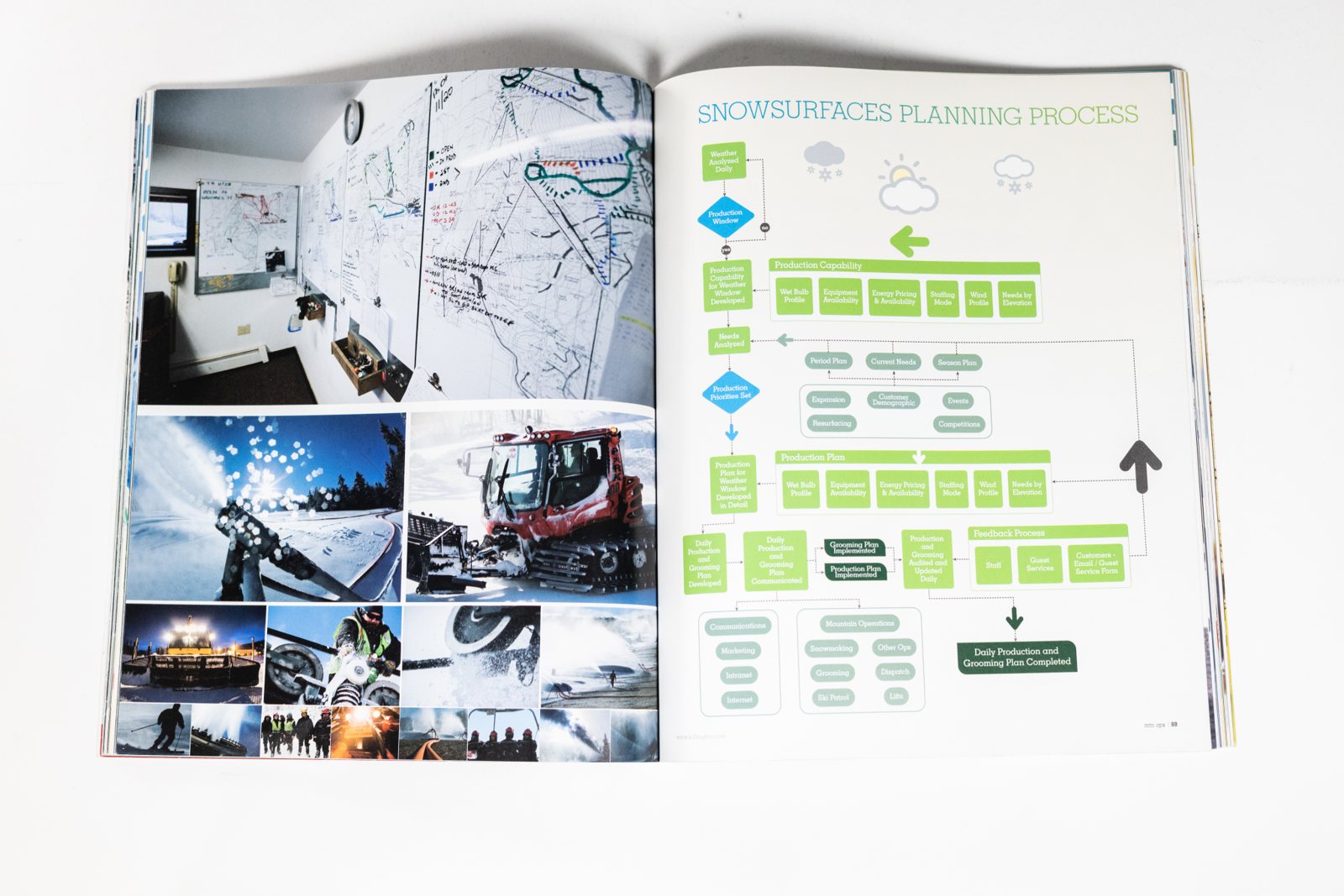
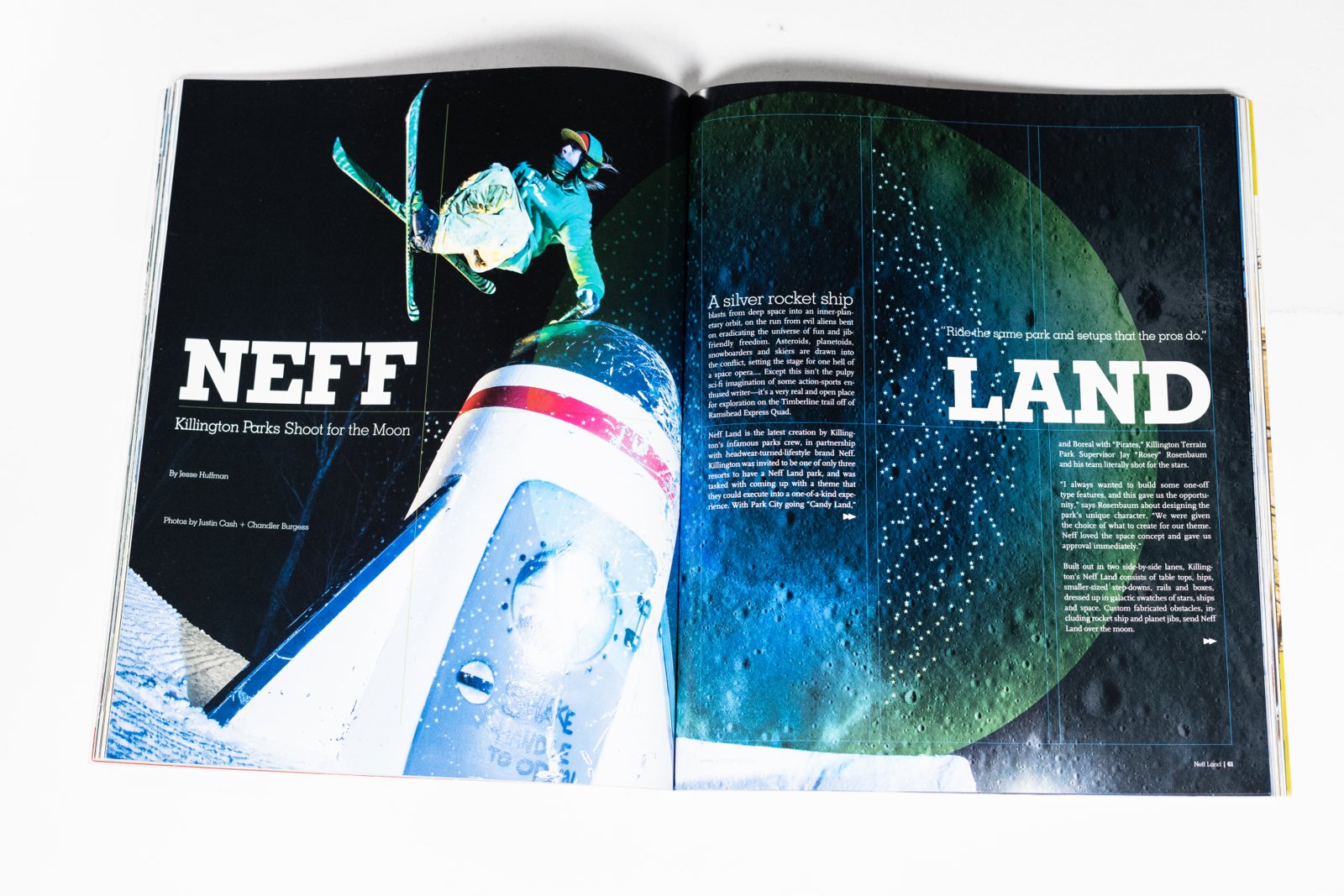
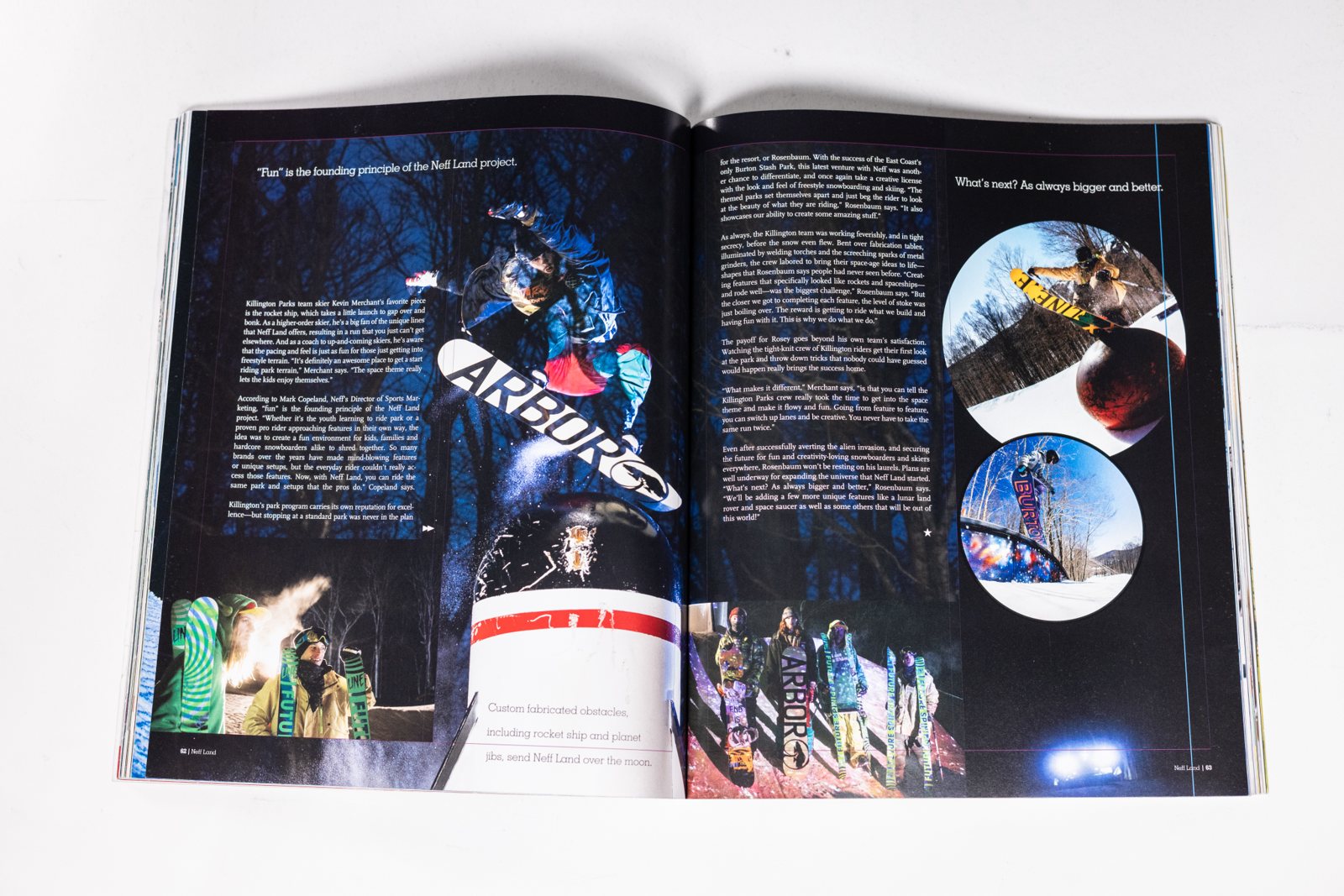
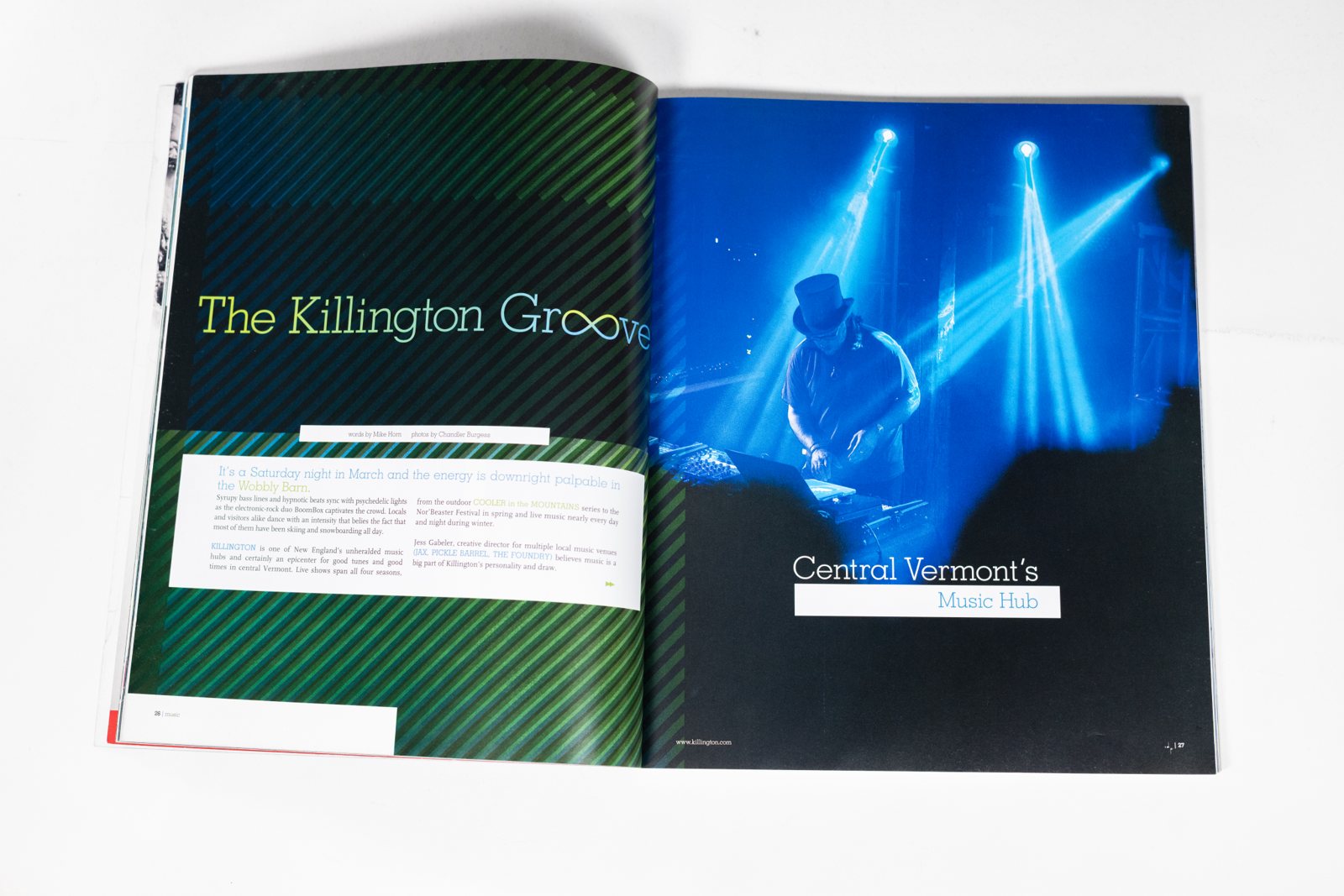
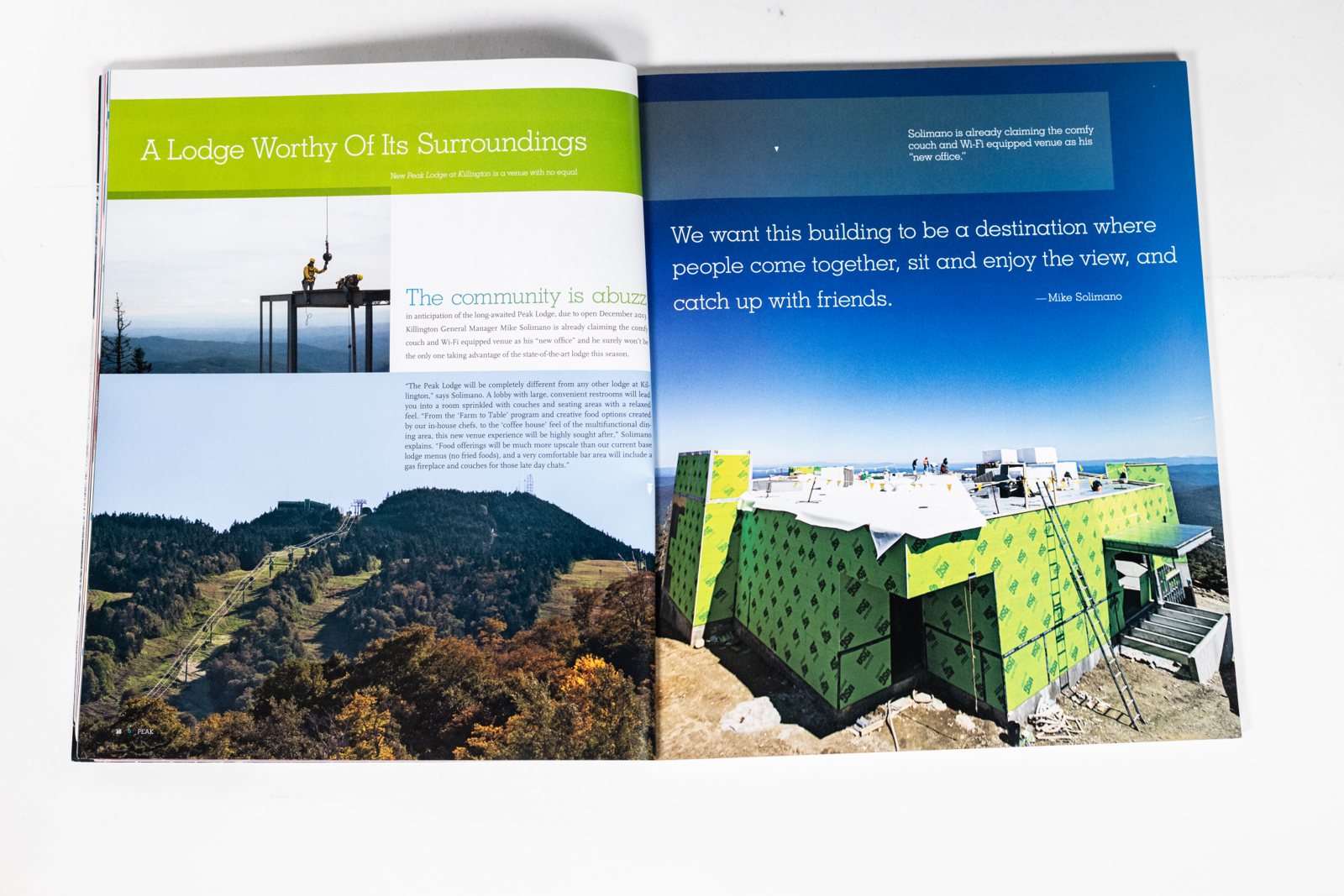
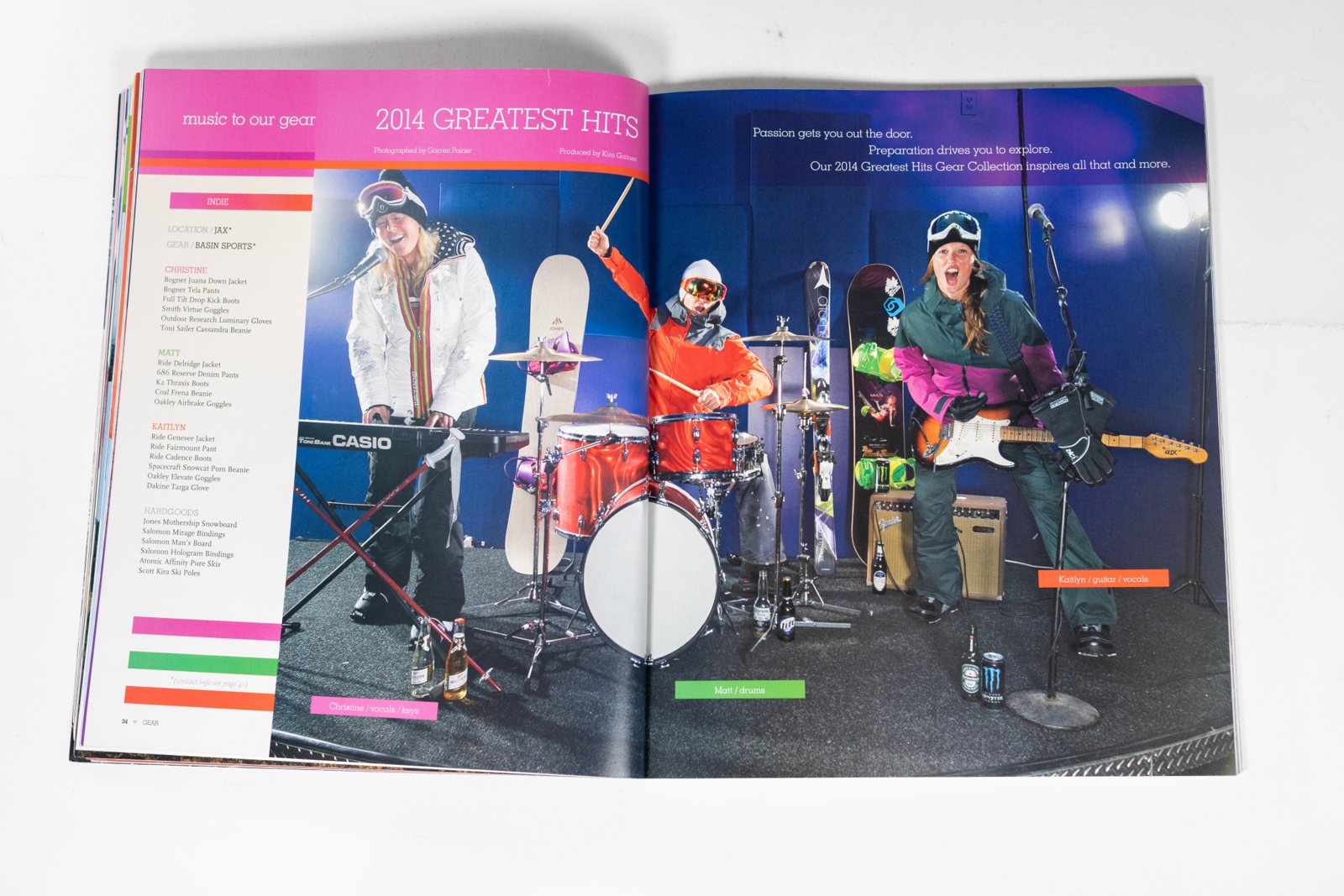
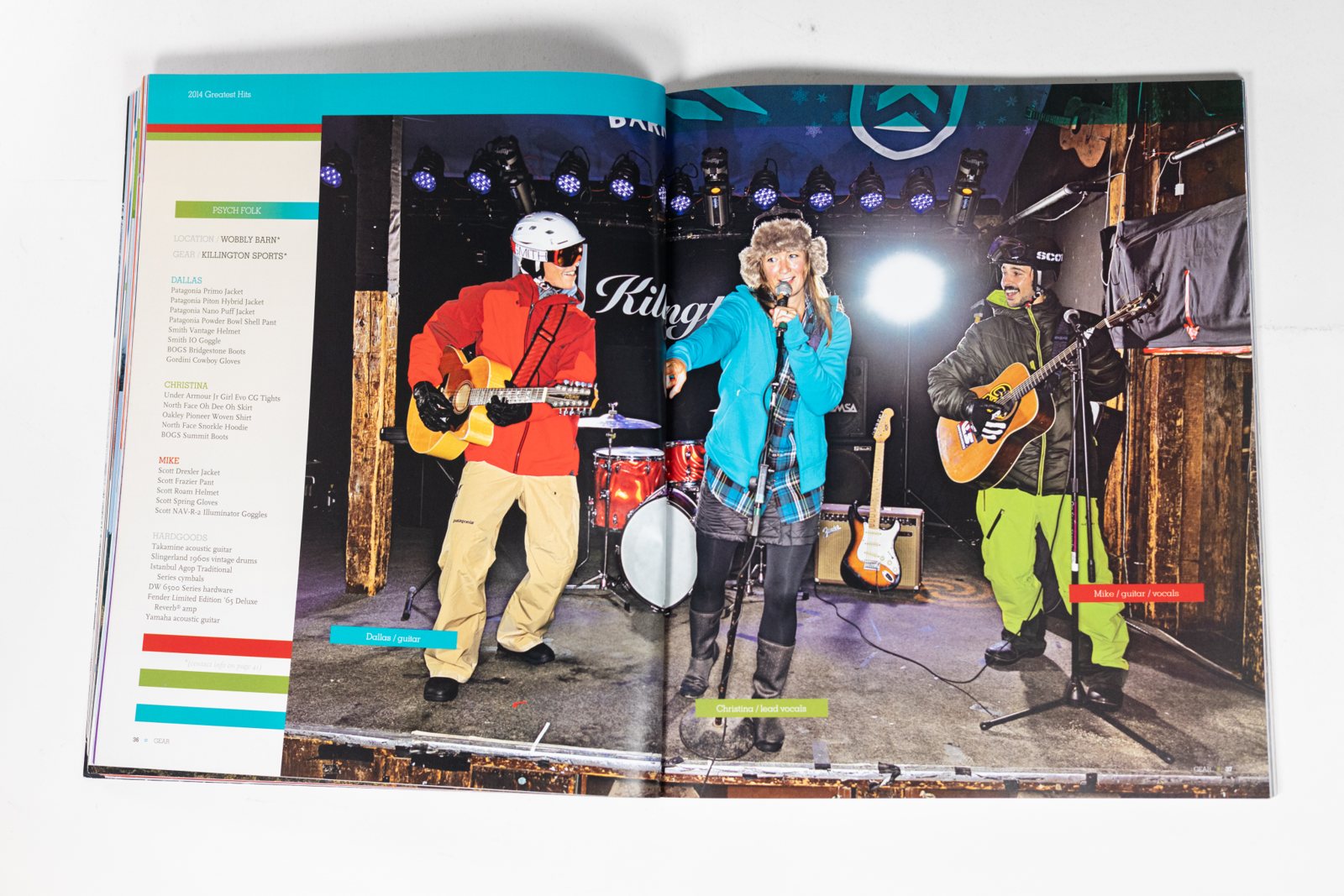
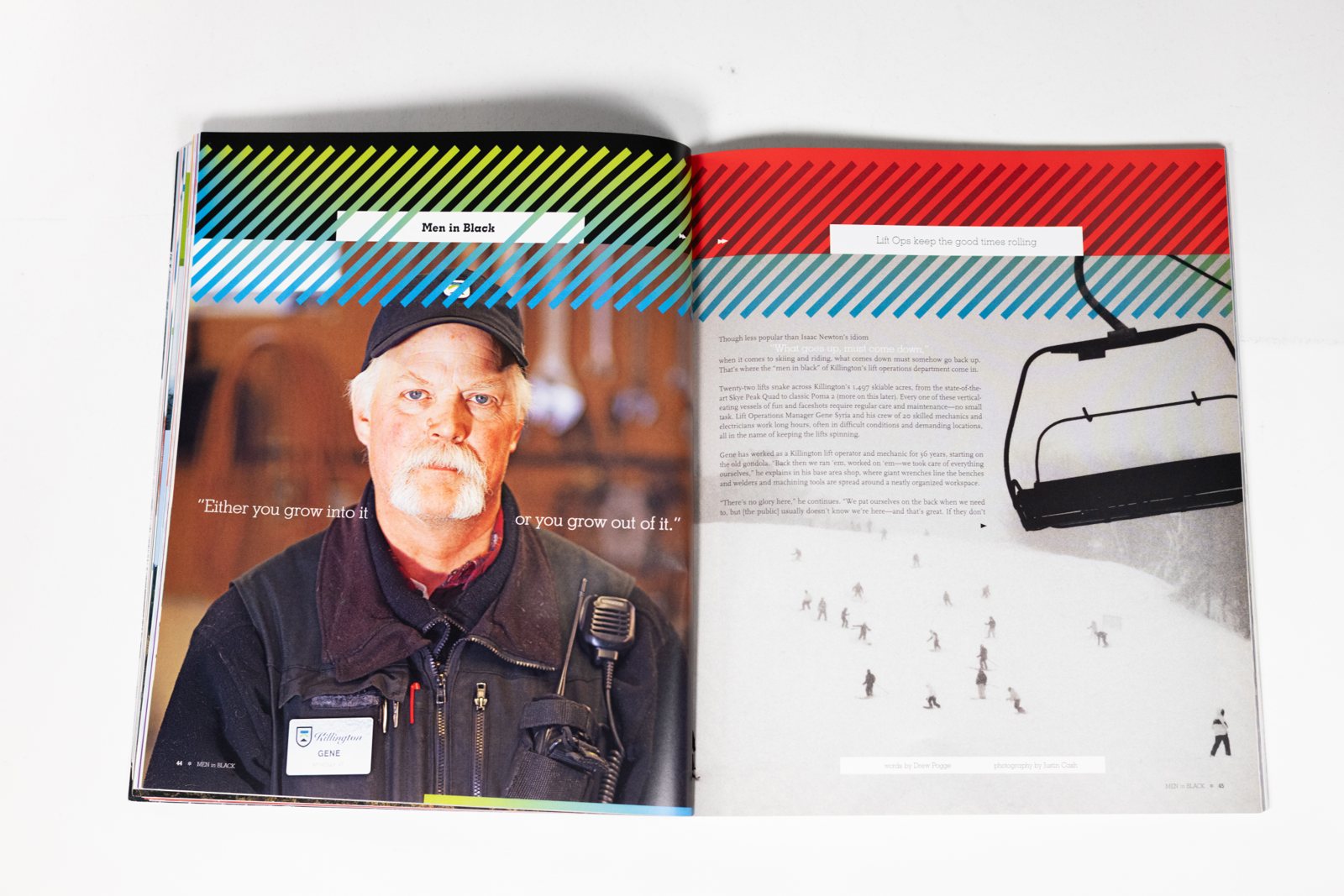
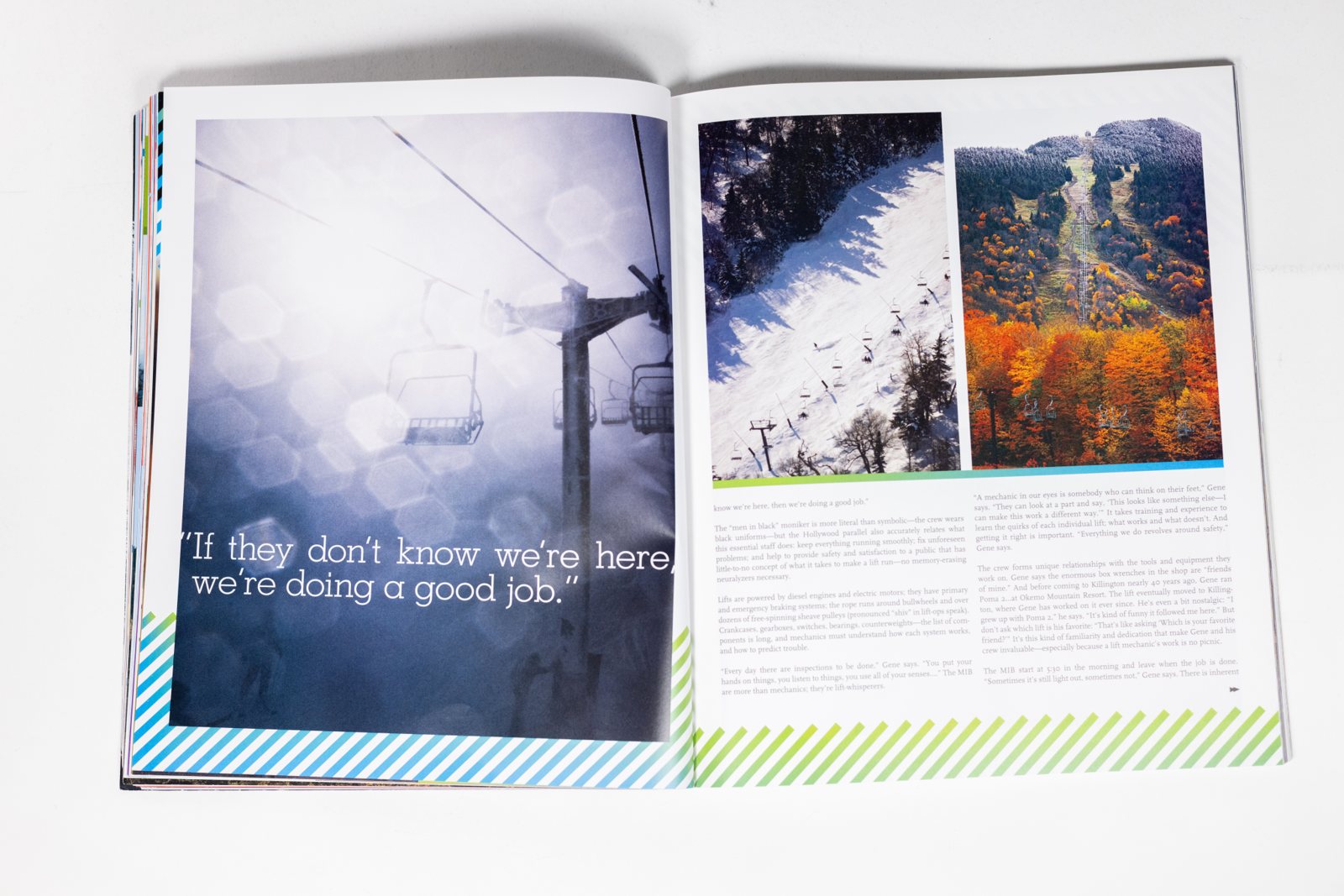
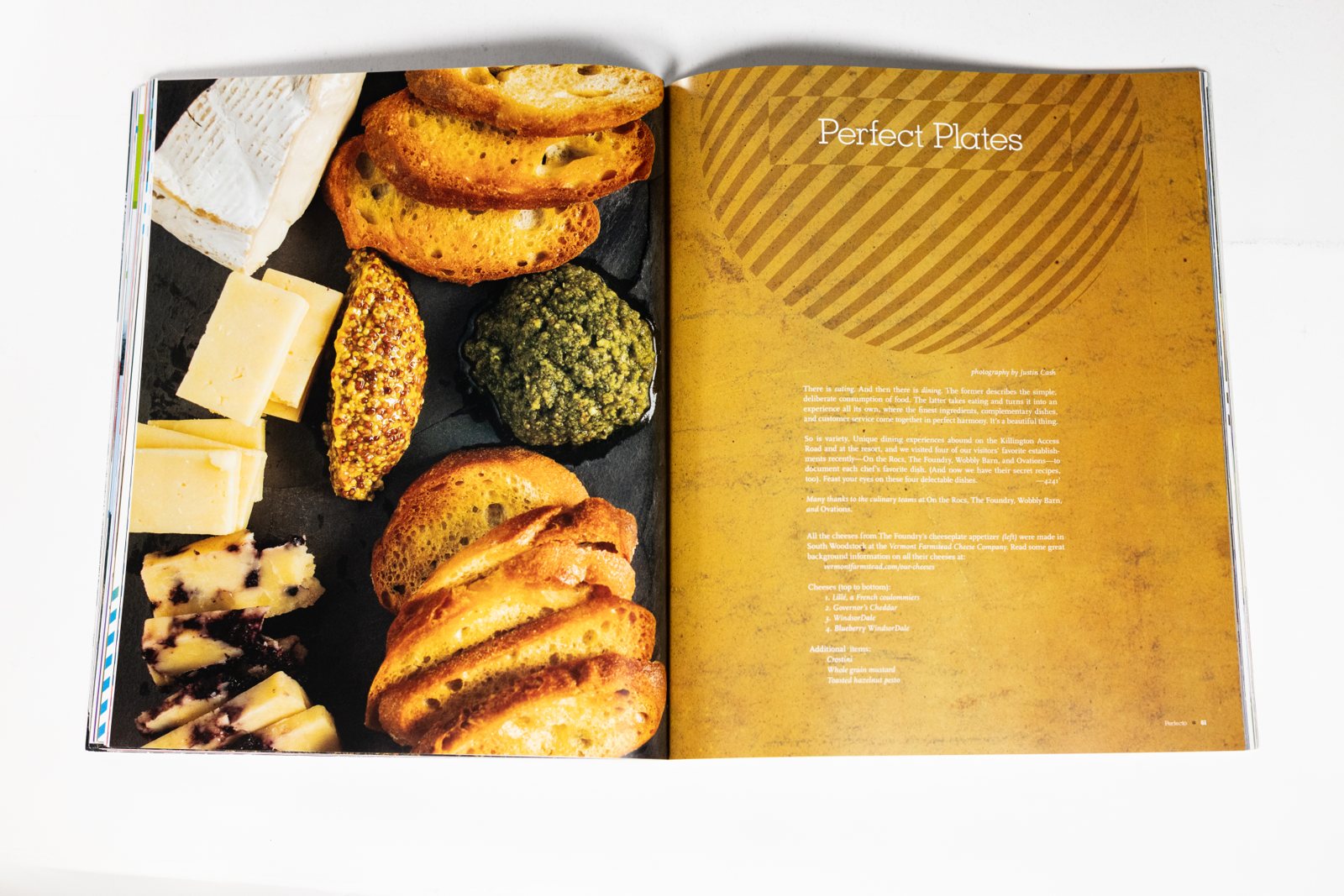
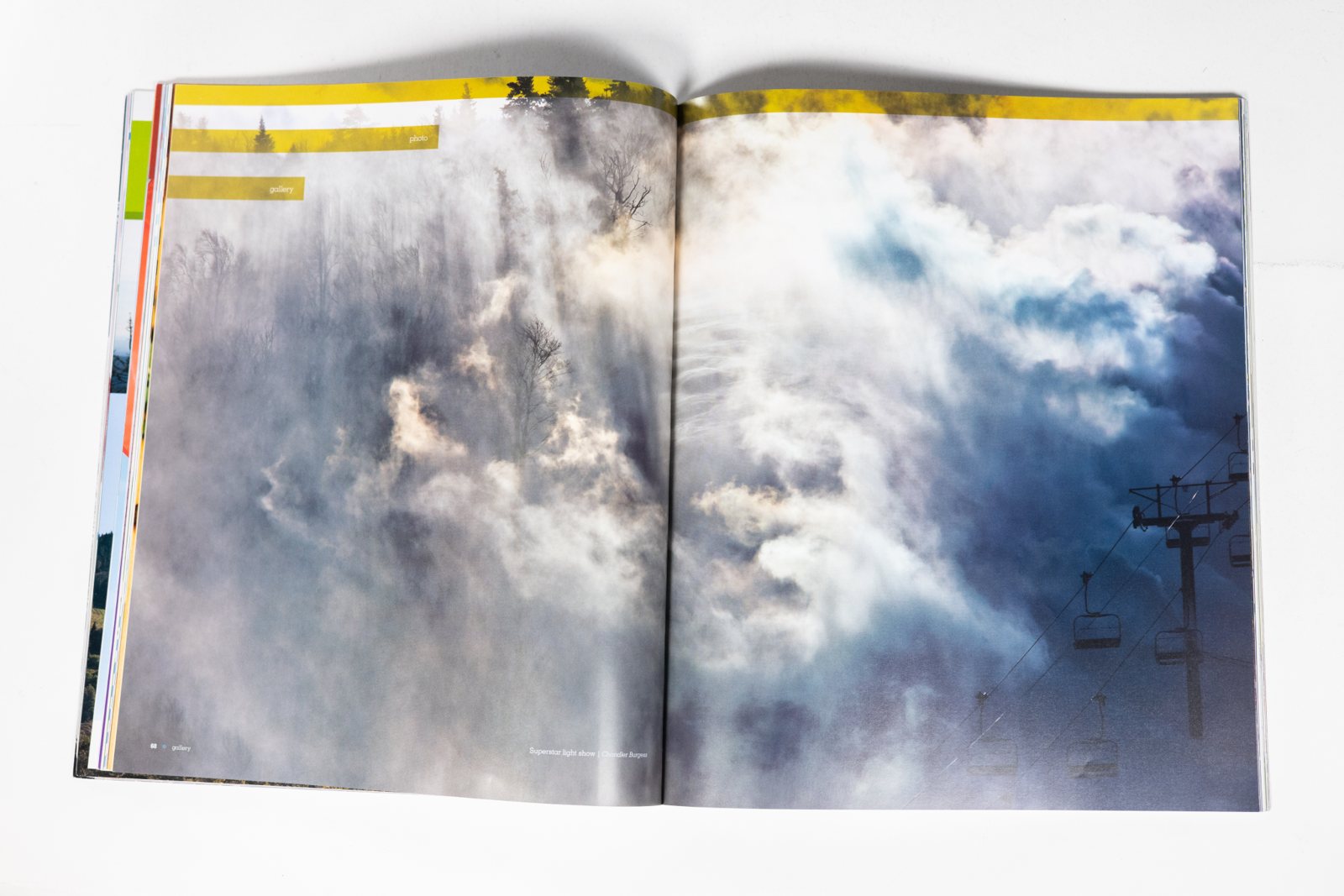
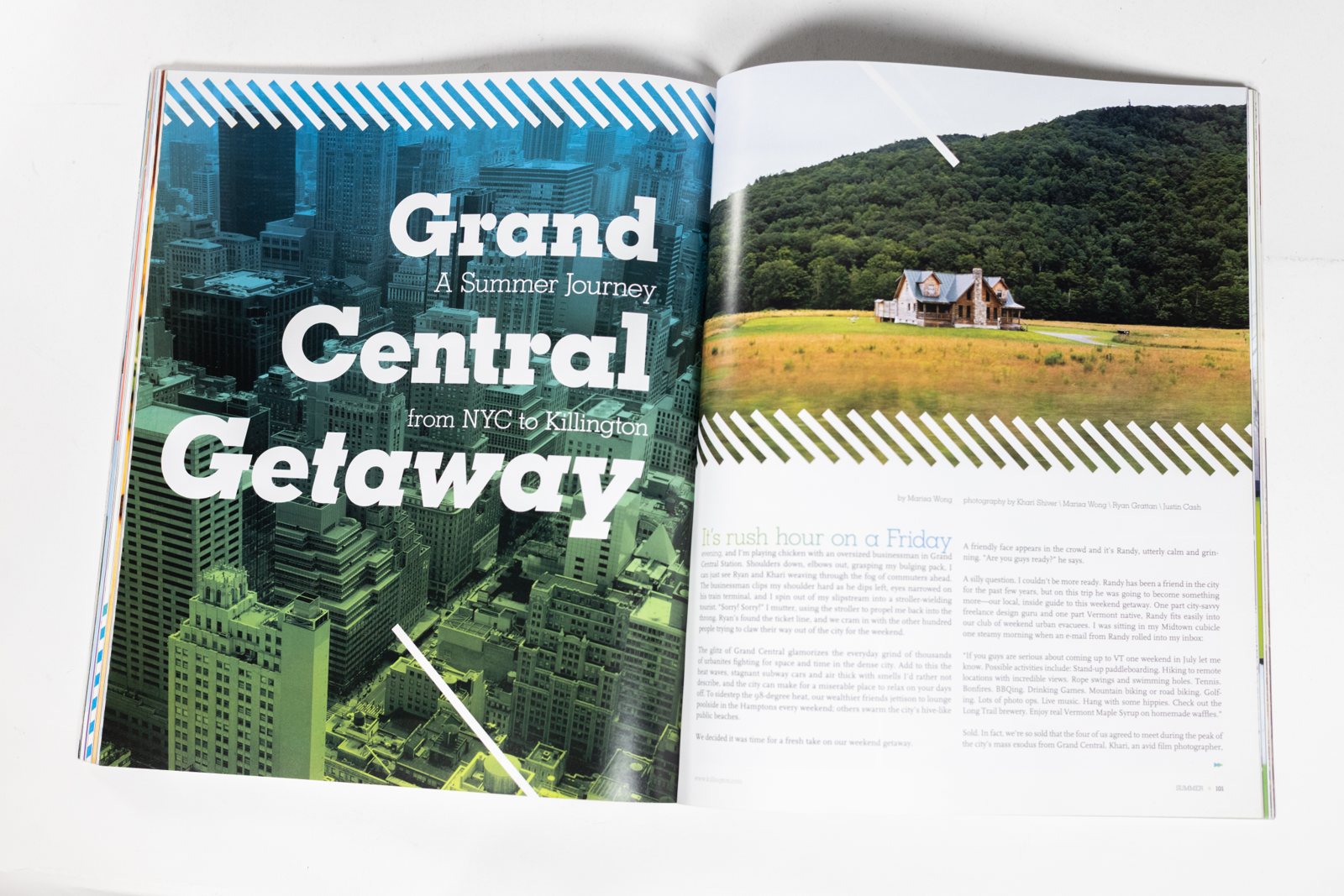
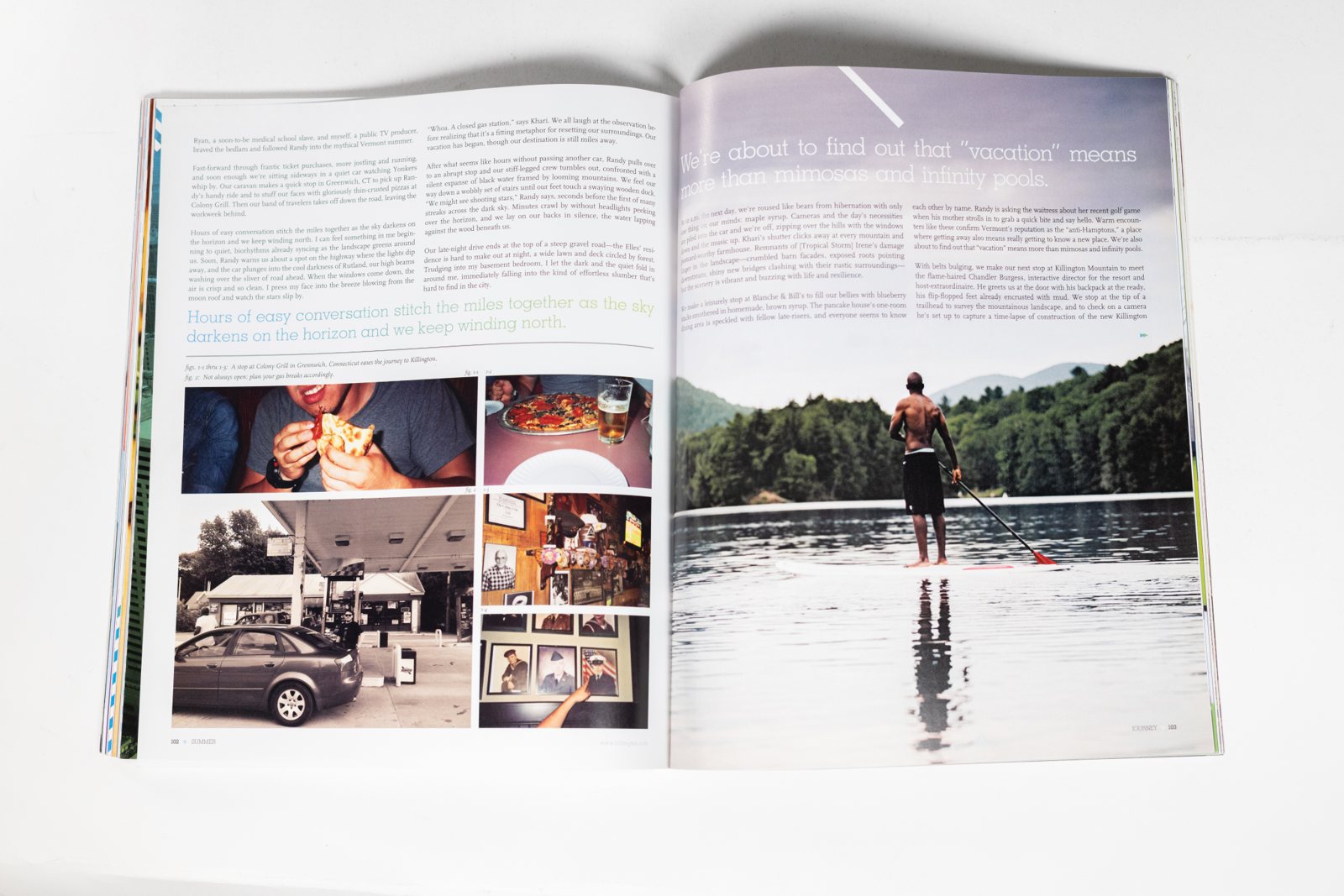
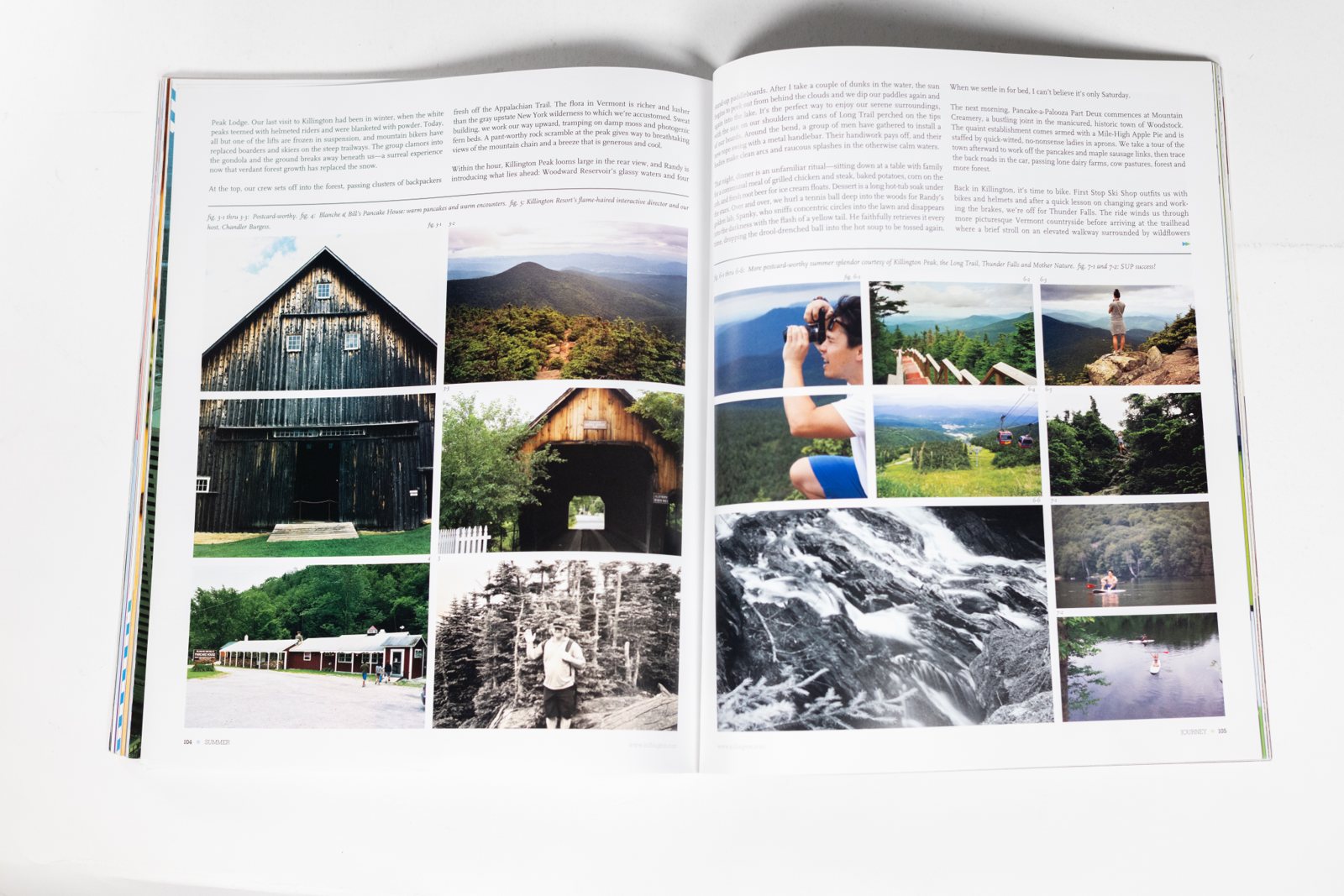
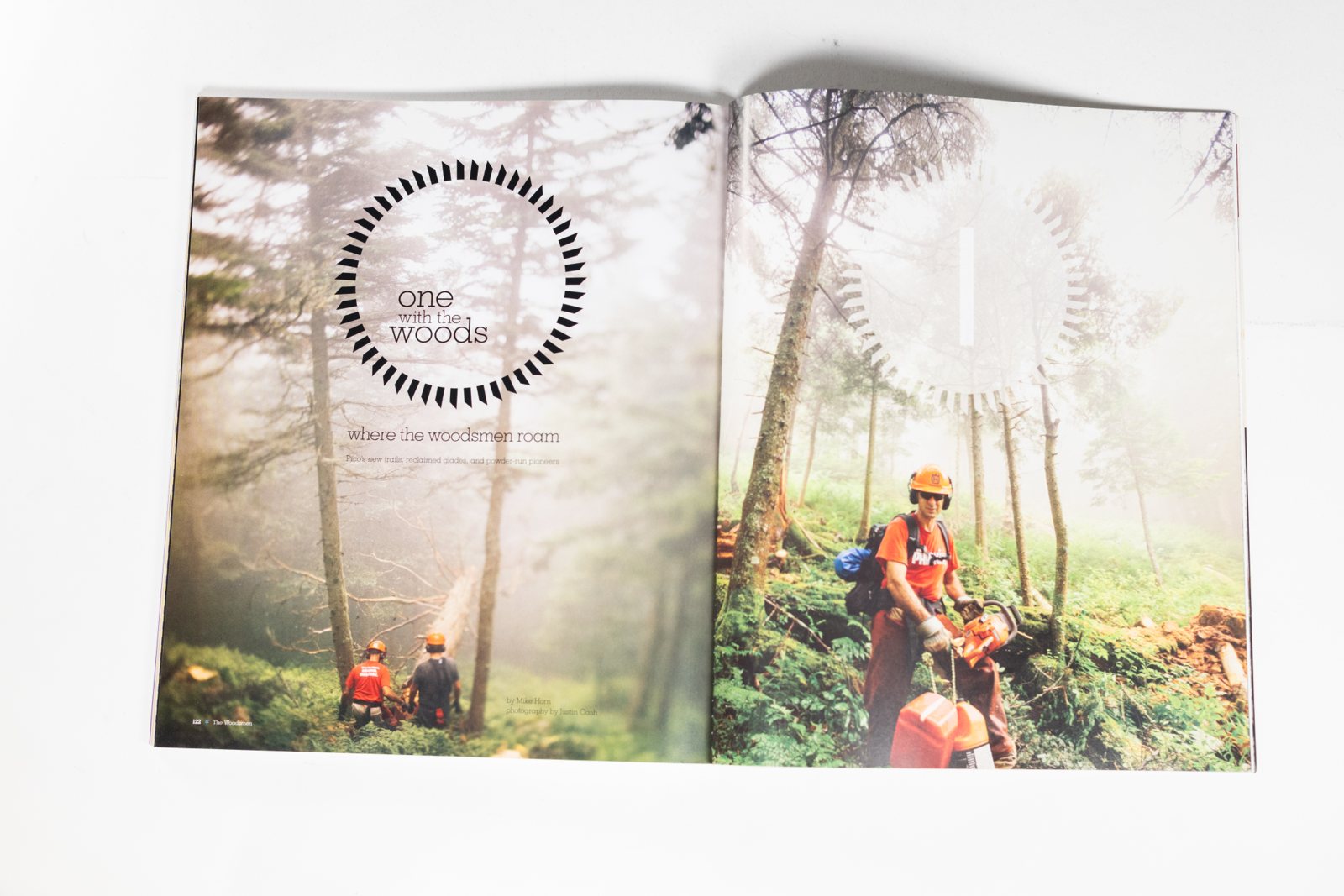
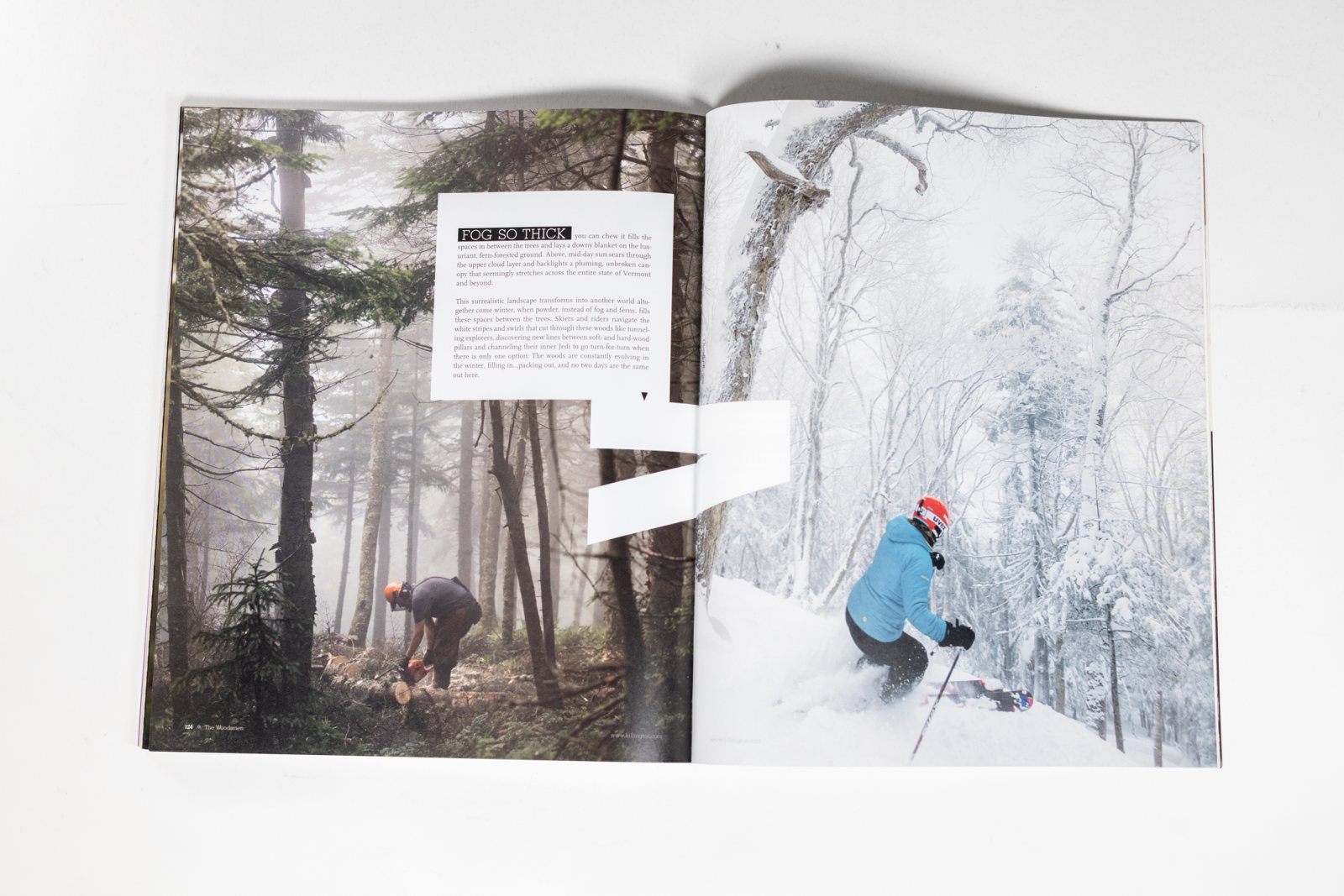
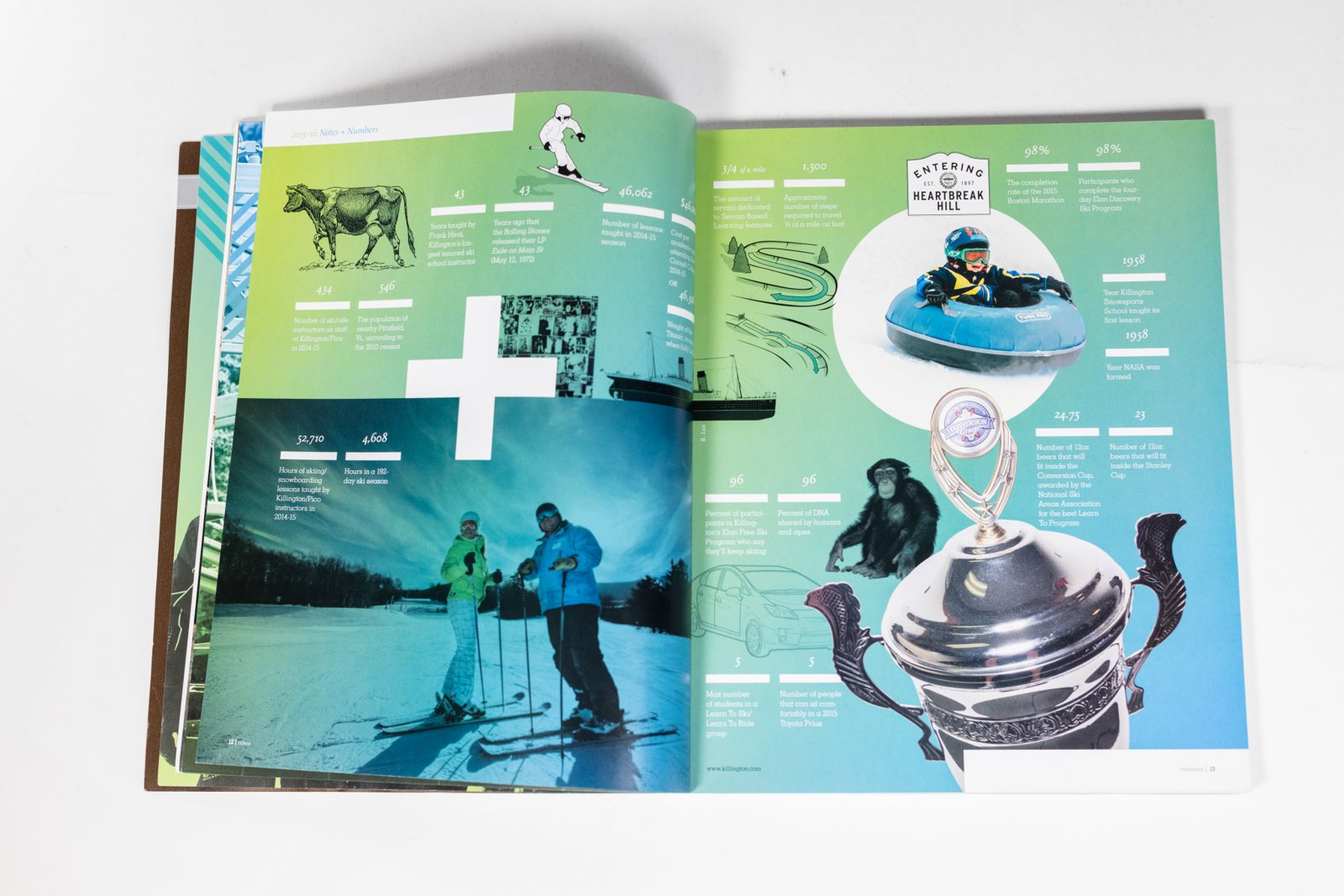
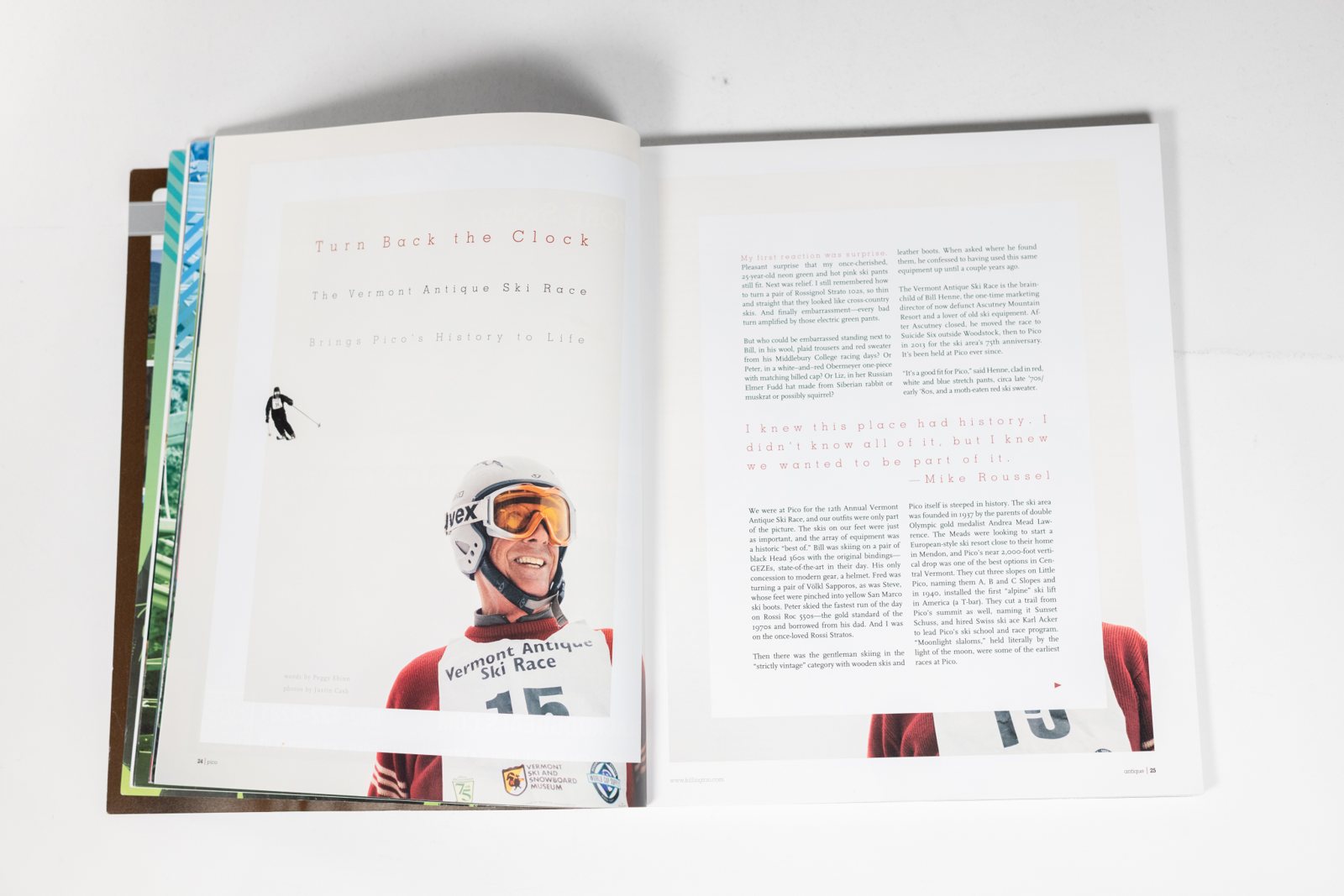
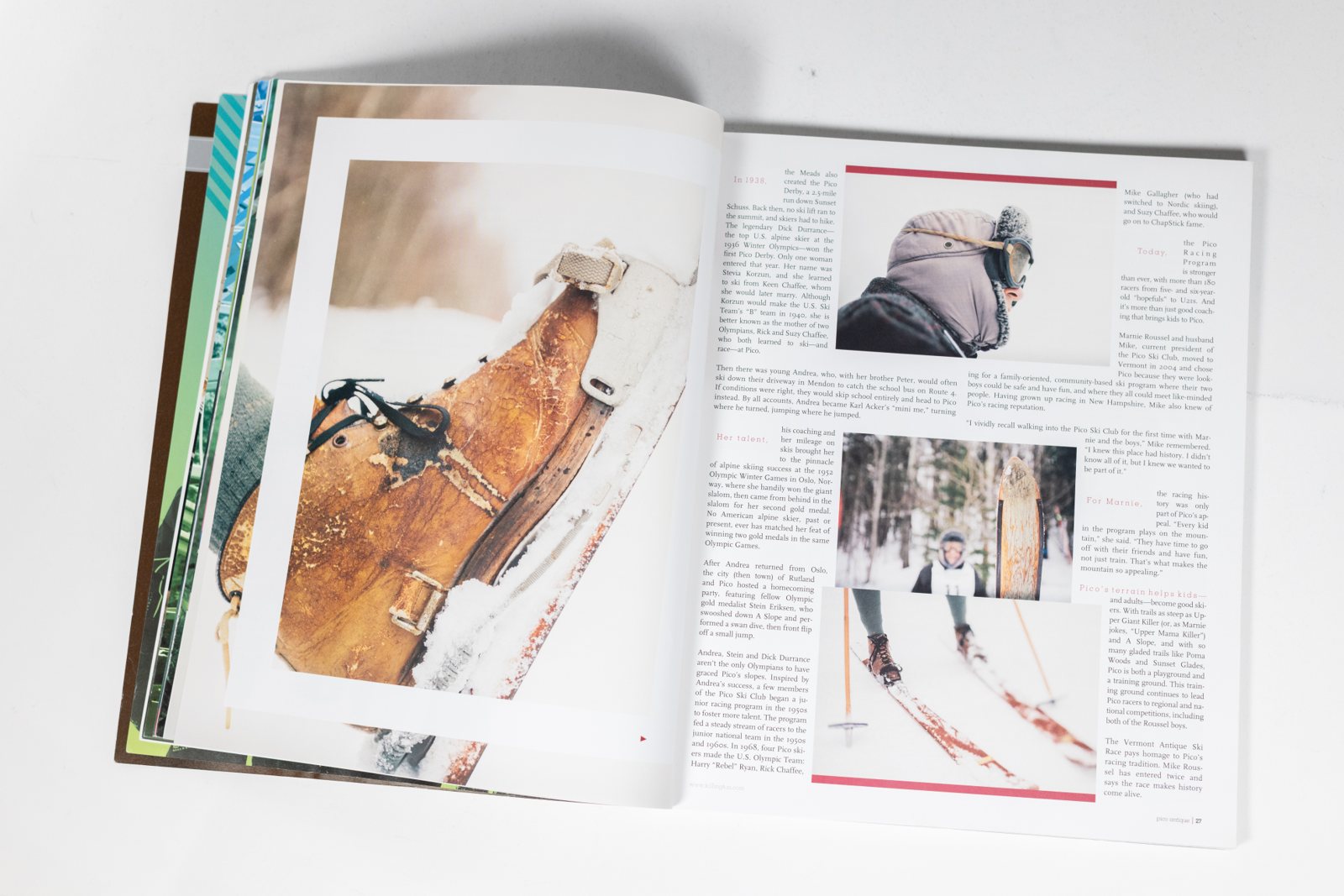
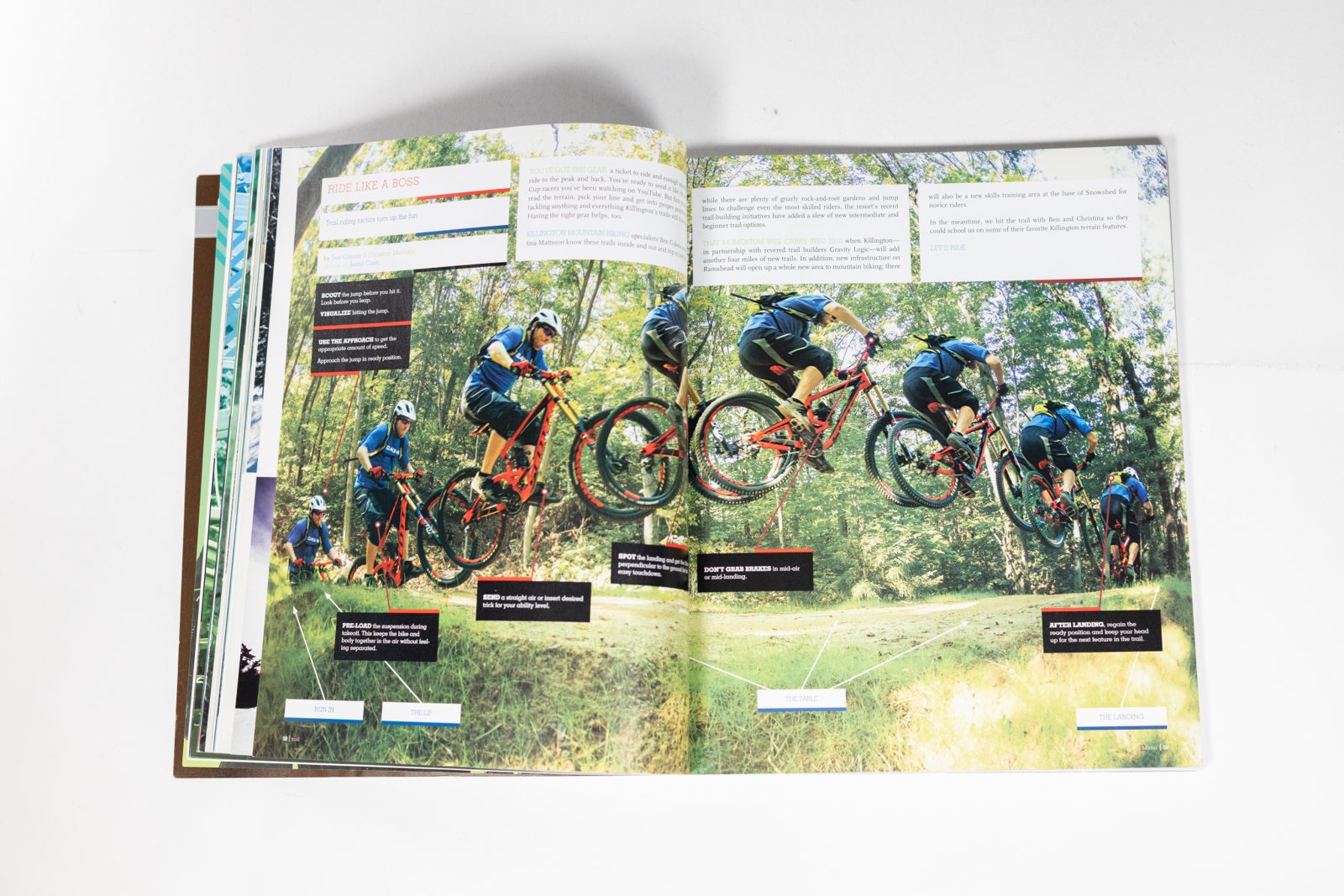
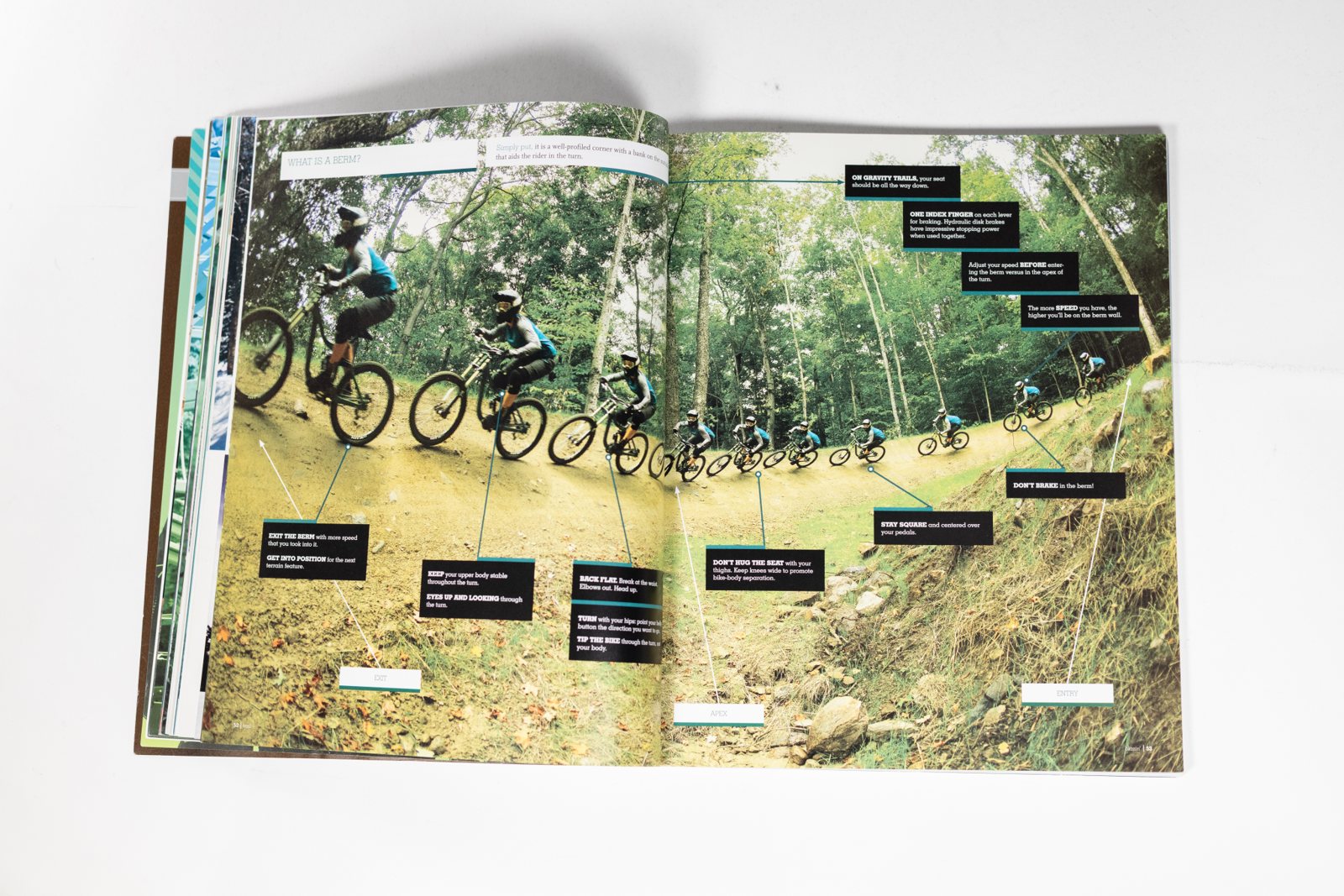
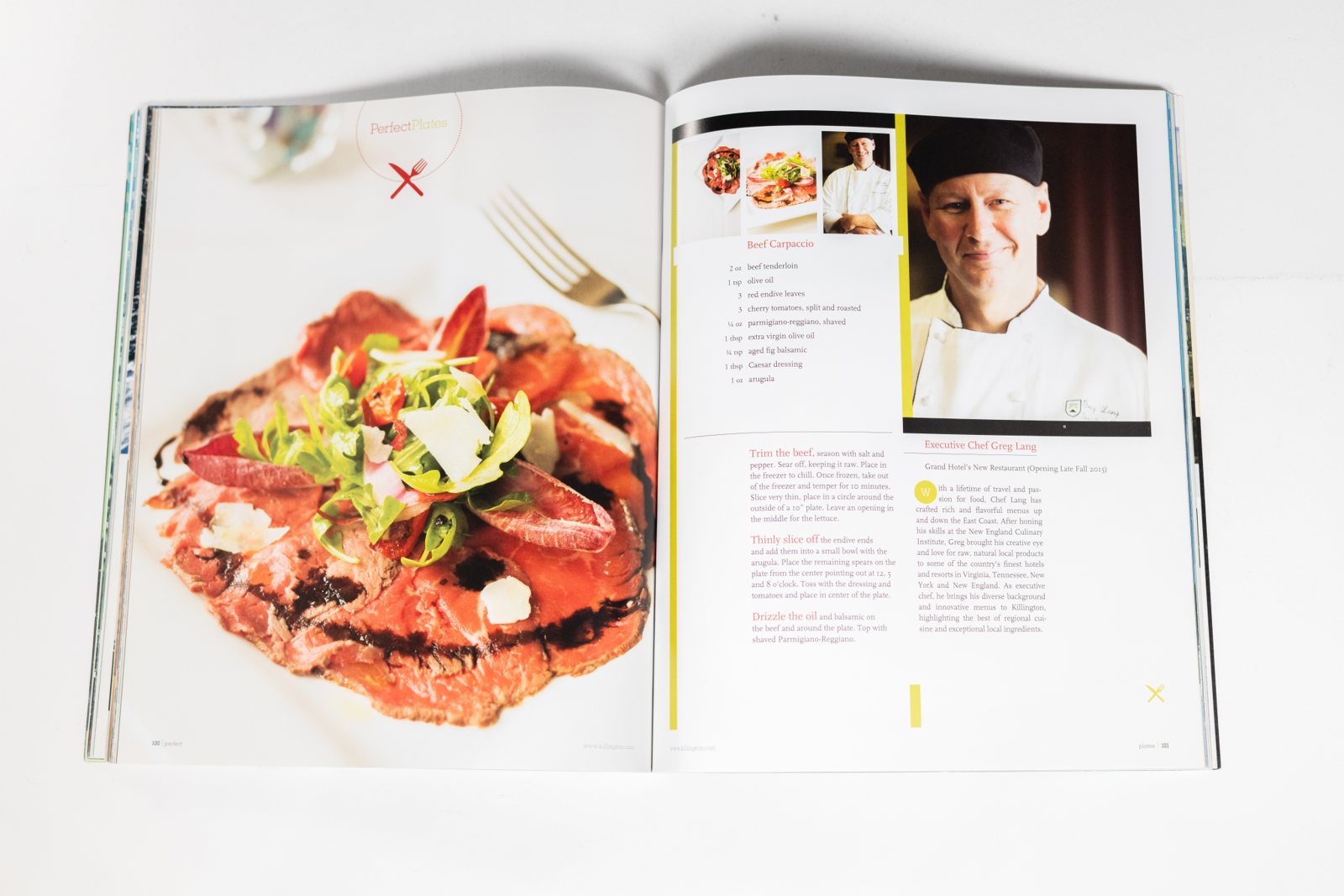
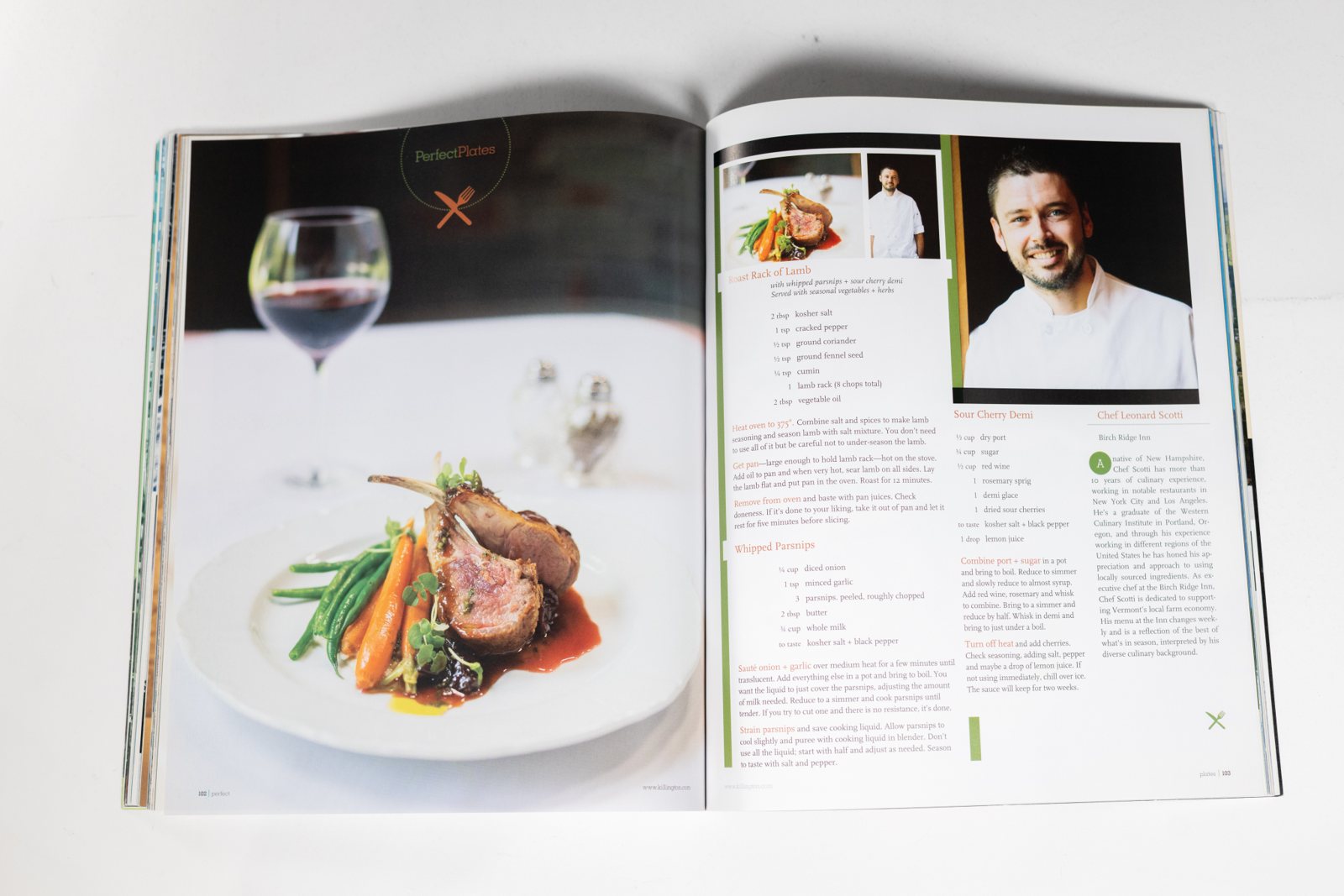
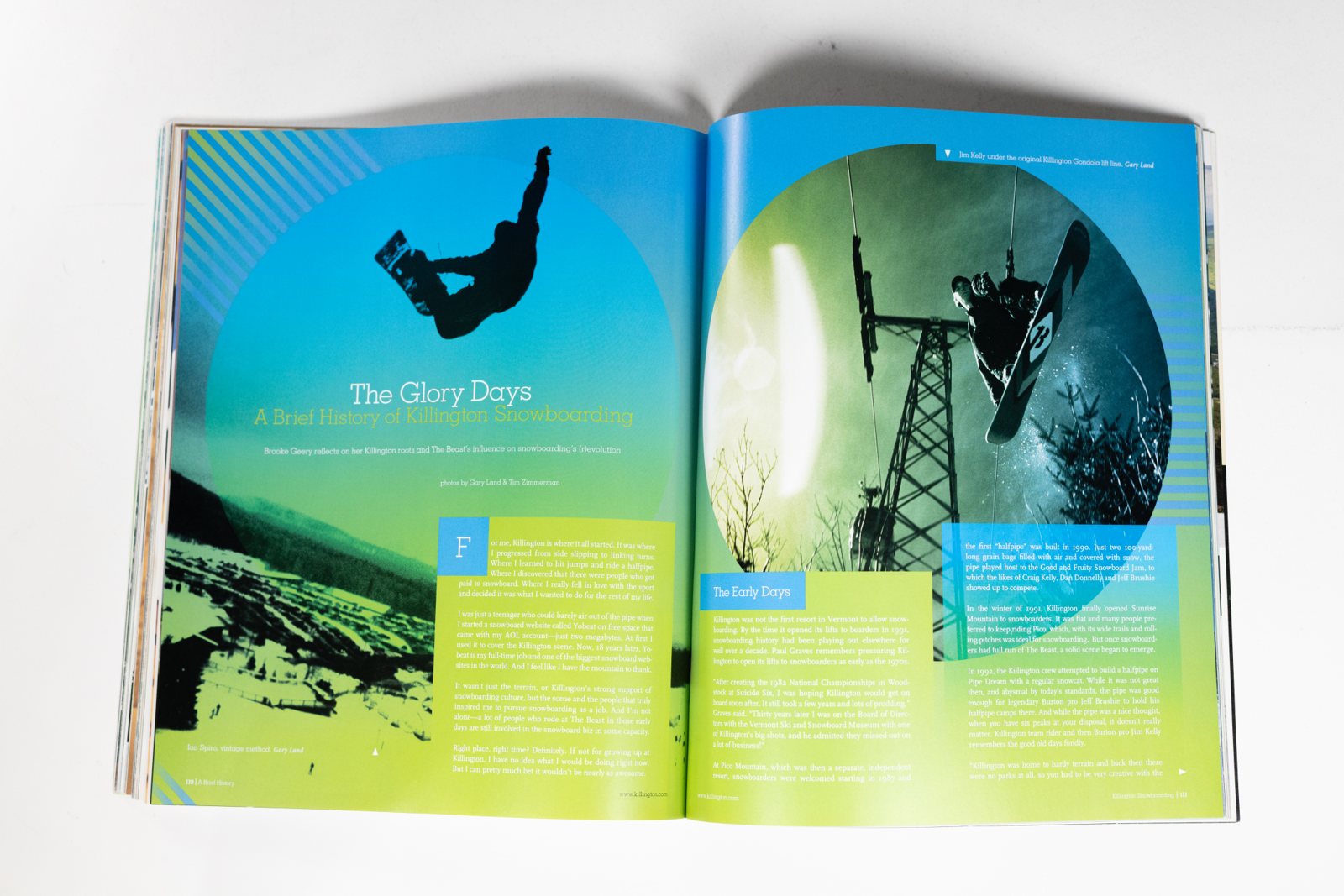
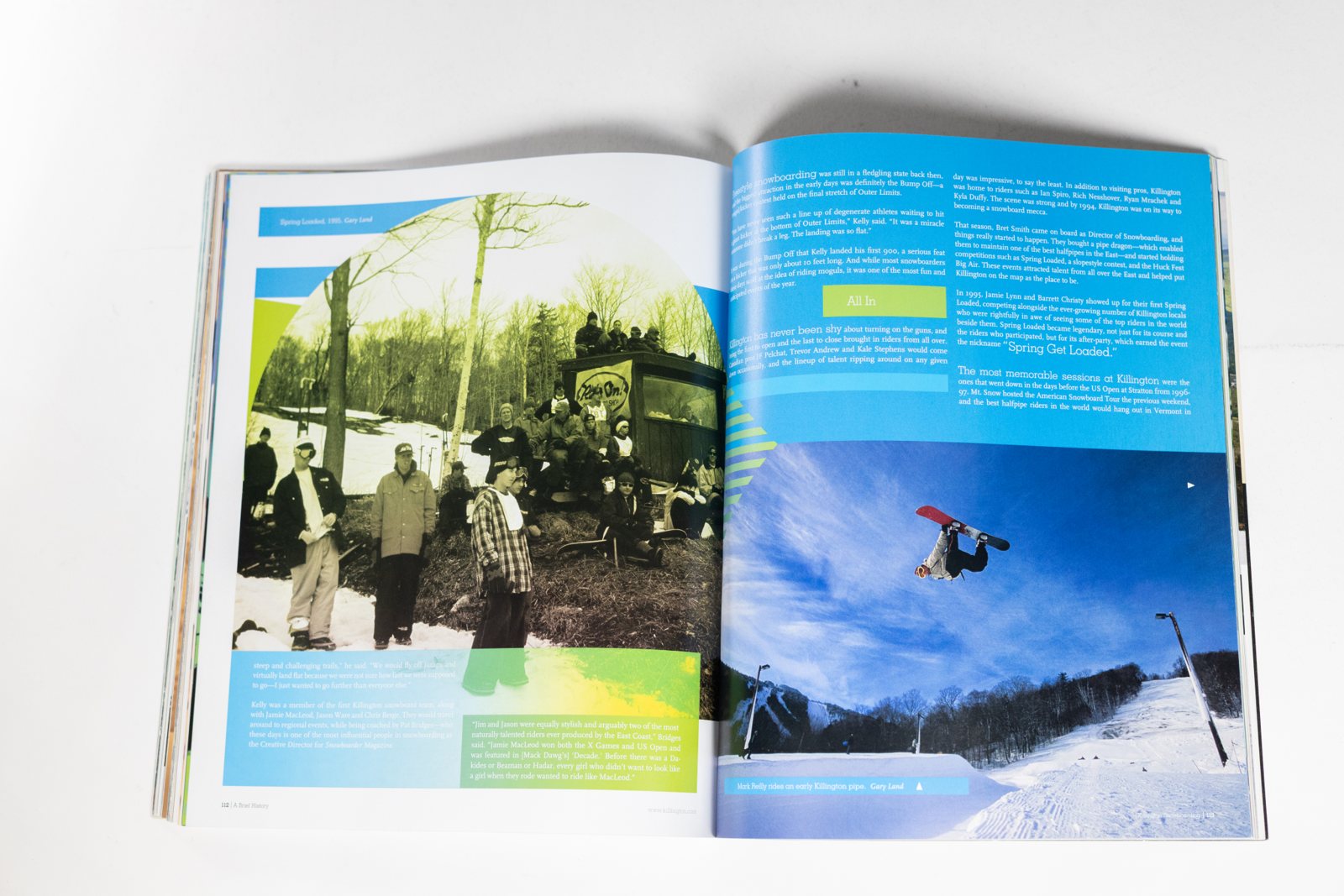
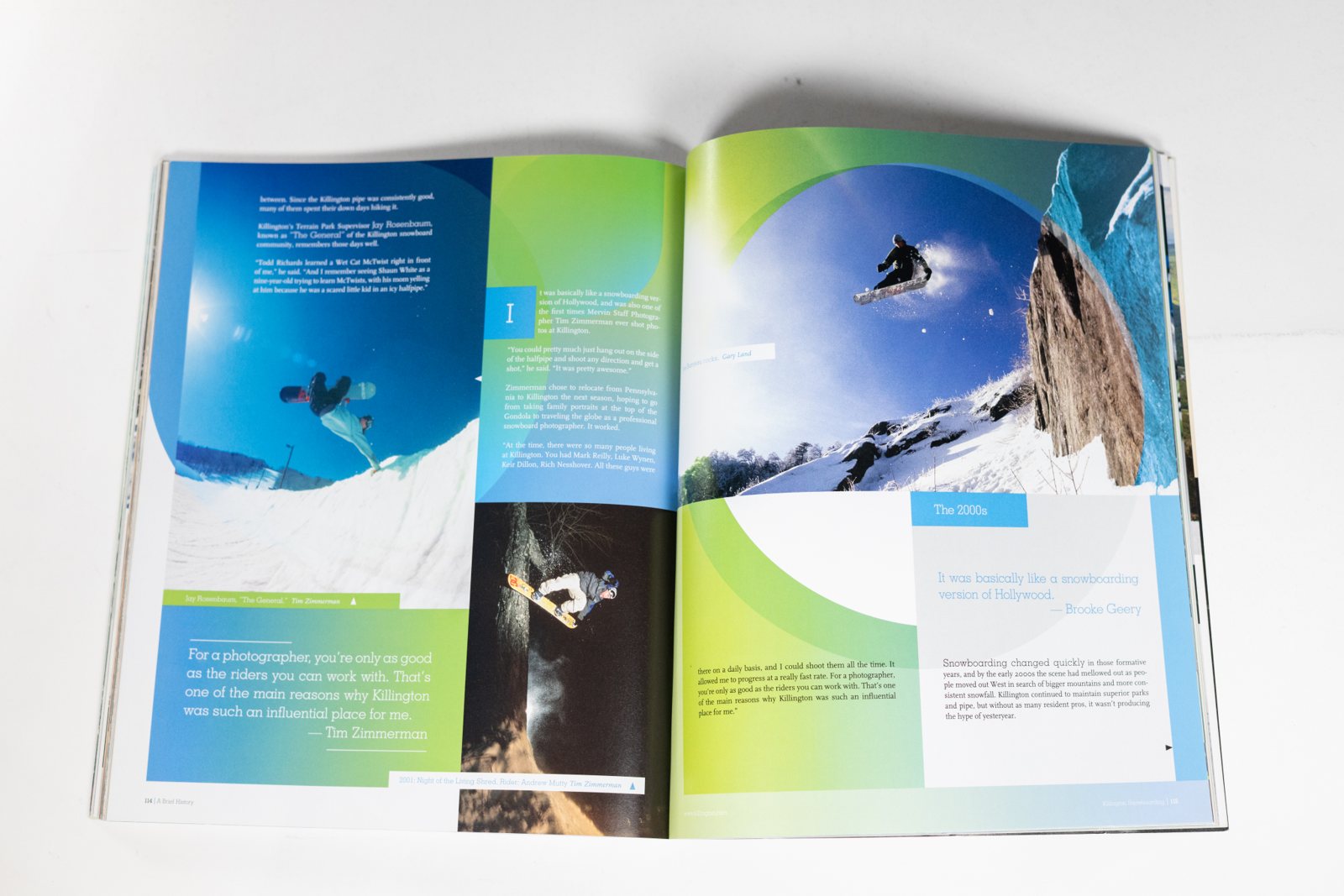
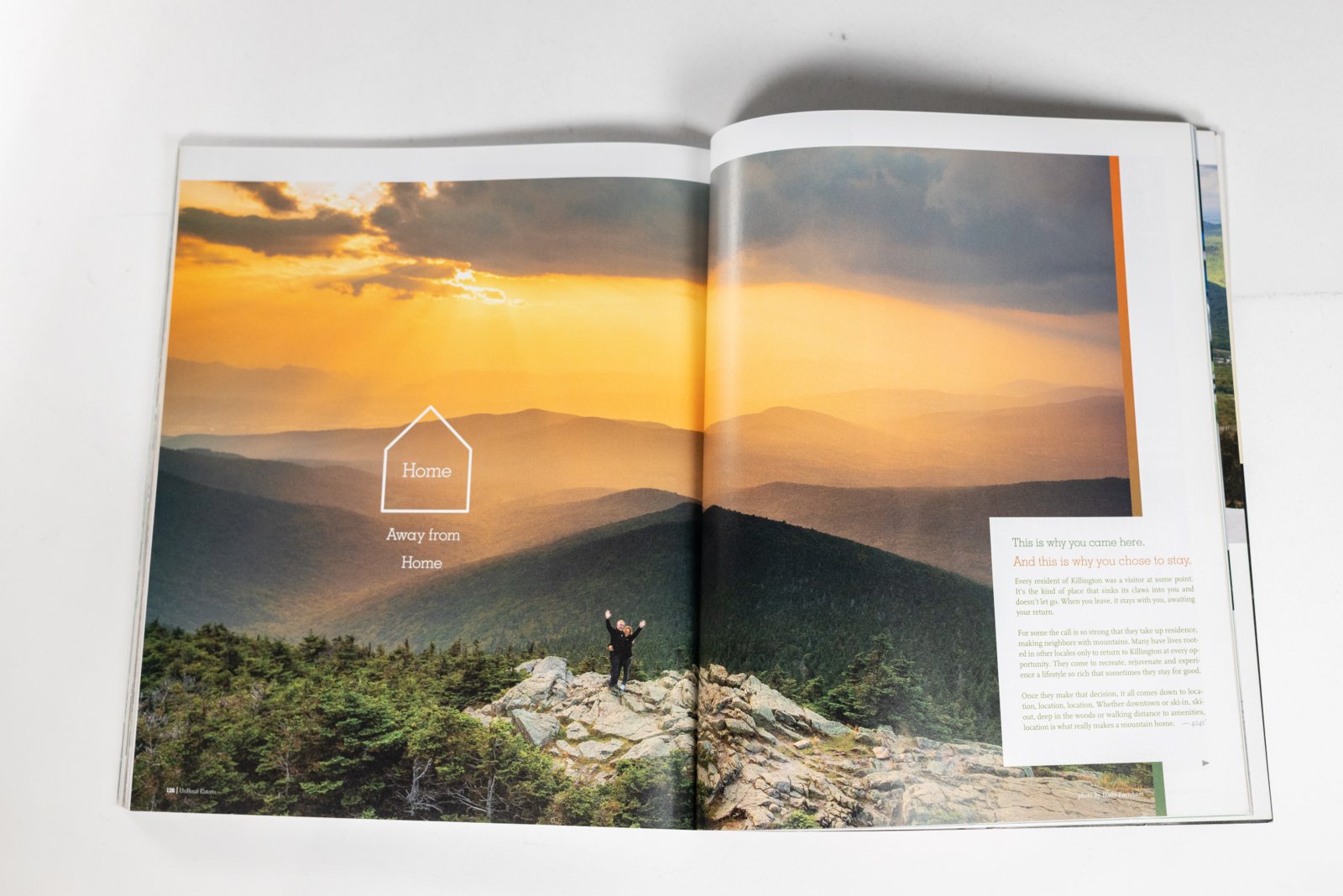
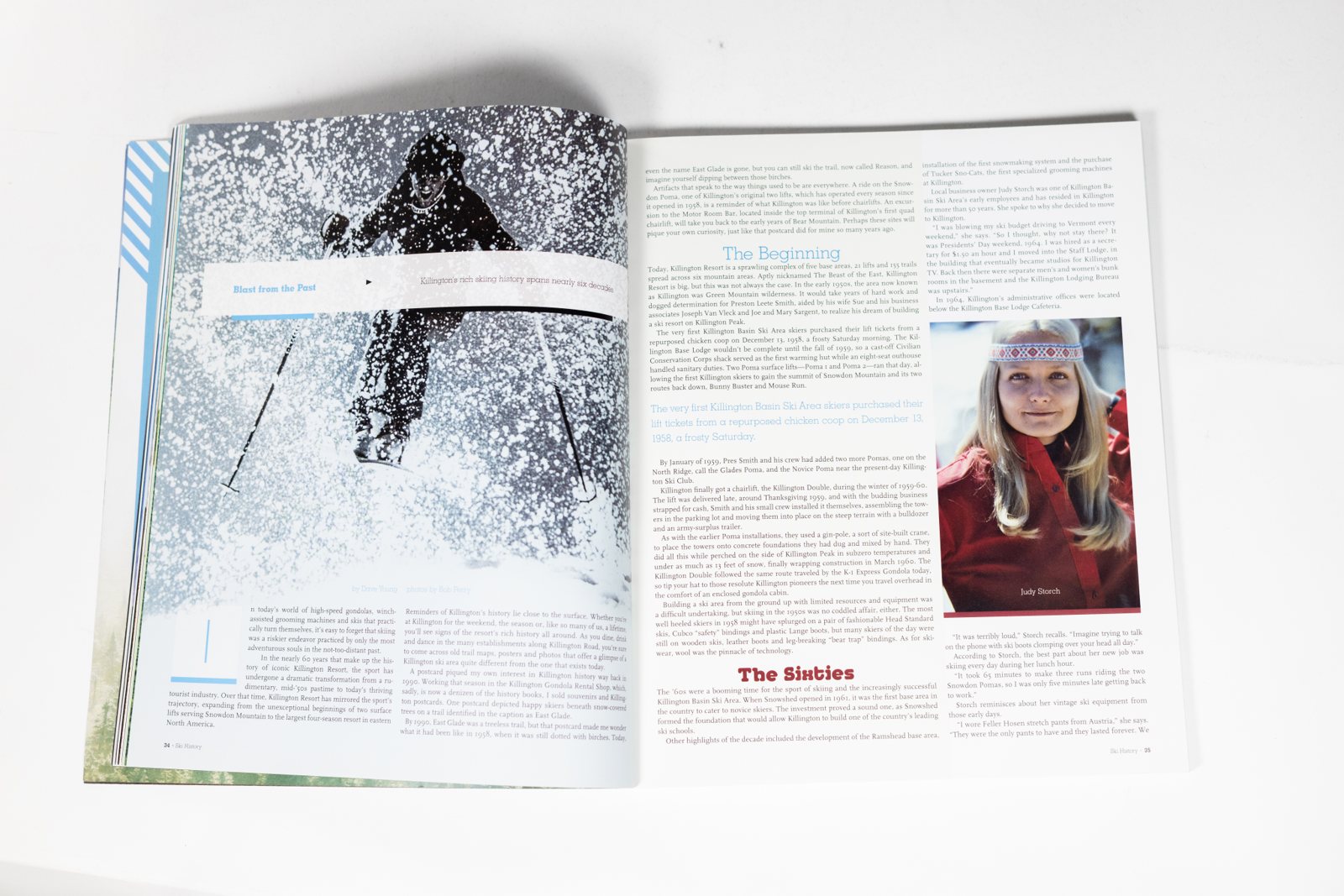
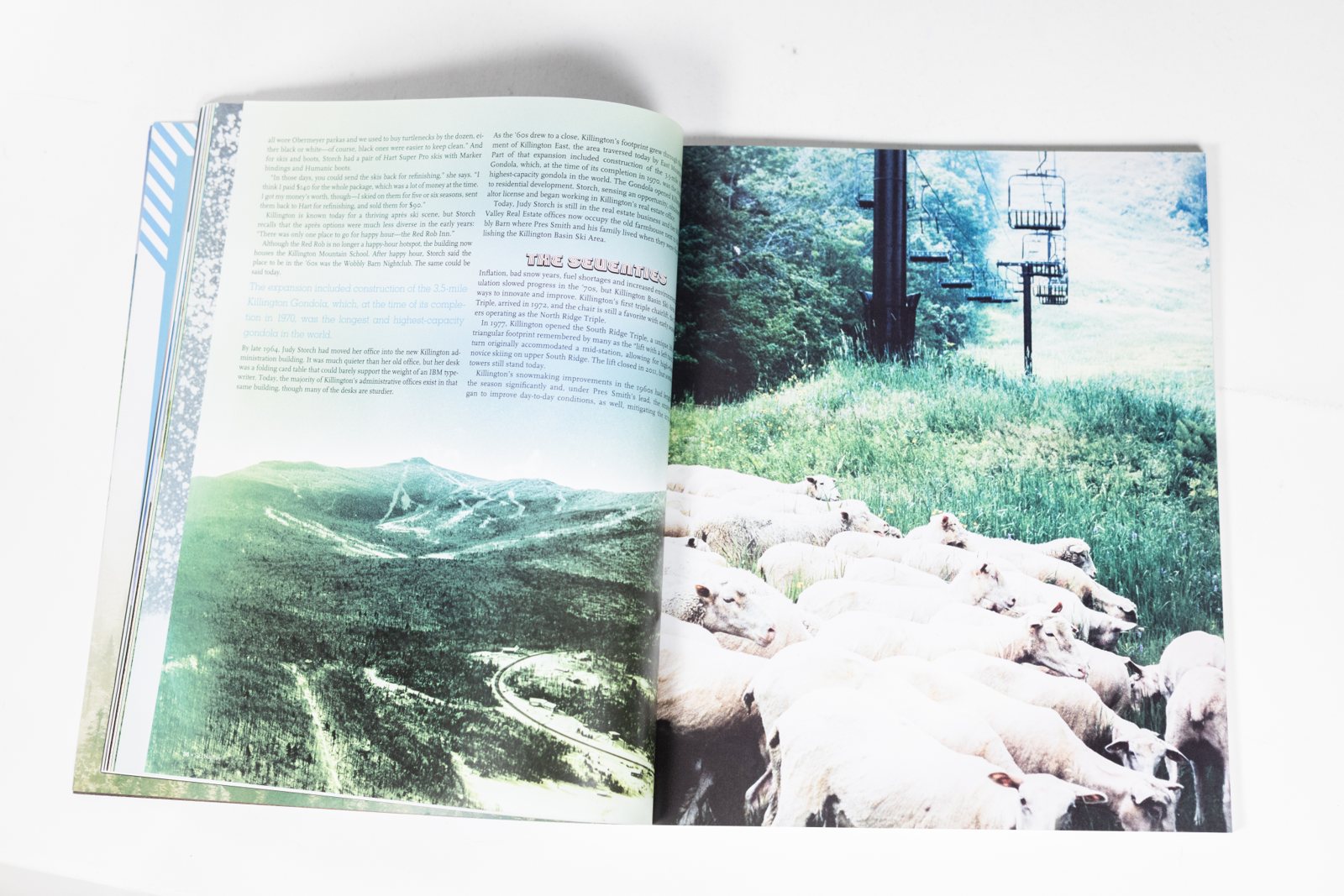
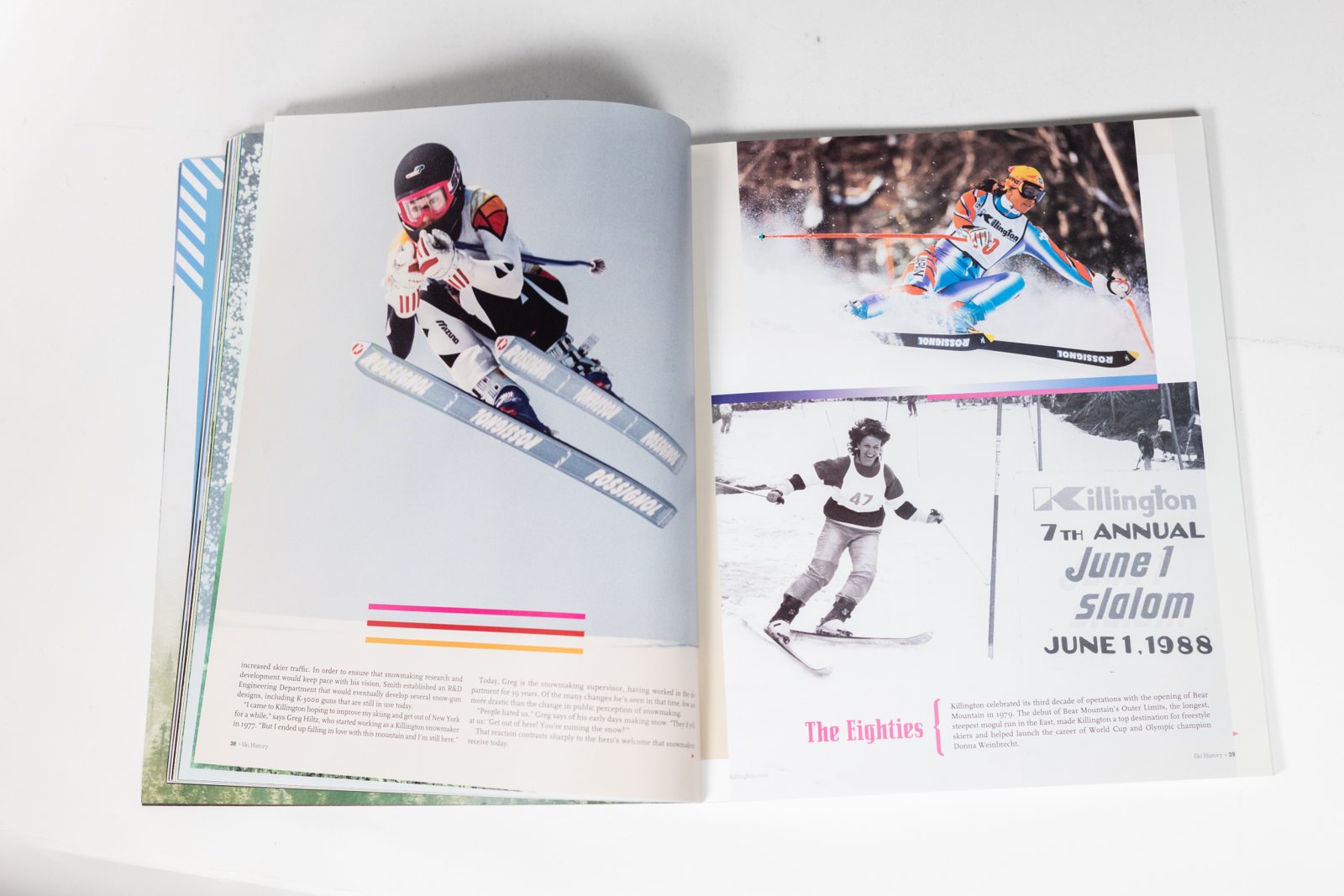
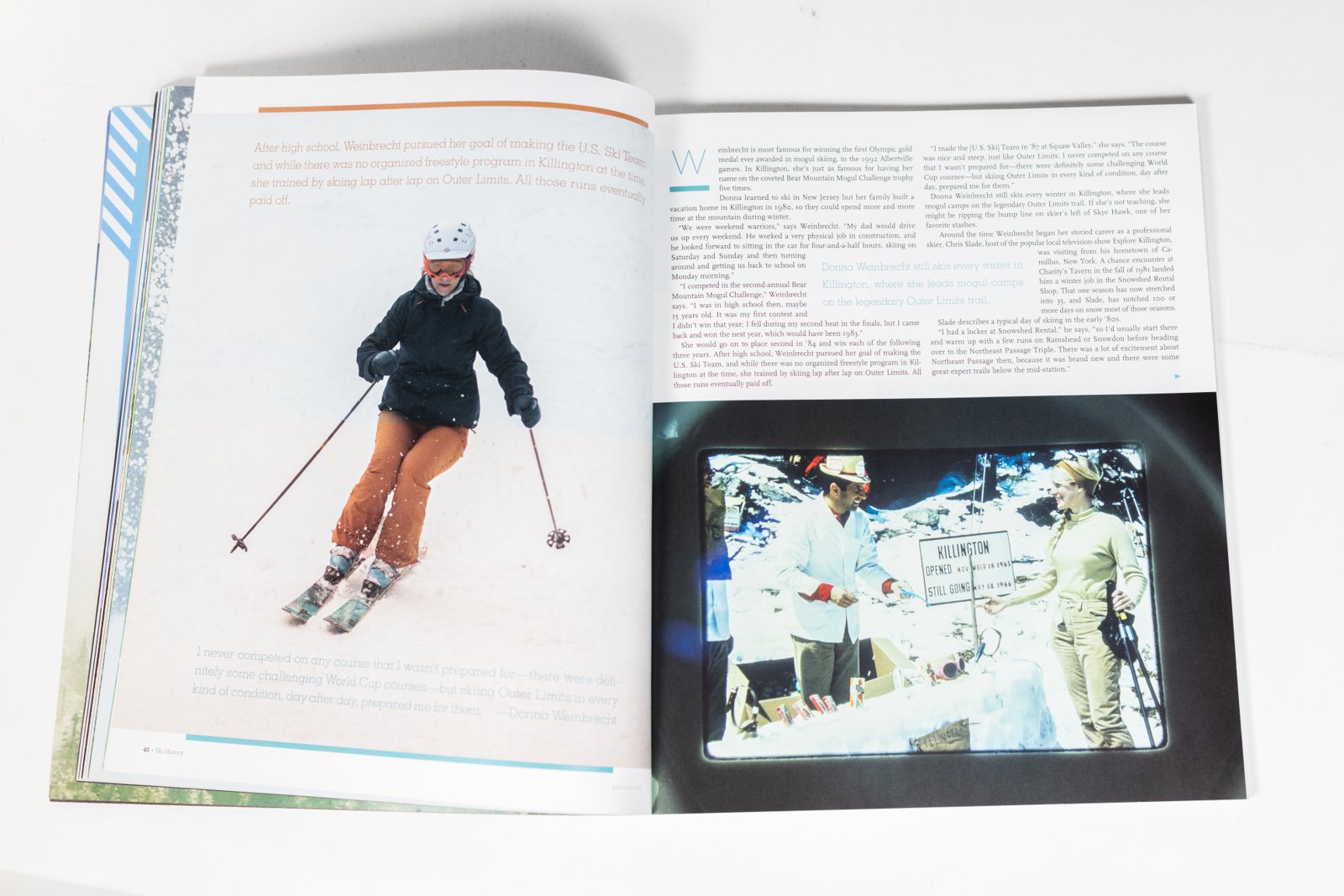
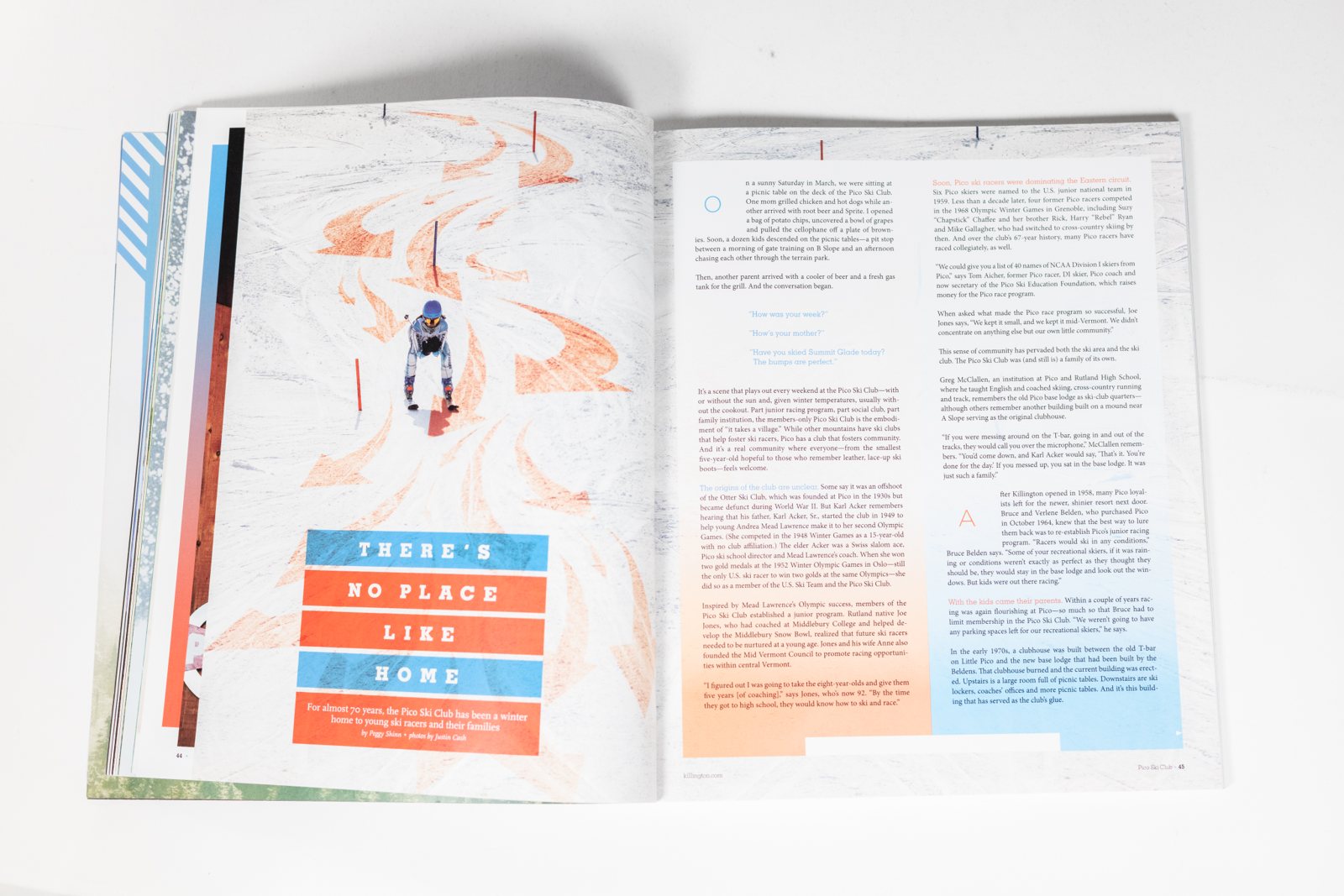
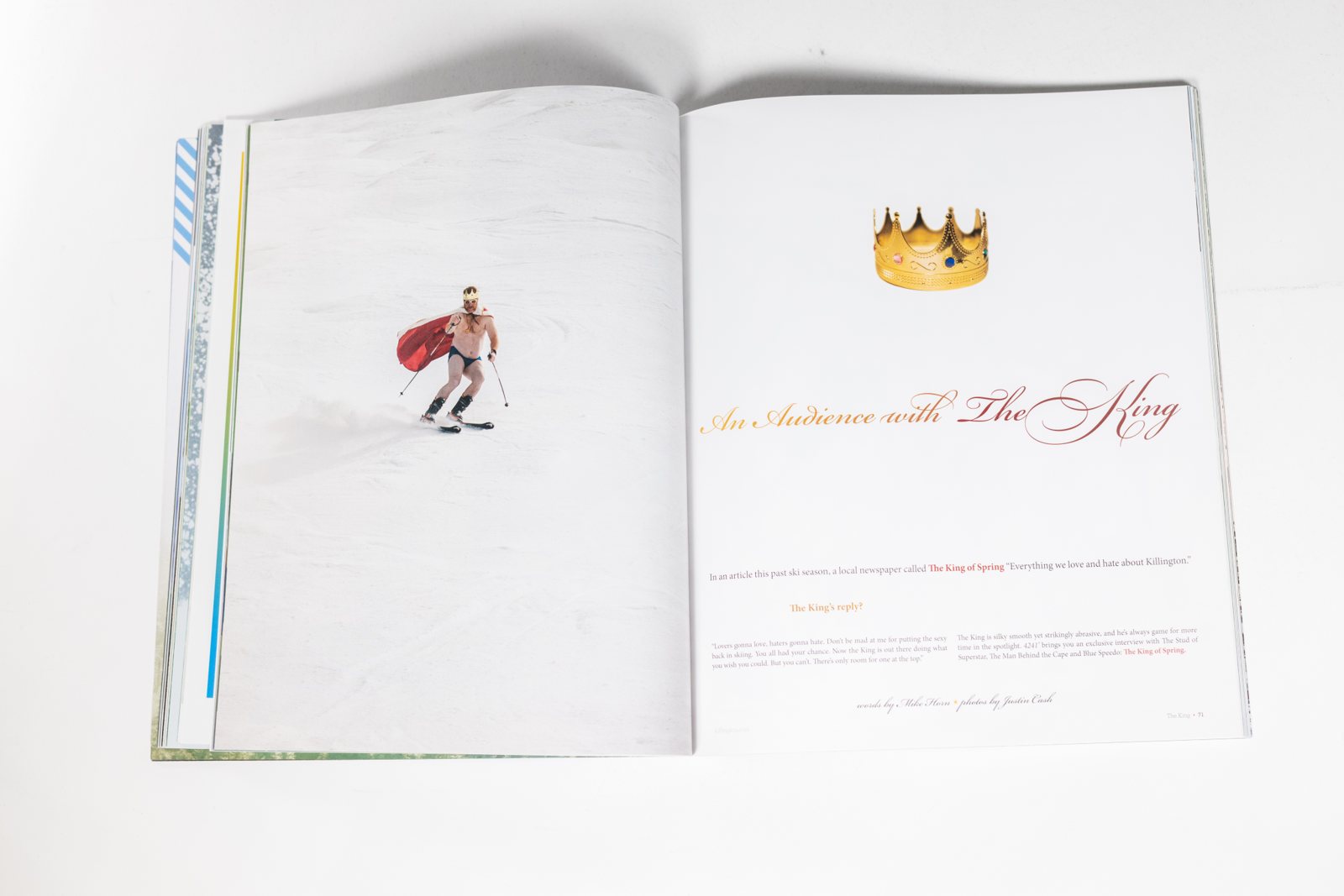
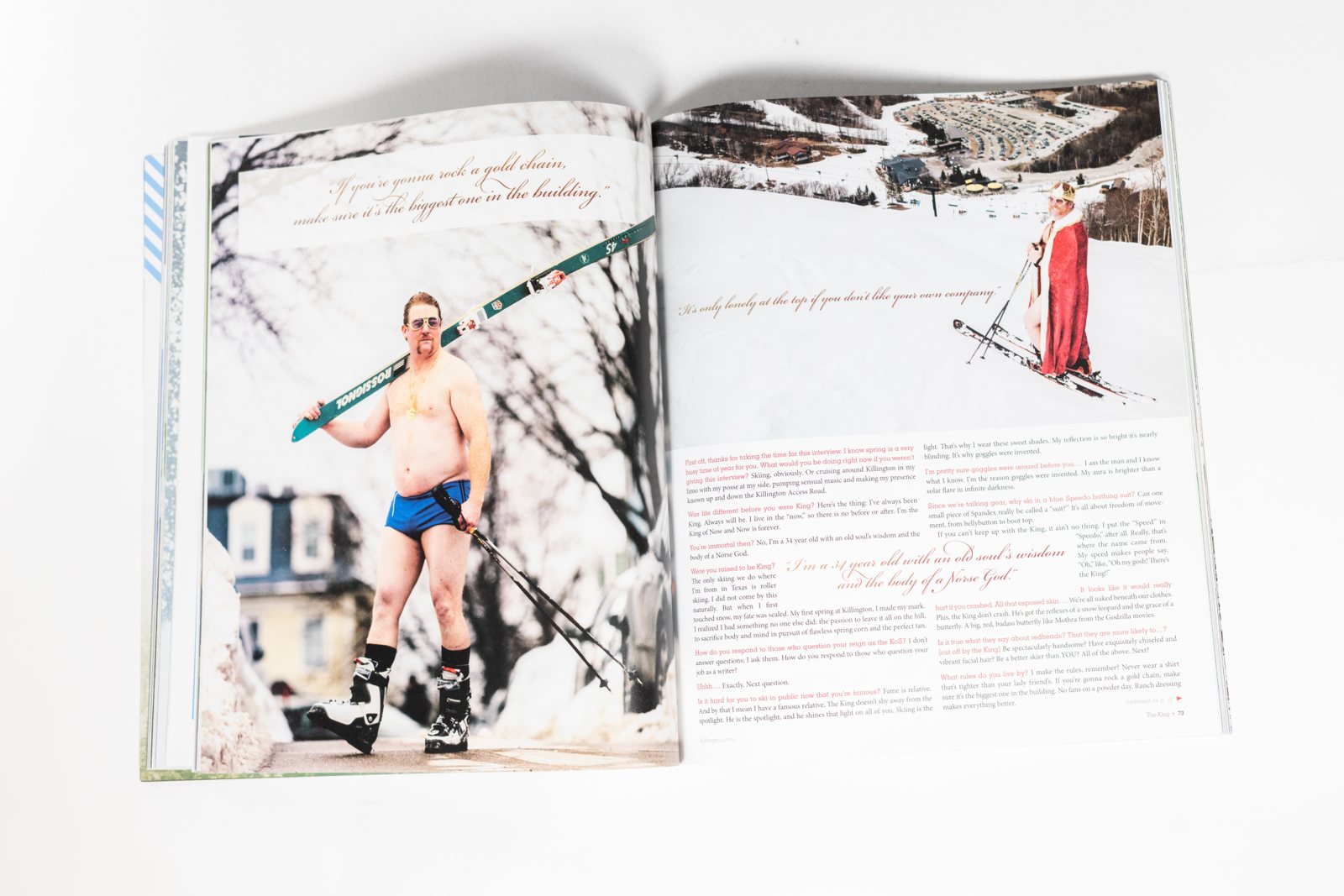
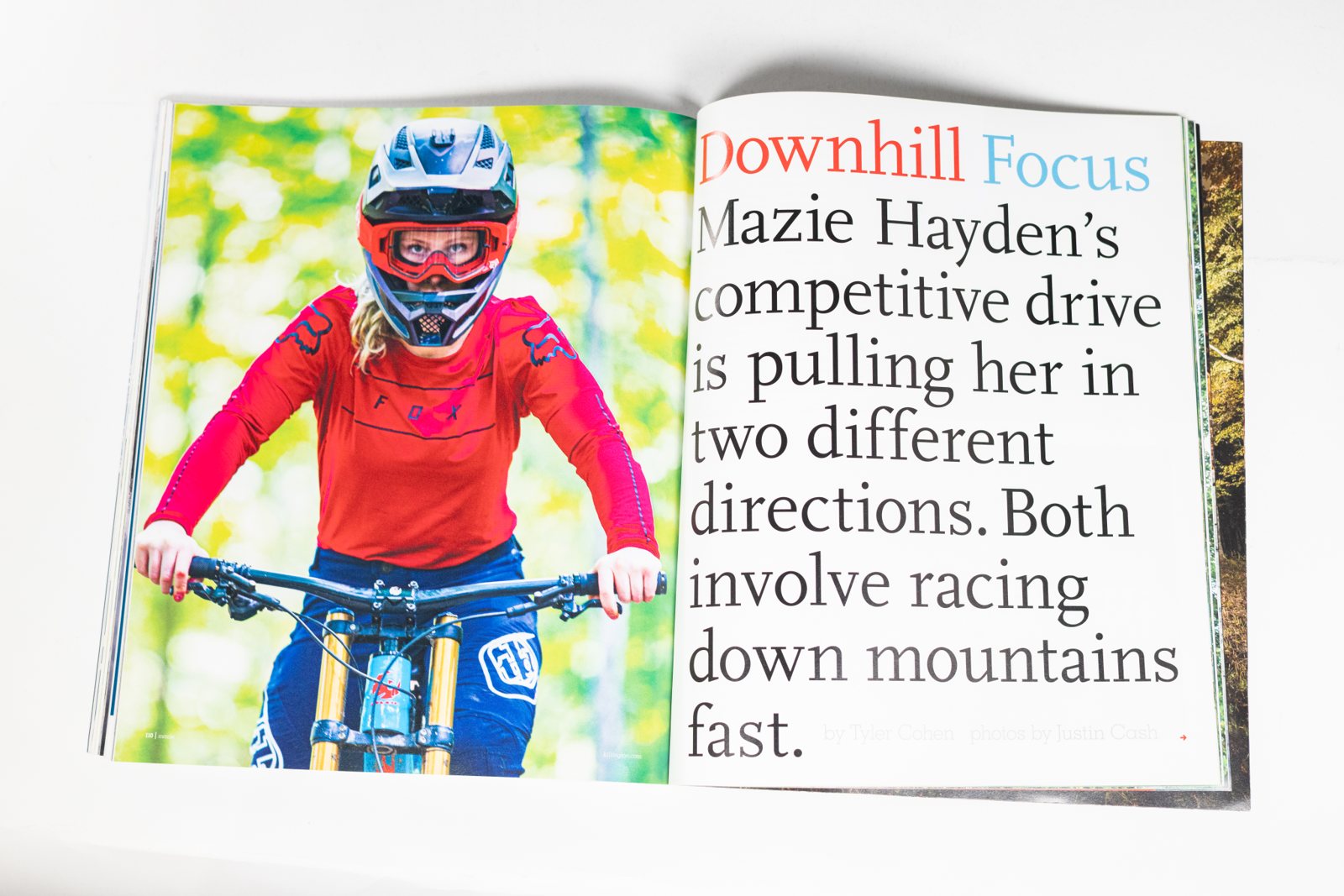
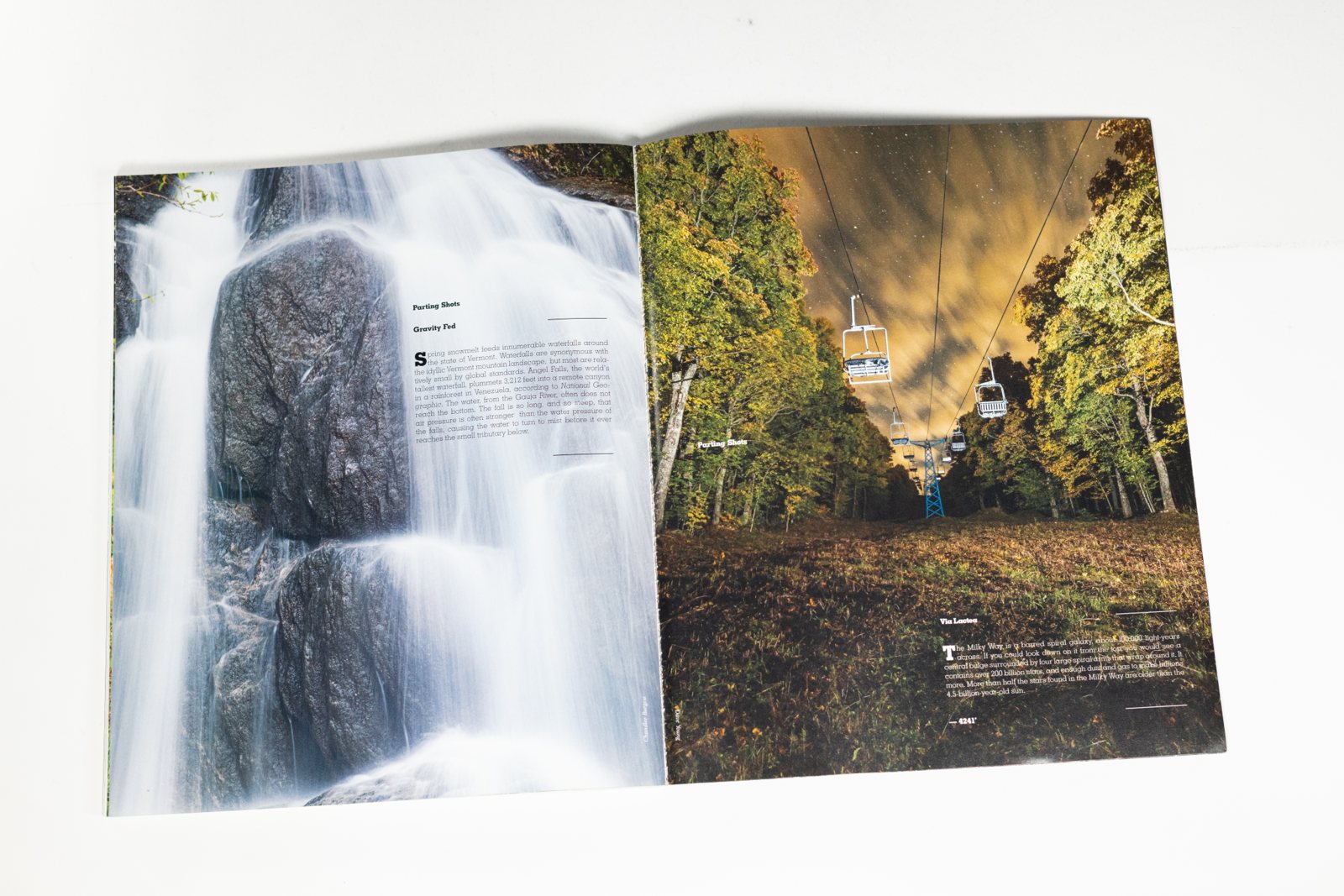
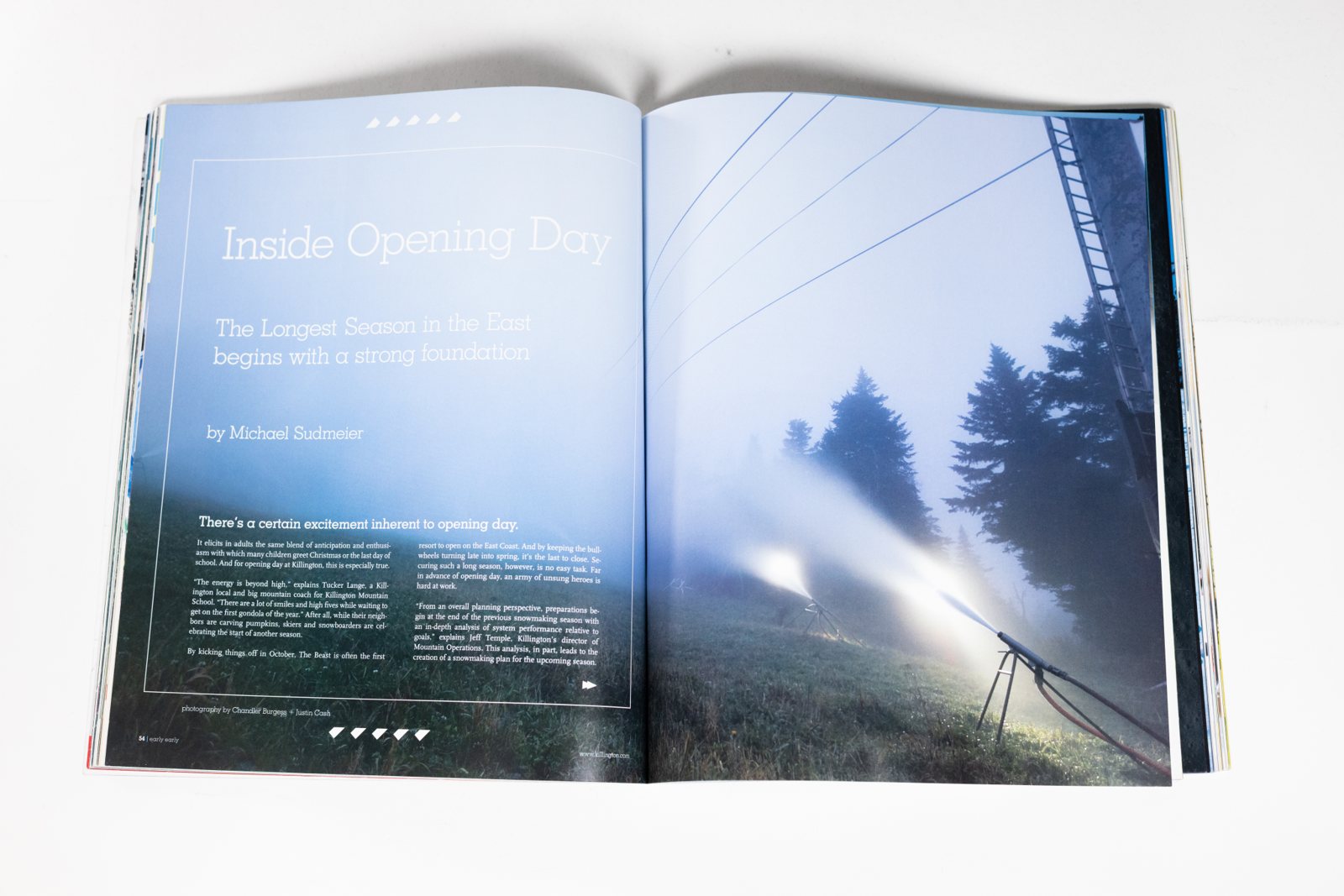
The magazine · selected spreads

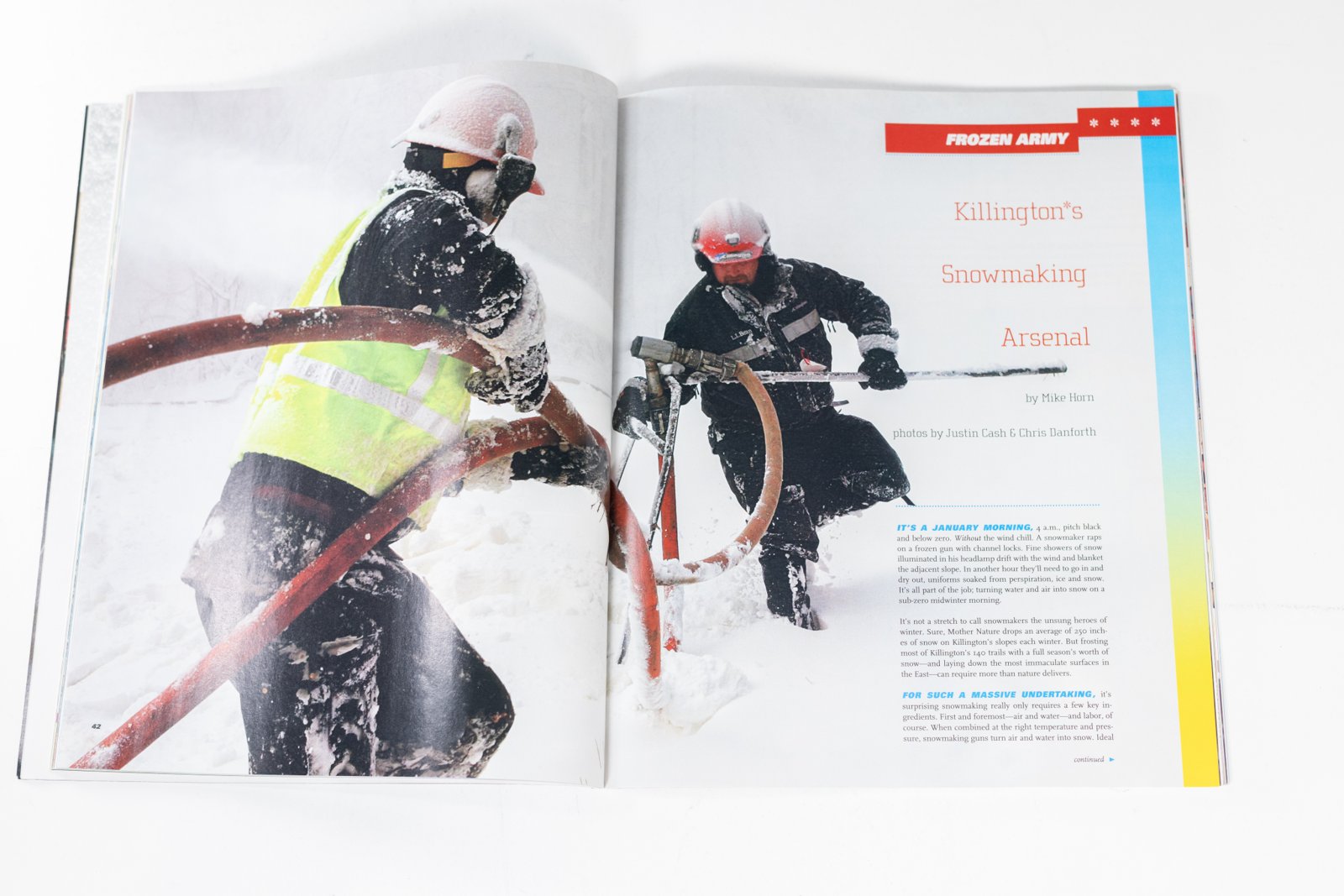
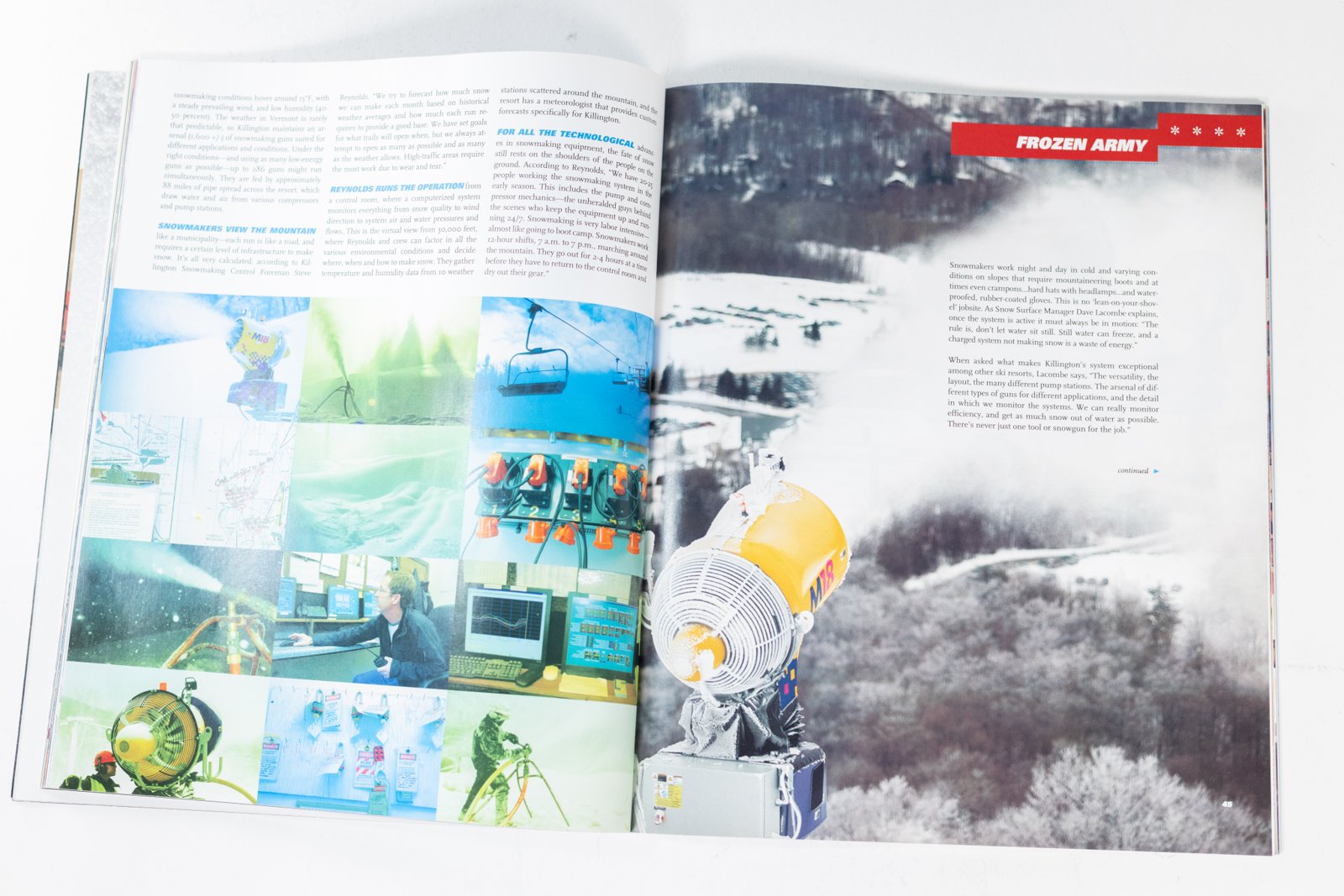
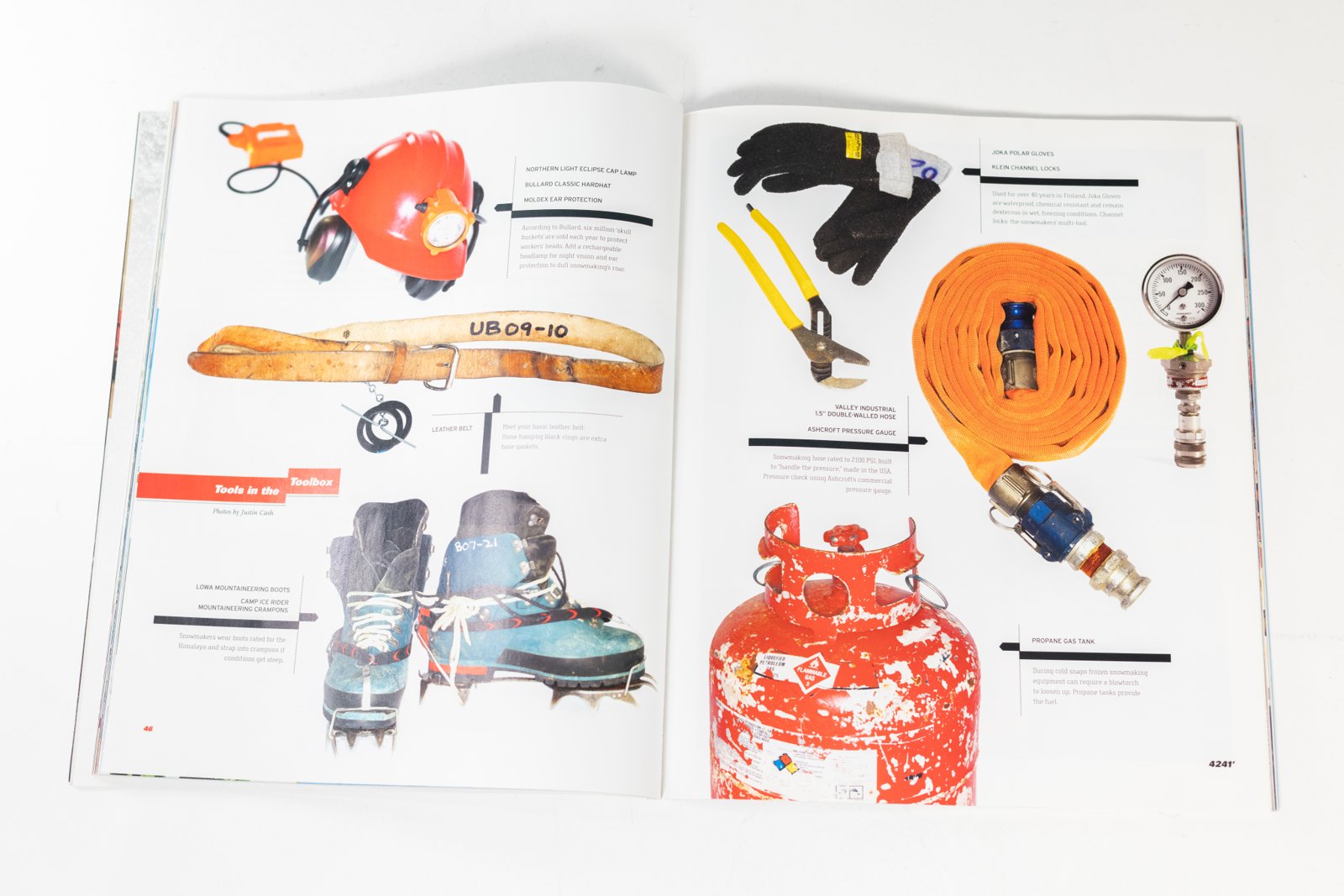
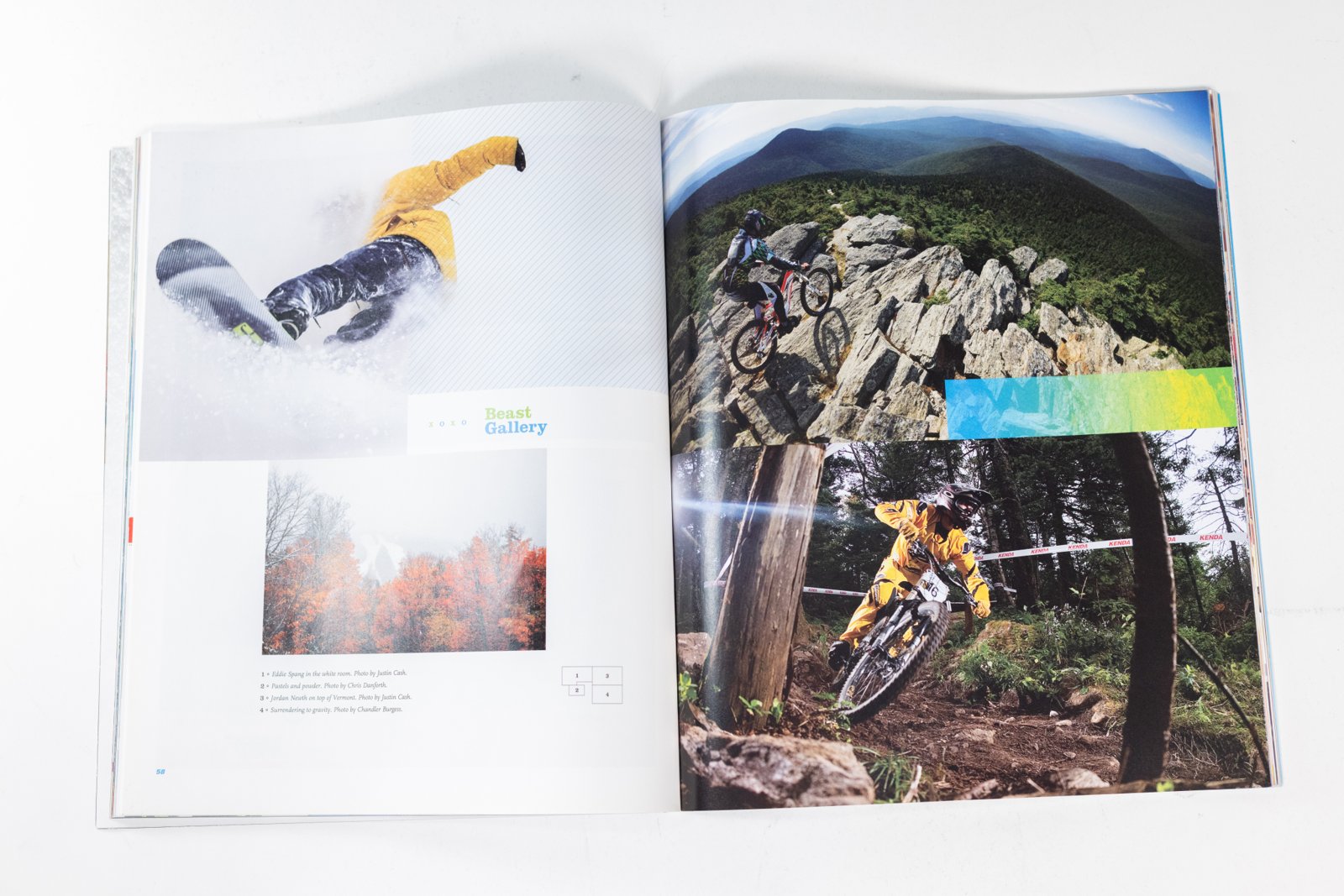
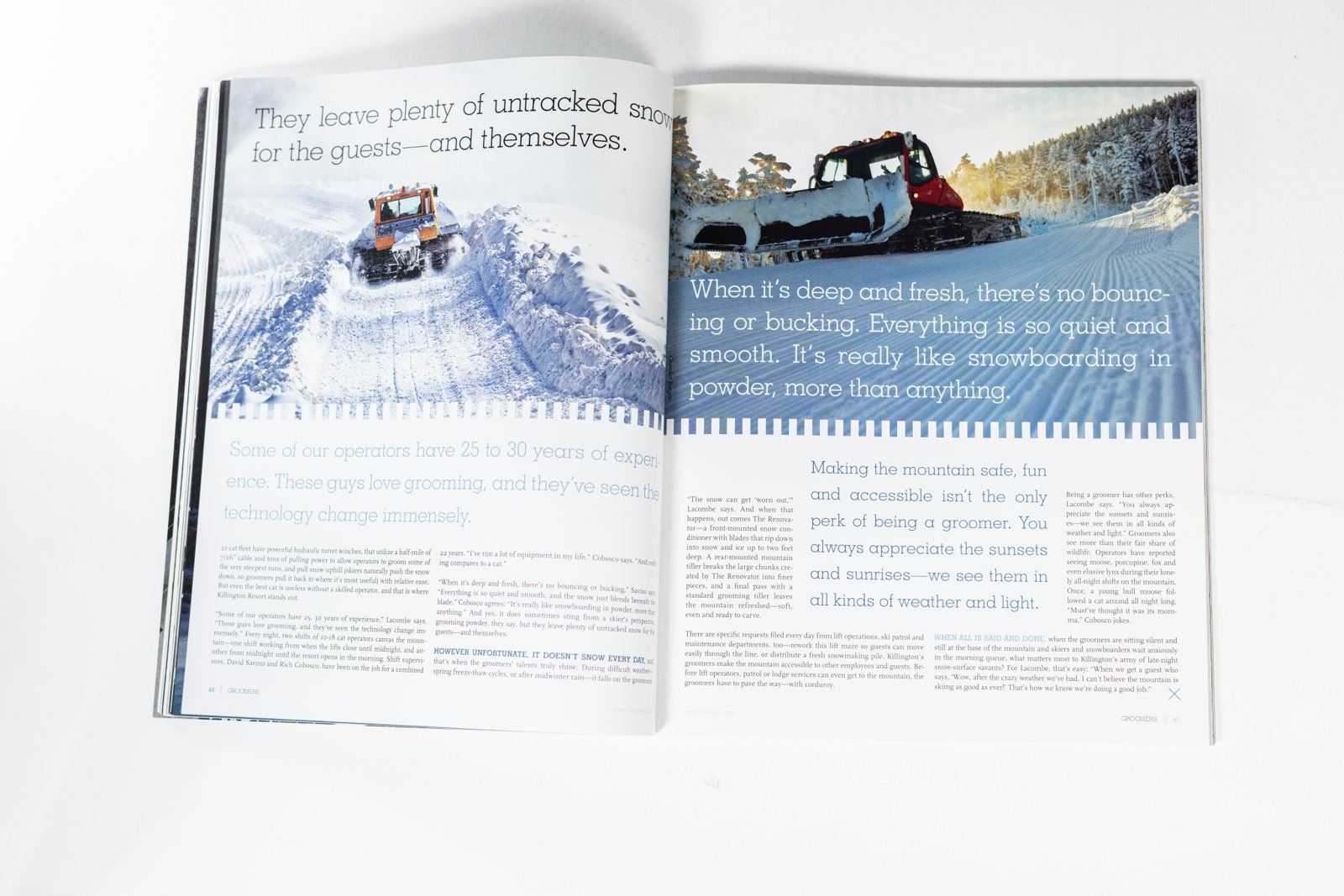
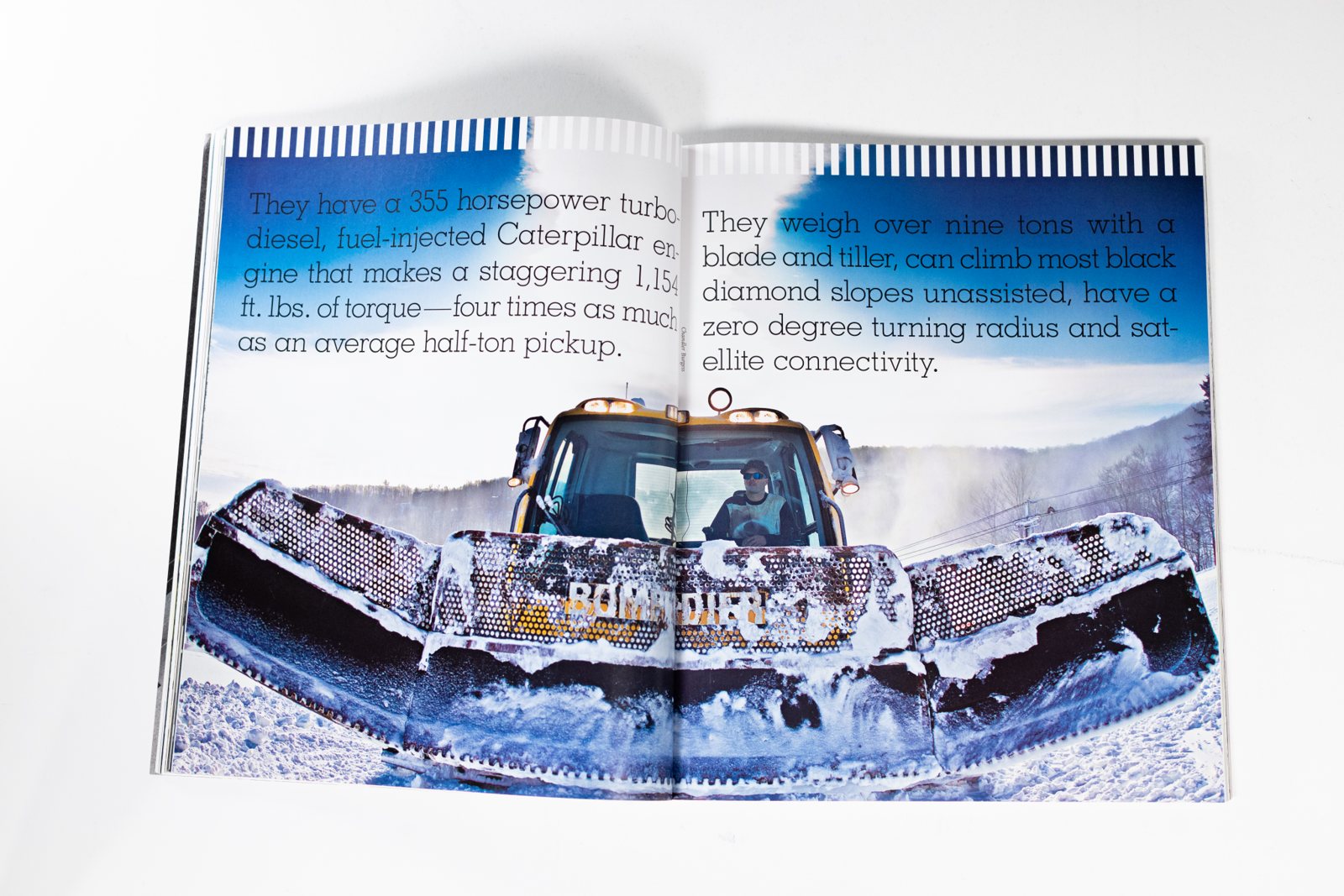
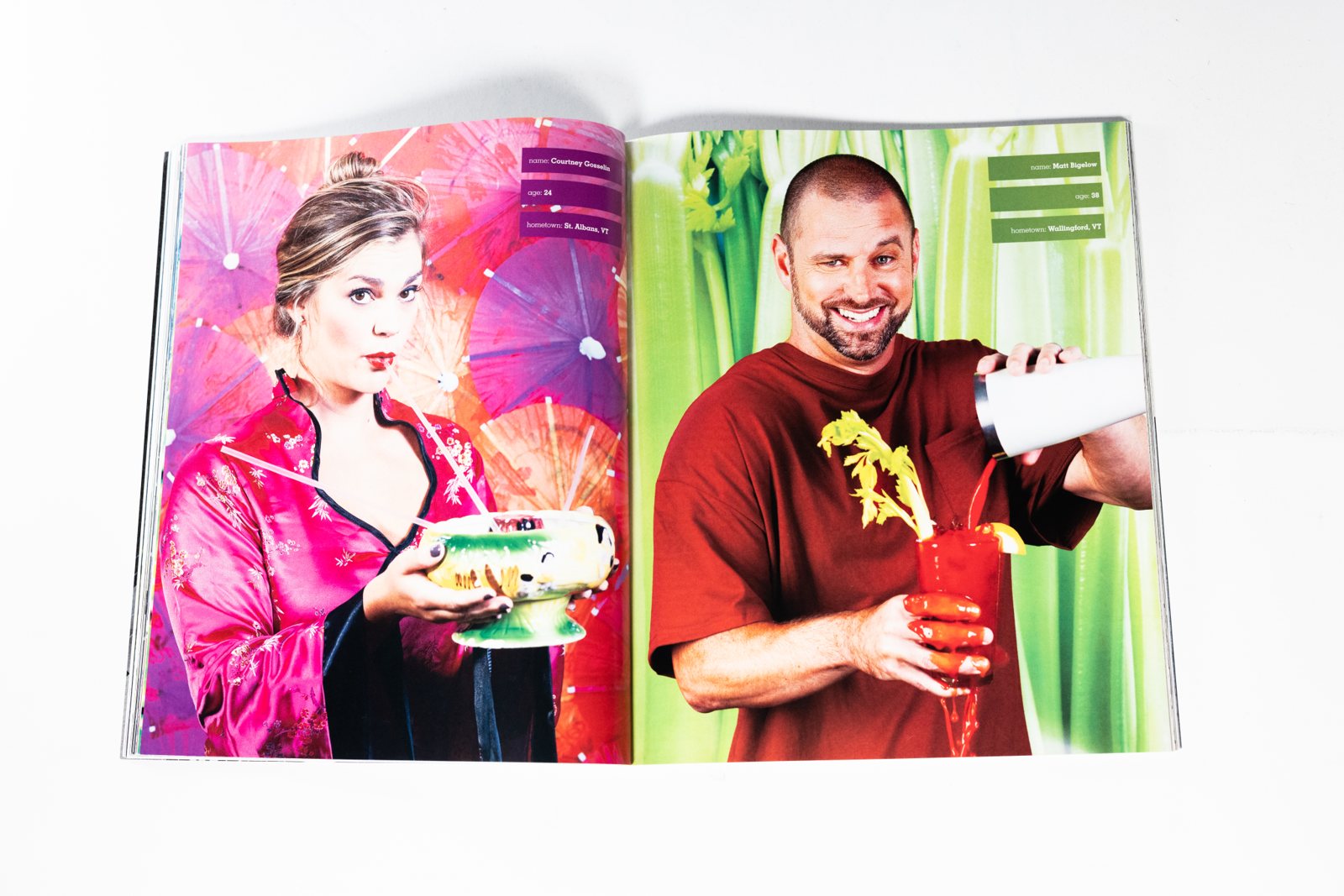
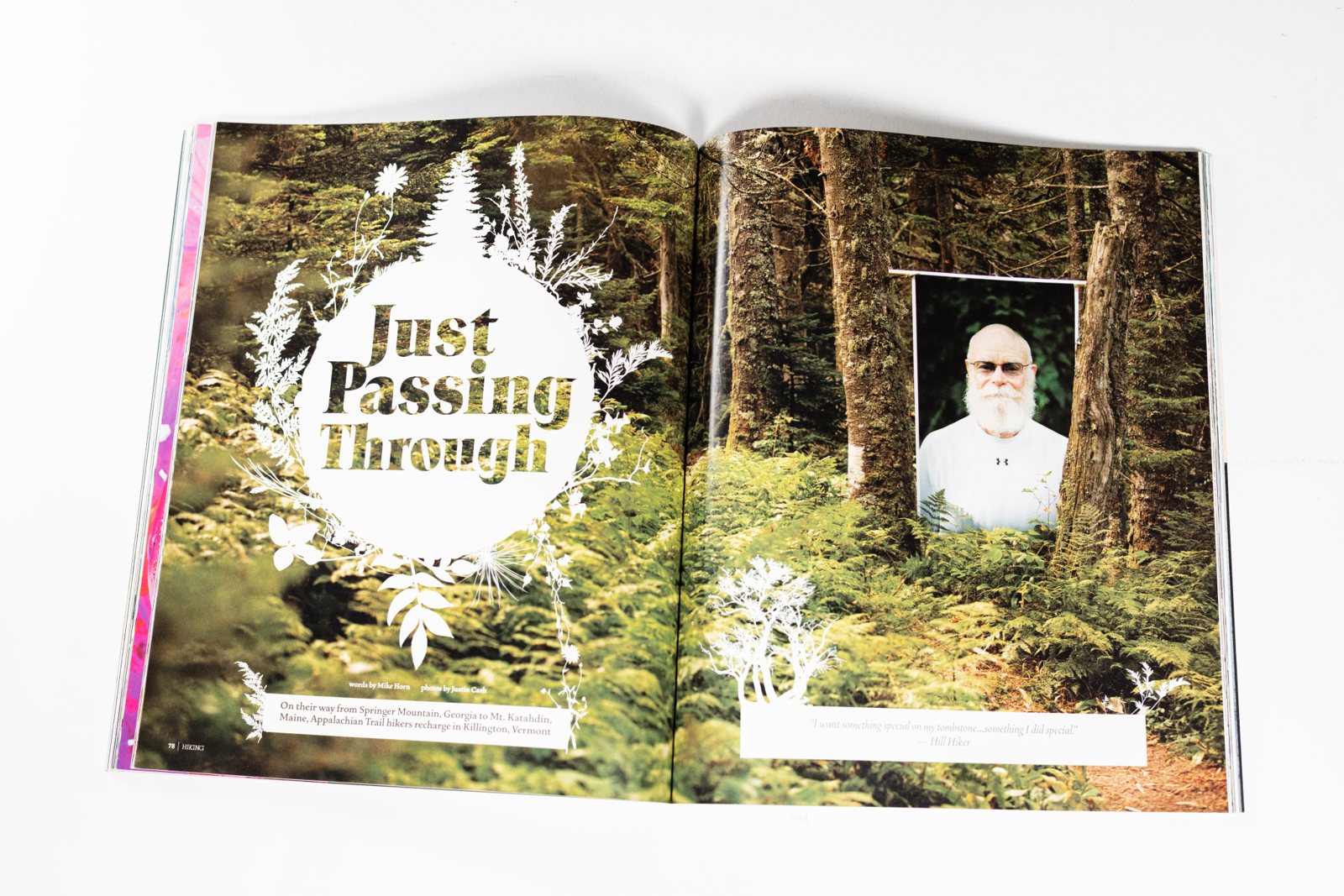
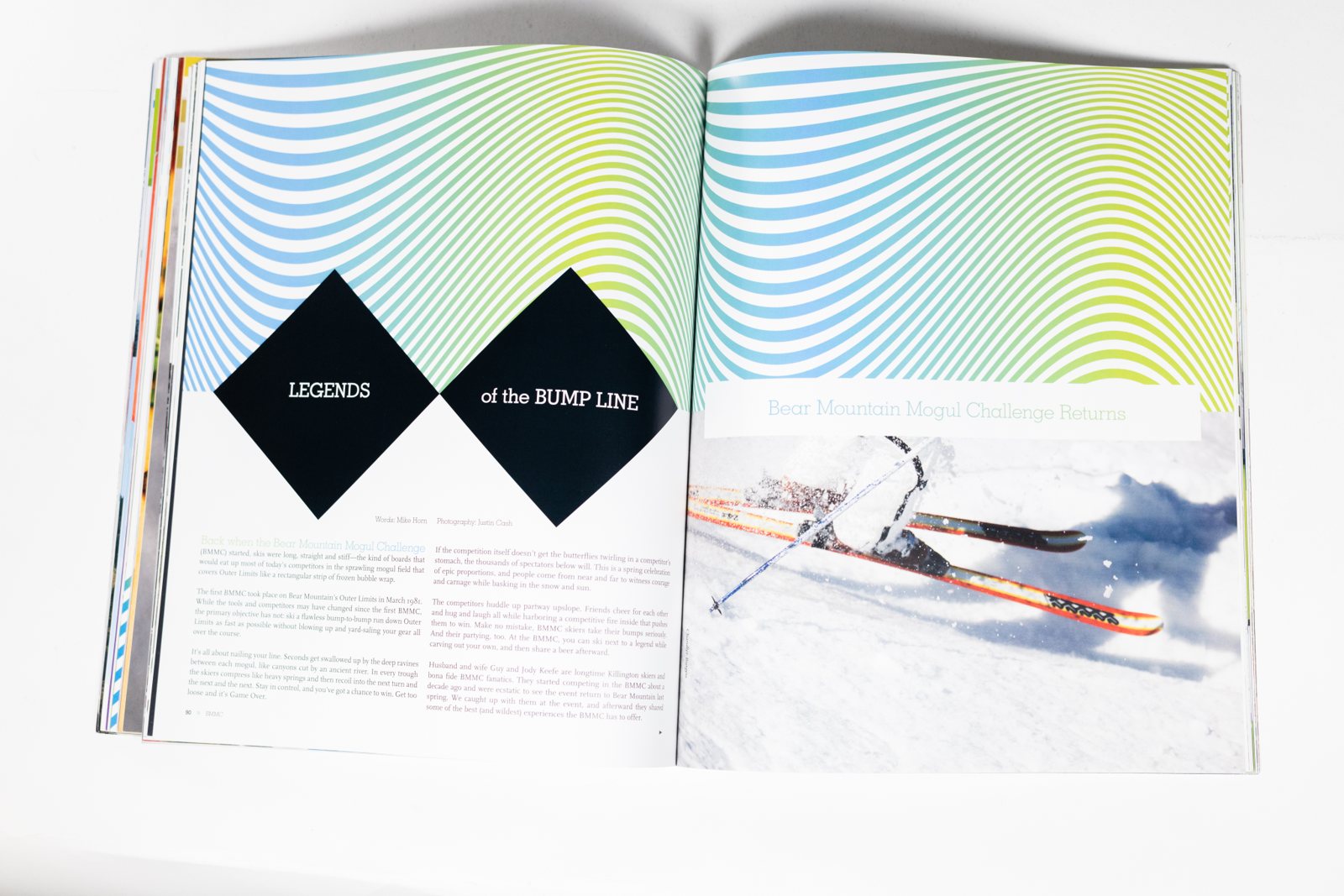
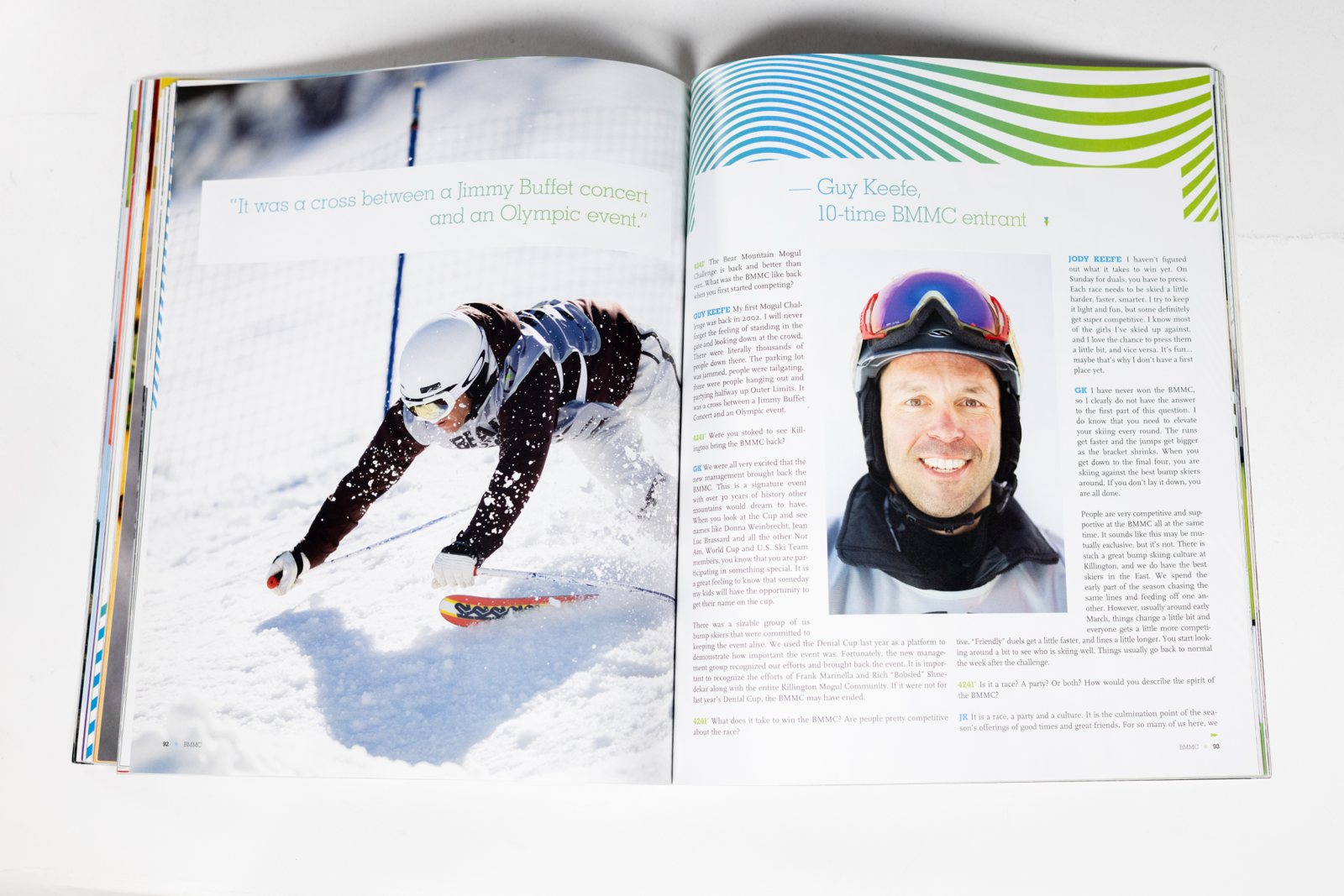
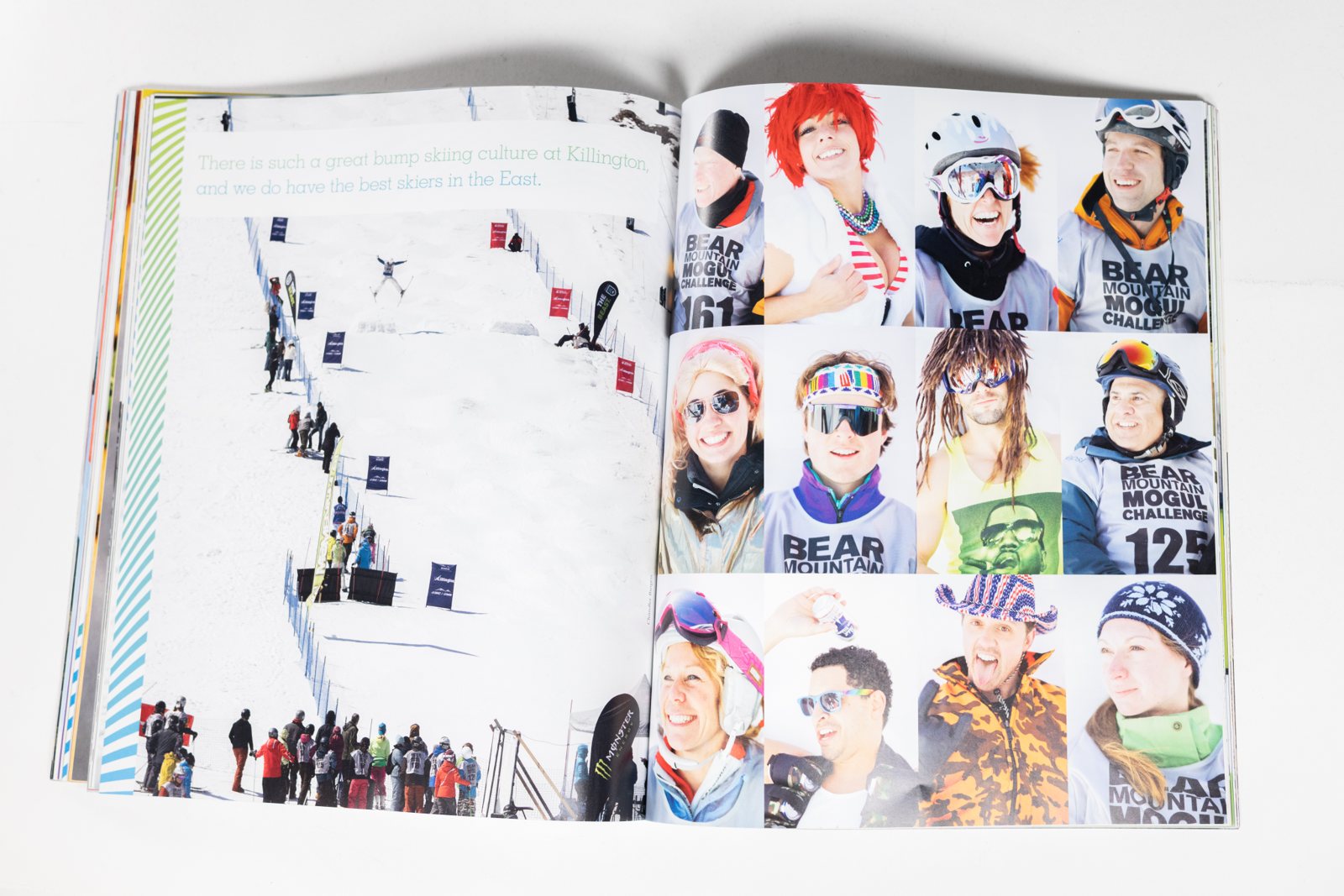
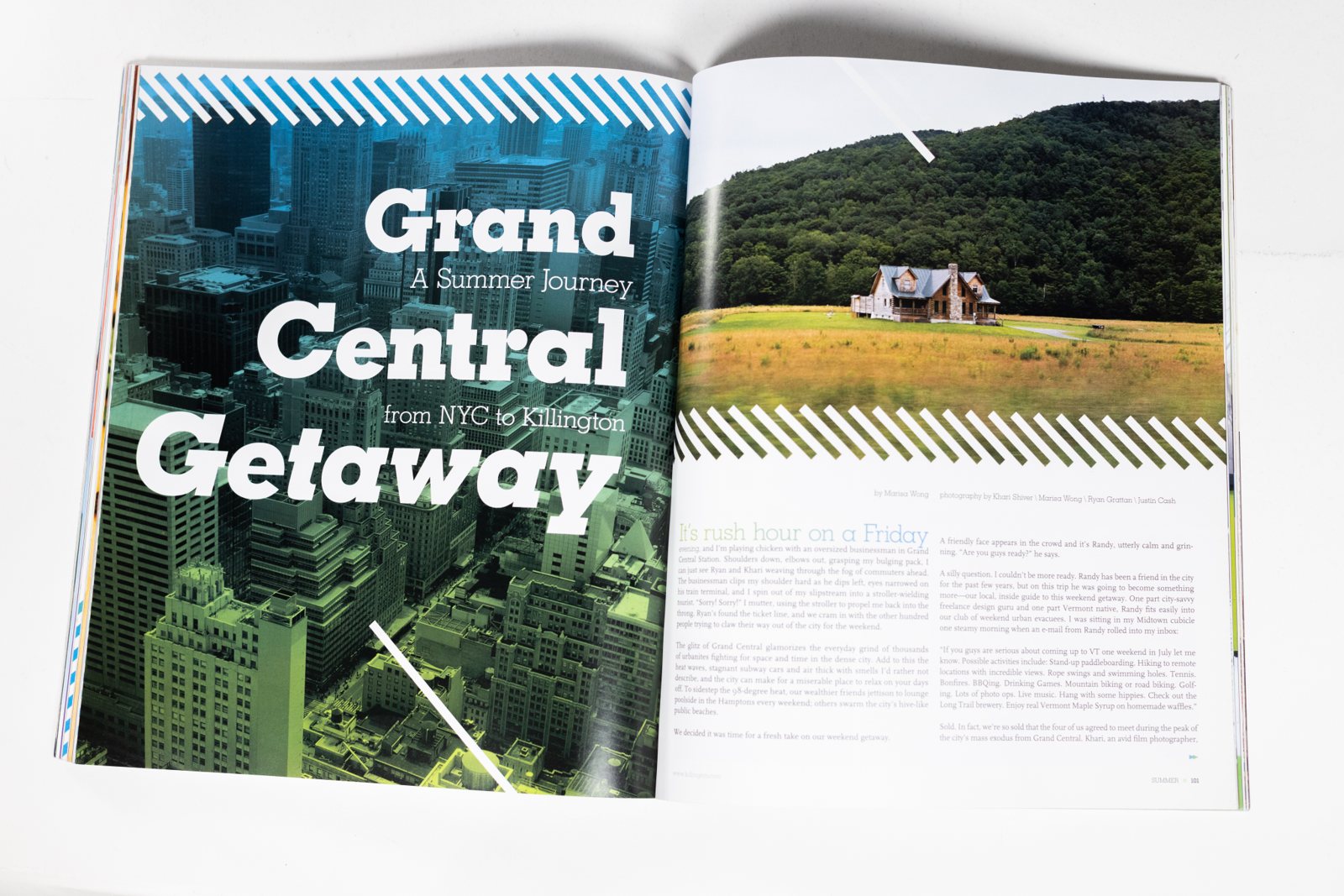
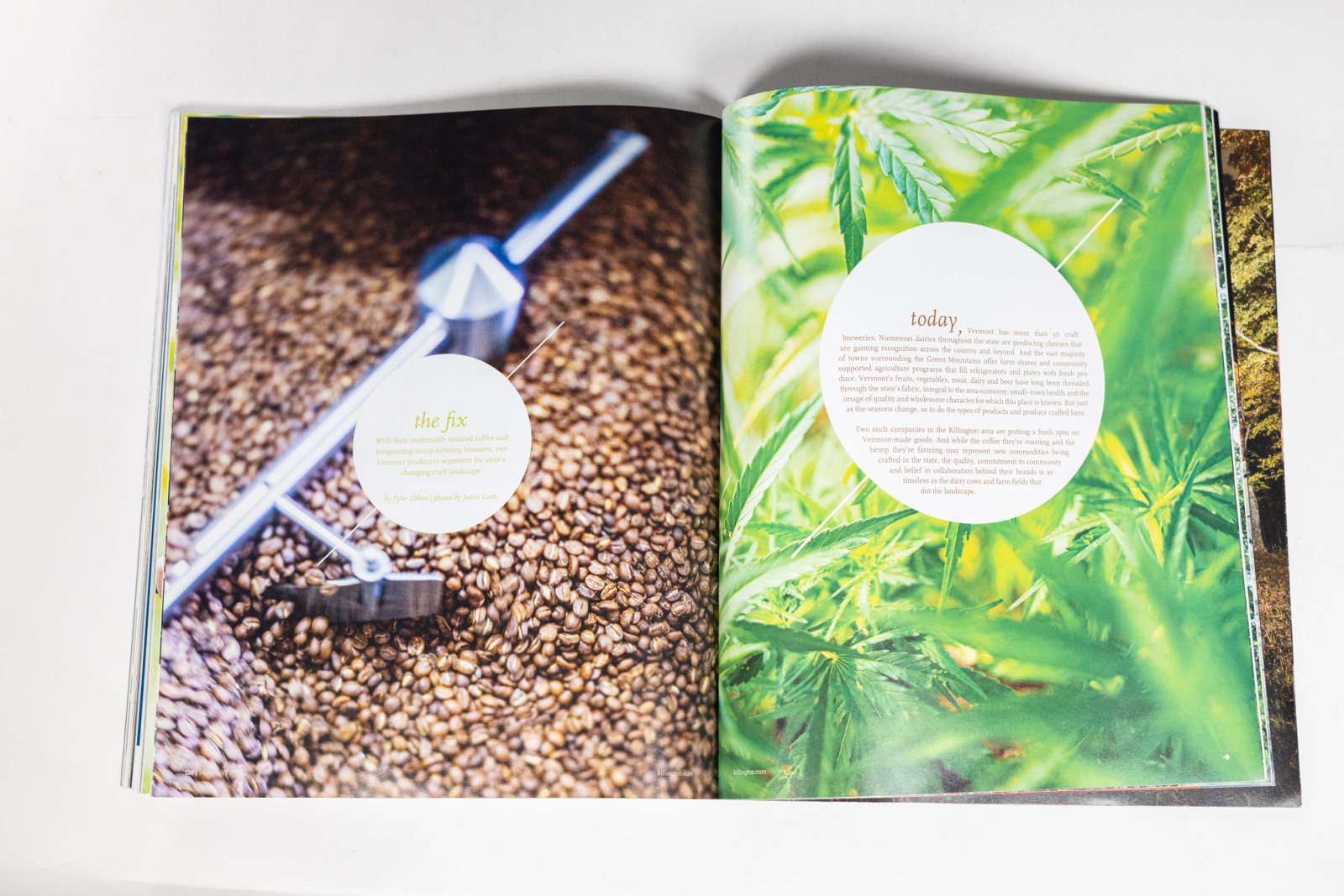
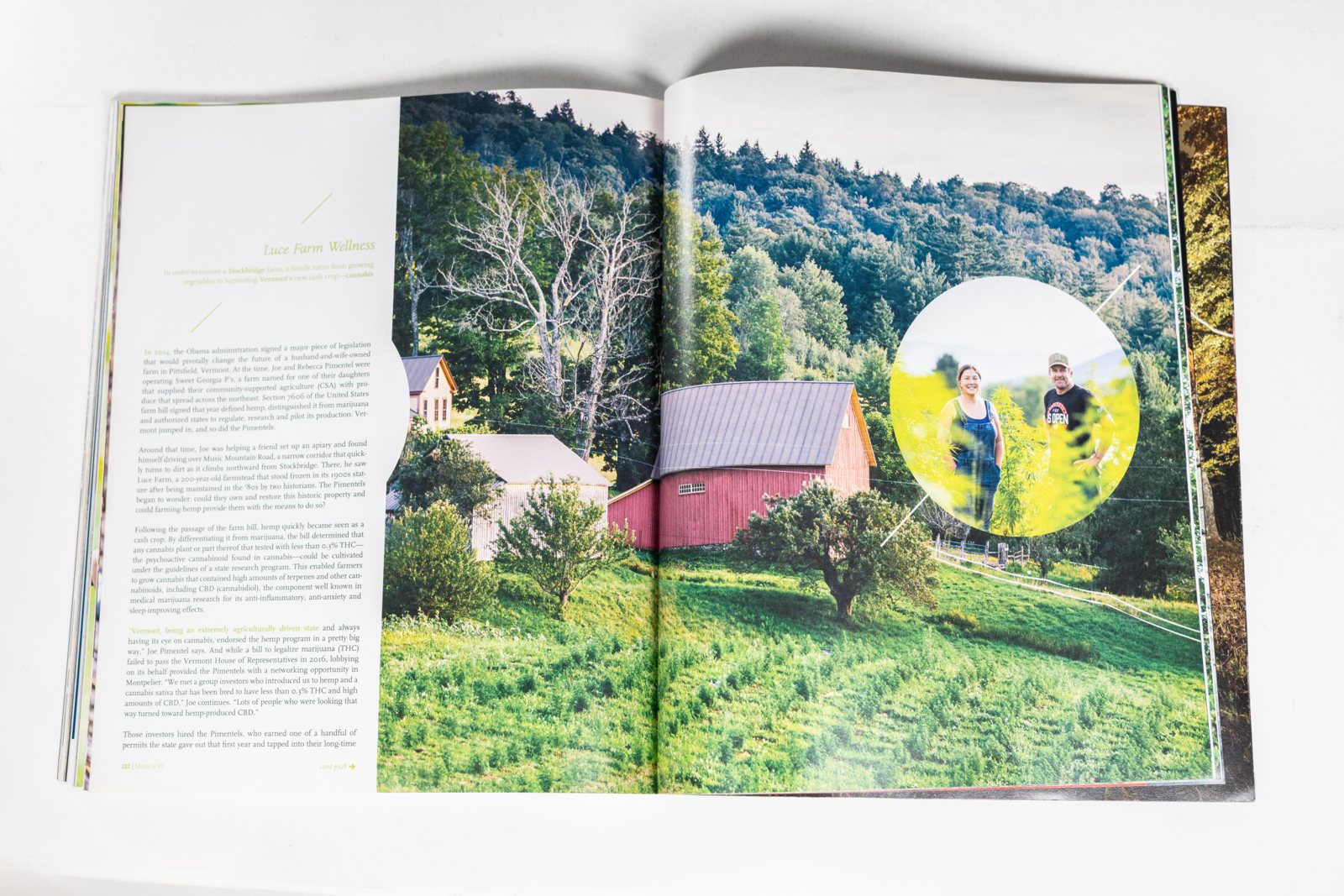
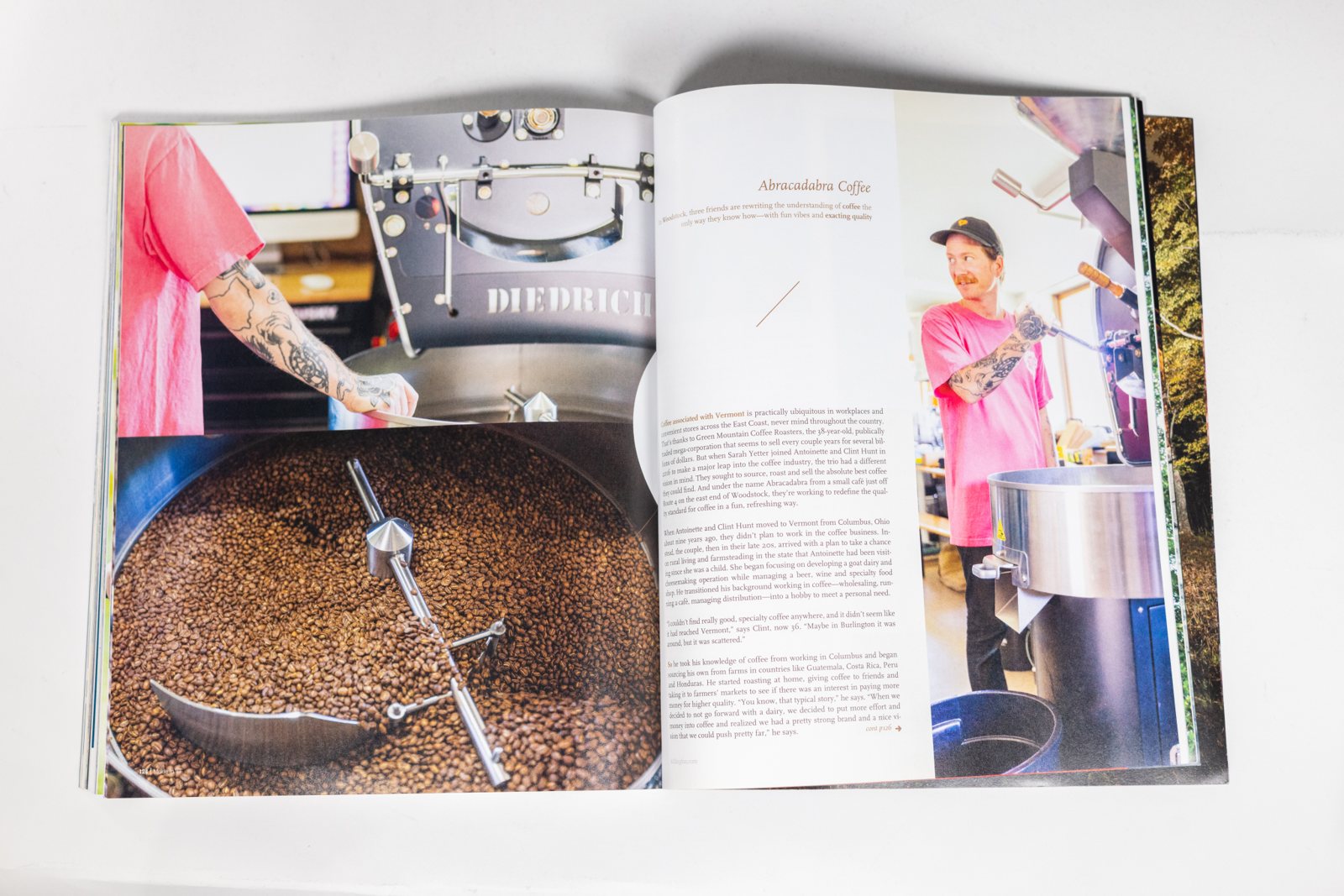
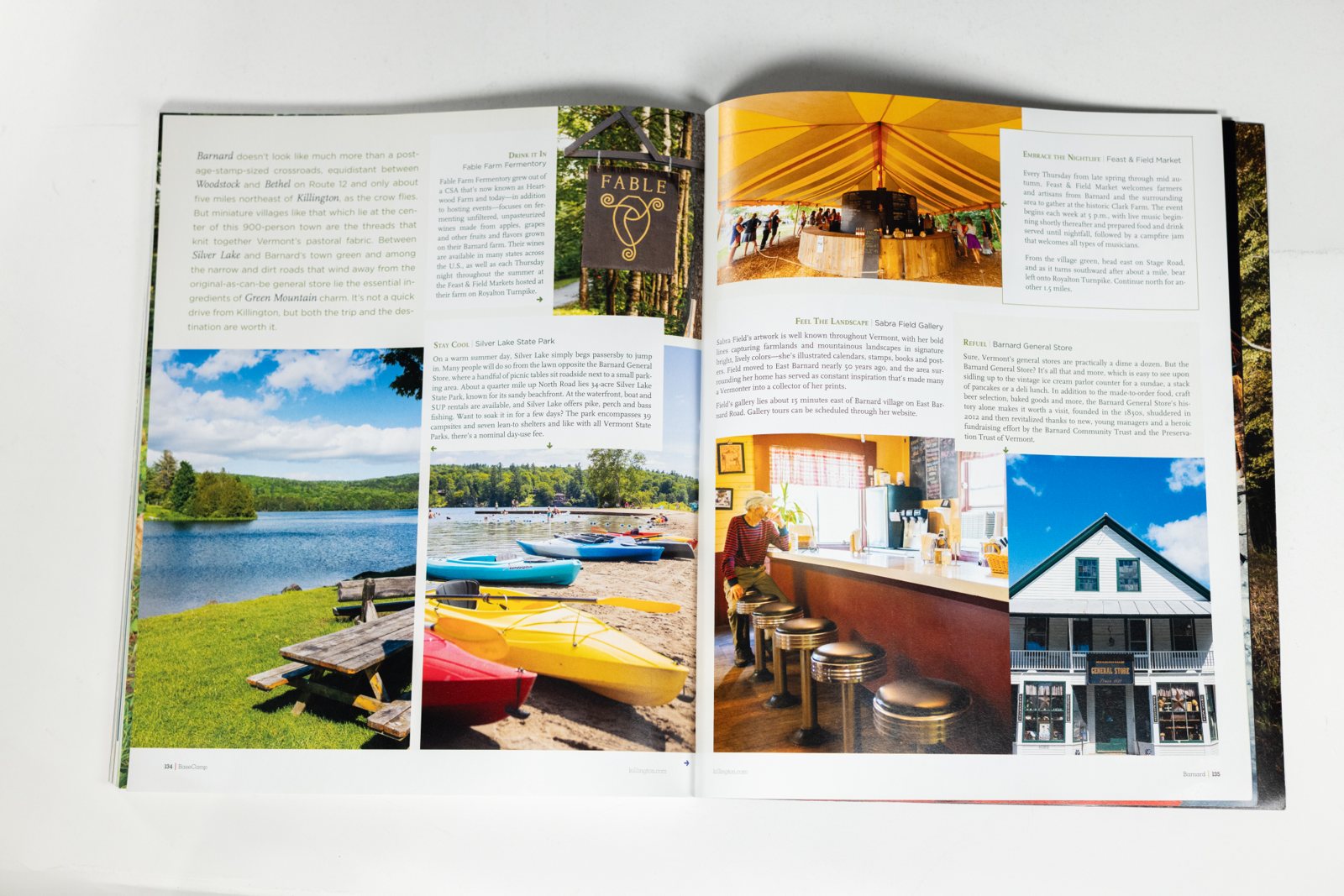
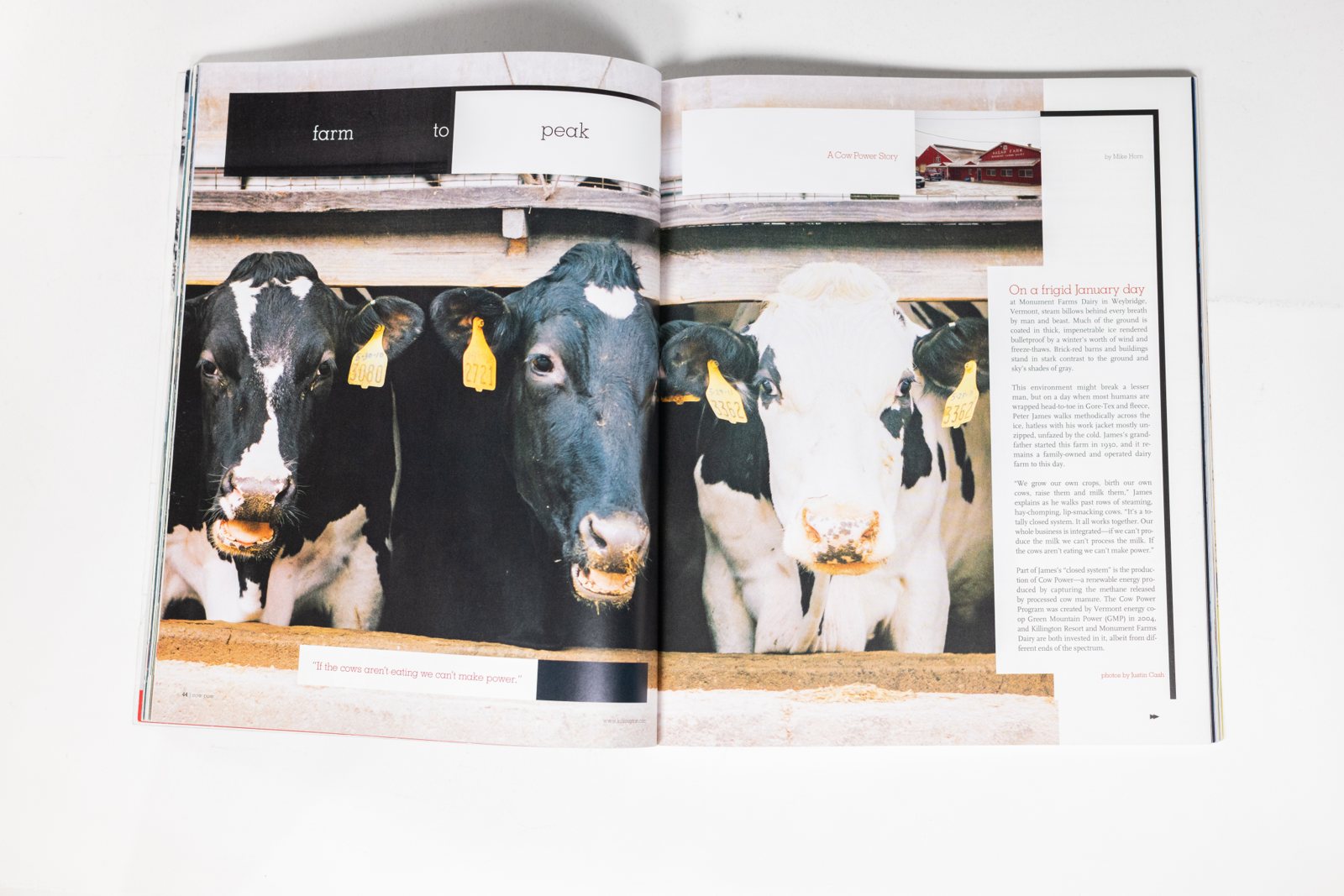
152 pages, at real scale.

01 / 79
4241 magazine spread
A 152-page magazine, at real scale, made in a ski town.
07What it became

One editorial engine,
spun out across every format it could reach.

It ran for a decade. A 152-page publication, printed with Universal Wilde in Boston on two web presses. A real magazine, at real scale, made in a ski town.

And it didn't stay a magazine. The narratives became a video series. The video series — roughly 75 films on YouTube — became a podcast, The Killington Download, still live on Spotify at 4.9 stars. One editorial engine, spun out across every format it could reach, each extension pulling more life out of the same stories. The magazine was the trunk. The video and the podcast were branches of their own.

Then COVID hit the world, and print became untenable. So we pivoted again, to a digital website version supporting the podcast, adapting the vehicle to a moment that made the original form impossible. Right up to the end, the instinct held: keep the story alive, change the container it lives in

152
Pages, printed with Universal Wilde in Boston.
10 yrs
One editorial engine, start to finish.
75+
Films on YouTube; a 4.9★ podcast still live.
The podcast · on camera

The Killington Download, in motion.

Social waveform cuts from the podcast the magazine became — hover to preview, click to play with sound.
01 / 06
Still live · The Killington Download

The magazine's narratives became a video series, then a podcast — still streaming on Spotify, years after the last issue printed.
Ratings & reviews · Spotify
4.9★ out of 5 34 ratings 30 episodes
★★★★★Life long Killington skier

"As a lifelong Killington skier it's a great listen. The host has great insight to Killington. Keep 'em coming."

Willo435173
★★★★★Awesome insight

"What a cool idea. Love the insight to running a ski area. And hearing from Mike every episode is great! Keep up the good work!"

coolhirdoo
★★★★★Awesome podcast

"Great job guys — just found the podcast, and am loving it. Can't wait for the next one."

Phloundavette
★★★★★Great listen

"Always great guests and insight. Keep the podcasts coming for next season!"

Spotify
08What it left

A standard the region still measures print against.

For ten years, 4241 did something a ski town wasn't supposed to be able to do: publish with real craft, at real scale, and make it pay for itself.

It set a bar the region still measures its print against. It proved a self-funding editorial model could hold up in a small market. And it seeded what came next — the Killington Download podcast is still live, and Buttery, the agency the whole team became, grew straight out of it.

When I left for a promotion at POWDR, the magazine wound down with me. I won't dress that up — I was holding a lot of it together. But a decade of craft, a funding model, four formats, and an agency don't un-happen. That's the part that lasted

09What it proves

Proof of the pattern, a decade before the tooling could make it live.

A pile of forgettable brochures could have stayed a pile of forgettable brochures. Instead it became a decade-long editorial engine — self-funded by a model I built, run by a team I became the spine of, and pushed across every format it could reach.

That's the pattern, a decade before the tooling could make it live: diagnose the gap, build the system that fills it, and make the story work harder than anyone thought it could. 4241 is where I first proved I could be the thing a brand is built around.

That's the whole of it. The story comes first. The system keeps it alive

Craft that paid its own way.
What it made me

It taught me to think like an operator as much as a creative: a story lasts when it carries its own business model. That's when "the creative" and "the business" stopped being two separate jobs to me.

Close ✕
Close ✕